



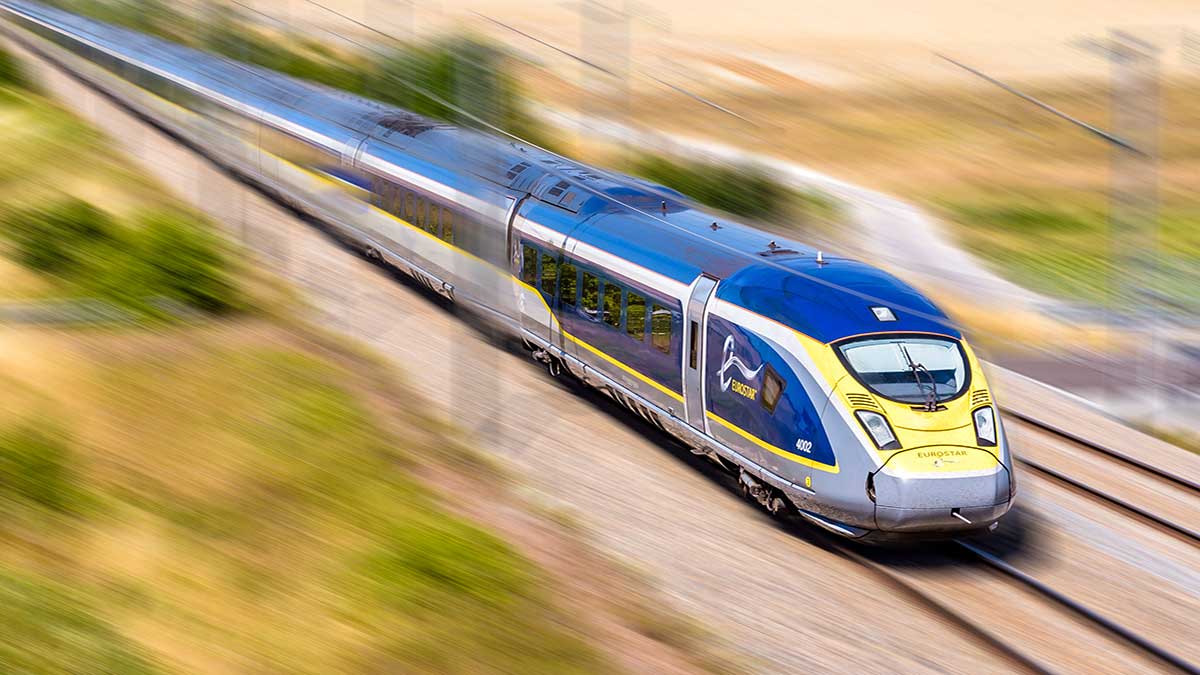
Eurostar is on monitor to turn out to be a Dubai-style totally automated service, because the worldwide prepare community operator seems to remodel its fleet into software-defined trains.
That was the message to delegates on the IoT Expo in London this week because the high-speed worldwide prepare firm sought to place itself as a pacesetter in cutting-edge rail know-how.
“We’re still a couple of years away… but to be honest, that’s the way things are going,” stated Aamir Tufail, Electrical Programs Engineer at Eurostar, talking to David Palmer, Chief Product Officer of Pairpoint — the IoT platform collectively owned by Vodafone and Sumitomo Company.
“When the driver sits in the cab and sets off the train, a lot of it is fairly automated. Everything’s ready for him. He’s monitoring that all the systems are happy,” Tufail stated. Fault codes now seem with really useful remedial actions, permitting drivers to intervene effectively and safely.
Regardless of this excessive degree of automation, Tufail identified that boundaries nonetheless stay earlier than Eurostar trains can start to emulate the driverless trains of the Dubai Metro or the DLR. Cross-border signalling provides complexity, as Eurostar trains navigate totally different techniques within the UK, France, Belgium, and the Netherlands. Full autonomy would require software program able to managing these variations safely — a big technical and regulatory problem.
Nonetheless, his feedback spotlight the corporate’s ambition to maneuver past hardware-led operations and make software program, sensors, and AI the core of its fleet administration.
“Instead of looking for an improved product in terms of hardware, we’re looking to the software,” Tufail stated. “How can we make that more resilient and keep updating it in line with IoT and everything being developed nowadays?”
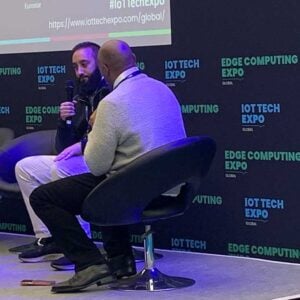
Dependable connectivity underpins Eurostar’s software-led strategy. The operator is exploring satellite tv for pc, cell, and fixed-network options to take care of communications even by the 20-minute Channel Tunnel stretch.
“Security is the priority. Whether someone could watch Netflix on the train or something like that is secondary, but we have to make sure that all our systems can communicate, even if we’re in a dead spot,” Tufail stated.
The corporate’s ambitions to offer connectivity by the Channel might by seemed upon with scepticism by some prospects, particularly the 1000’s of passengers left stranded through the New Yr’s holidays because of an electrical energy failure in Europe’s longest undersea tunnel.
Nonetheless, Tufail stated that the corporate had been quietly implementing IoT-based upkeep techniques on board which reduces downtime, improves reliability, and maximises prepare availability on the busy worldwide routes between London, Paris, Brussels, and Amsterdam.
“Initially, we did a lot of time-based maintenance,” Tufail defined. “Whether or not something needed changing, you changed it, whether it was a wheelset, an axle bearing, or a pump.” Whereas efficient, this strategy was inefficient: elements had been usually changed earlier than the tip of their helpful life, rising downtime and operational prices.
At present, sensors monitor the well being of particular person elements in actual time, giving engineers exact perception into when replacements are literally required.
“Now the train is communicating well with all the systems and all the components. We can see at what point certain components start to scream for help,” Tufail stated. Elements will be changed barely earlier or later than the producer’s nominal schedule, relying on precise put on.
“Instead of changing it every six years, maybe it’s five-and-a-half, or five. Or the opposite way, we might find after six years that it’s perfectly fine and it can run for another two or three years.”
Sensor knowledge feeds predictive fashions, serving to engineers anticipate points earlier than they happen. “We feed it all the data, for example wheel measurements, and it outlines where we might have degradation,” Tufail stated. Nonetheless, human oversight stays crucial. “We don’t want to completely rely upon it. We’ve seen it give the wrong answer very confidently. Our role as engineers is to verify what it’s telling us.”
Furthermore, Tufail added, working trains at speeds of as much as 200 miles per hour throughout a number of nations makes Eurostar a very demanding surroundings for IoT and software program techniques.
Sensors should survive ballast mud, brake particles, and excessive temperature adjustments whereas offering correct, actionable knowledge.
“If we can make IoT work on a train that’s going 200 miles an hour, I think we can make it work anywhere else,” he stated.
