



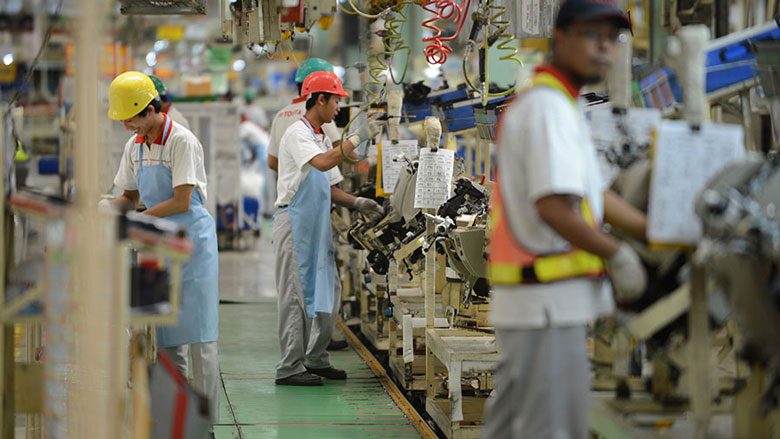
As producers race to modernize operations and construct resilience, the dialog has shifted from automation to intelligence, and from massive, centralized factories to nimble, distributed microfactories.
However the success of those sensible factories gained’t be measured by robotics alone. It’ll depend upon how nicely knowledge flows throughout programs, roles and time horizons. Most producers are underprepared for this new paradigm.
Microfactories are gaining traction throughout industries, together with automotive, medical units, aerospace and client items. Microfactories are small, modular, hyper-automated services which might be sometimes situated near their finish markets.
The idea is rising in popularity for a number of causes. Demand volatility requires flexibility and quick reconfiguration. Provide chain disruptions demand native manufacturing choices. Sustainability objectives push for shorter logistics chains. Buyer expectations favor personalized, low-volume manufacturing.
However microfactories will not be simply smaller replicas of mega-factories. They function with radically totally different assumptions. Knowledge is real-time and transient, not batch-processed. Manufacturing is modular, not linear. And, decision-making is distributed, not centralized.
These variations put huge strain on conventional knowledge architectures.
Development gear retailer Hastings Deering constructed a unified knowledge market on the Denodo platform, enabling ruled self-service analytics and real-time operational insights throughout its enterprise. Picture courtesy Hastings Deering
A Hidden Bottleneck
Most producers depend on knowledge methods designed for a distinct period. Knowledge lakes, knowledge warehouses, and different monolithic programs could serve nicely for historic reporting, however they wrestle in high-speed, multi-system, low-latency environments like sensible microfactories.
In search of fast solutions on meeting and manufacturing matters?
Strive Ask ASM, our new sensible AI search software.
Ask ASM
An information lake is a central location that holds a considerable amount of knowledge in its native, uncooked format. In comparison with a hierarchical knowledge warehouse, which shops knowledge in information or folders, a knowledge lake makes use of a flat structure and object storage to retailer the information. Object storage shops knowledge with metadata tags and a novel identifier, which makes it simpler to find and retrieve knowledge throughout areas, and improves efficiency. By leveraging cheap object storage and open codecs, knowledge lakes allow many functions to reap the benefits of the information.
Knowledge lakes have been developed in response to the restrictions of knowledge warehouses, that are costly and proprietary and may’t deal with the trendy use instances most firms want to deal with. Knowledge lakes are sometimes used to consolidate a company’s knowledge in a single, central location, the place it may be saved “as is,” with out the necessity to impose a proper construction for the way the information is organized.
Not like most databases and knowledge warehouses, knowledge lakes can course of all knowledge varieties—together with unstructured and semi-structured knowledge like photos, video, audio and paperwork—which is essential for machine studying and superior analytics.
Extra not too long ago, the “knowledge lakehouse” was conceived as a contemporary different to the information lake. An information lakehouse is a brand new, open knowledge administration structure that mixes the flexibleness, cost-efficiency, and scale of knowledge lakes with the information administration and ACID transactions of knowledge warehouses, enabling enterprise intelligence and machine studying on all knowledge. (ACID—atomicity, consistency, isolation, sturdiness—is a set of properties of database transactions supposed to ensure knowledge validity regardless of errors.)
Knowledge lakehouses are enabled by a brand new, open system design: implementing related knowledge buildings and knowledge administration options to these in a knowledge warehouse, straight on the form of low-cost storage used for knowledge lakes. Merging them collectively right into a single system implies that knowledge groups can transfer quicker, as a result of they can use knowledge while not having to entry a number of programs. Knowledge lakehouses additionally be certain that groups have probably the most full and up-to-date knowledge accessible for knowledge science, machine studying and enterprise analytics.
Even so, knowledge lakehouses, like knowledge lakes, are monolithic and unable to combine knowledge from supporting knowledge sources with out expensive, advanced, and time-consuming replication.
Take into account the fact on the manufacturing facility ground. Machine telemetry arrives by the second. Environmental sensors fluctuate by the minute. Updates from ERP software program and standing studies from MES software program shift hour by hour. PLM specs evolve with design cycles.
This flood of ephemeral, distributed and system-specific knowledge creates a visibility hole. Manufacturing leaders want insights, not uncooked knowledge. Knowledge scientists want curated options, not fragmented fields. Operations groups want up-to-date dashboards, not stale studies.

With Denodo’s assist, Festo created AI-powered chat functions for intuitive knowledge entry. Picture courtesy Festo Corp.
Logical Knowledge Administration
That is the place logical knowledge administration performs a essential function. It leverages a virtualized, real-time knowledge entry layer that connects disparate programs, from product lifecycle administration (PLM) and manufacturing execution programs (MES) to web of issues (IoT) and enterprise useful resource planning (ERP) programs, with out counting on first bodily transferring knowledge.
It permits manufacturing groups to:
- Question knowledge in place throughout cloud, edge and on-premises programs.
- Create AI-ready, ruled knowledge merchandise tailor-made to make use of instances.
- Keep end-to-end traceability for compliance and surroundings, social and governance reporting (ESG).
- Ship immediate entry to trusted knowledge for digital twins, dashboards and AI fashions.
In essence, logical knowledge administration serves as the information orchestration layer that allows sensible factories, and notably microfactories, to operate as cohesive, insight-driven environments.
Image a medical gadget microfactory in mid-production. All of a sudden, environmental sensors detect a spike in humidity and vibration. These very small anomalies might have massive penalties.
But, with logical knowledge administration, edge units can seize the information domestically and make it immediately accessible for evaluation. Up to now, that form of knowledge might need gone unnoticed till post-production critiques. Now, it may be queried in actual time, cross-referenced with batch knowledge and machine diagnostics, and fed straight right into a digital twin that spots deviations as they occur. Operators are alerted instantly, permitting them to recalibrate earlier than the batch is compromised.
What’s distinctive about this case is that after manufacturing finishes, the information doesn’t disappear. As an alternative, it’s archived for high quality management and future audits. The actual win? Gaining quick entry to transient knowledge throughout programs, with out having to maneuver it, copy it, or watch for it.
Bridging OT, IT and Engineering: The PLM Connection
PLM programs are evolving from static design archives to central hubs of cross-functional collaboration. PLM programs now have the potential to underpin sensible manufacturing by appearing as a coordination layer throughout engineering, operations and provide chain.
This imaginative and prescient is simply achievable if PLM can:
- Hook up with dwell manufacturing knowledge for closed-loop suggestions.
- Share specs with MES and ERP programs in actual time.
- Feed AI fashions with related design and check metadata.
Logical knowledge administration makes this potential by:
- Federating PLM knowledge into operational programs with out duplication.
- Creating digital joins between design, manufacturing, and high quality knowledge.
- Enabling self-service entry for engineering, QA, and operations.
This turns PLM programs into dwell nodes within the digital nervous programs of sensible factories.

Chinese language EV producer Seres makes use of Denodo software program for hasten decision-making in manufacturing and logistics. Picture courtesy Seres Group
Accelerating AI, Digital Twins and Compliance
Sensible microfactories typically embed:
- AI and machine studying for predictive upkeep, high quality inspection, and adaptive manufacturing.
- Digital twins for digital commissioning and real-time simulation.
- Compliance programs for traceability, sustainability and regulatory wants.
None of those instruments operate nicely with outdated or inaccessible knowledge. Logical knowledge administration permits the creation of constant and ruled AI fashions, and it supplies digital twins with dwell multi-source knowledge feeds. It provides compliance groups the power to generate on-demand ESG studies. That is all with out rebuilding knowledge pipelines or copying delicate info into yet one more silo.
Microfactories, digital twins, and AI-first manufacturing methods will not be science fiction, they’re right here. However their success relies upon not simply on sensors and robotics, however on how nicely knowledge is linked, contextualized and consumed.
Logical knowledge administration permits this shift by providing a real-time knowledge entry layer; federated views throughout operational expertise, info expertise and engineering programs; and agile knowledge merchandise for AI, compliance and choice assist. As manufacturing turns into extra modular, native and clever, firms have to rethink not simply their machines, however their knowledge basis. Sensible manufacturing isn’t nearly what you automate. It’s about what you recognize and how briskly you’ll be able to act.
For extra info, go to www.denodo.com.
For extra info on manufacturing software program, learn these articles:
Small Robots Play a Massive Position in Automation
Minimizing Waste within the Shelling out Course of
Guaranteeing Efficient Robotic Shelling out
