



Operational leaders face instant strain to scale connectivity pilots into world manufacturing whereas managing knowledge transmission prices.
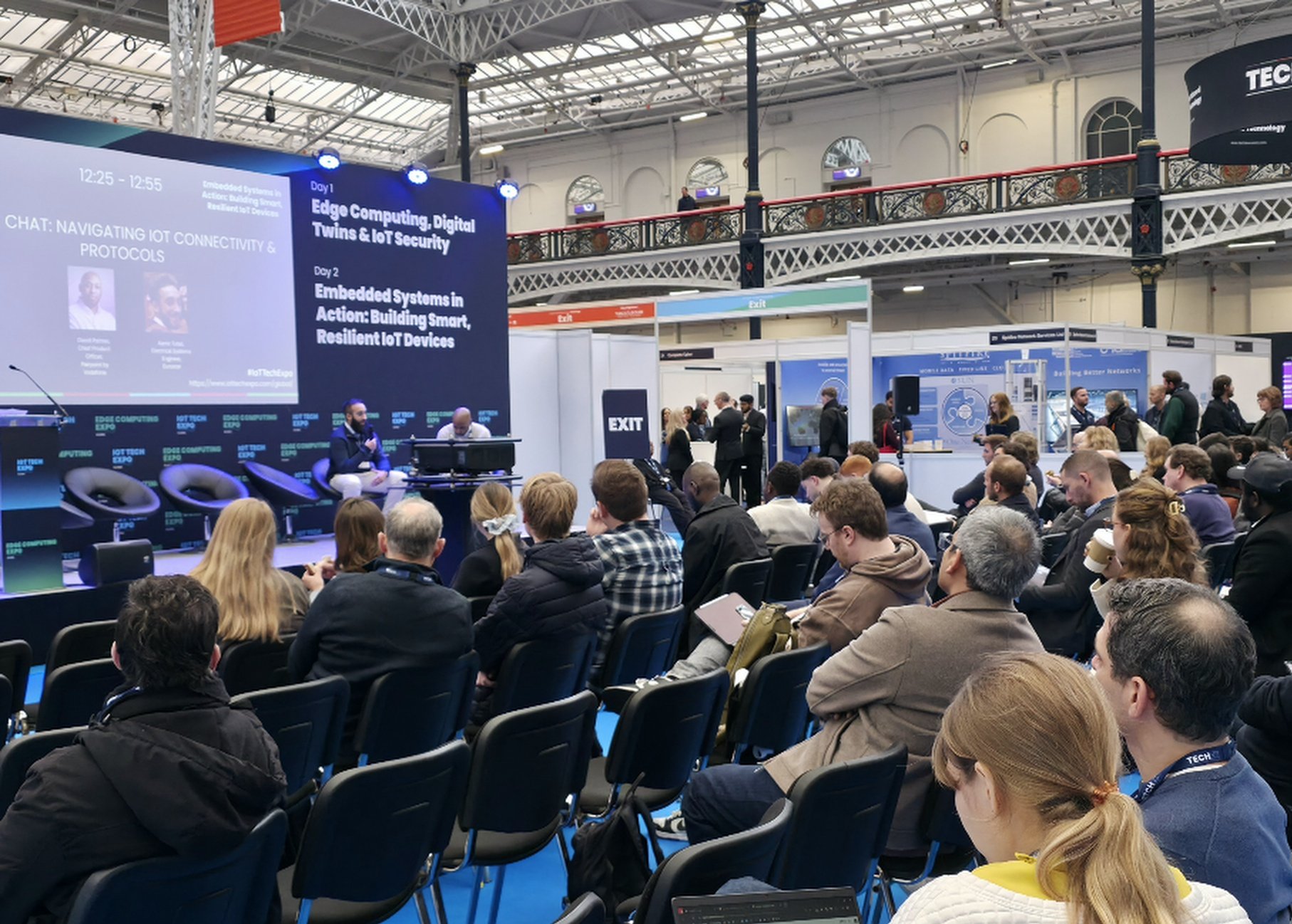
The second day of the IoT Tech Expo World and Edge Computing Expo centered extra on the engineering realities of those networks. Classes moved previous common digital transformation discussions to deal with particular protocols, {hardware} constraints, and the logistics of managing large machine fleets.
The evolution of fleet connectivity
Managing world SIM profiles stays a major friction level for logistics administrators. Julian Skeels from Expereo addressed this in a session on future-proofing world IoT fleets.
Skeels detailed how factory-provisioned connectivity, particularly by way of the SGP.32 customary, adjustments the way in which producers and logistics firms deal with machine deployment. This customary permits for distant switching of operator profiles with out bodily SIM swaps, which reduces operational overhead for belongings shifting throughout borders.
The sensible software of connectivity at scale was additional illustrated by Eric Bobek from Simply Eat. Bobek’s case research on scaling IoT messaging to 1 million gadgets highlighted the distinction between laboratory reliability and real-world throughput. He centered on the engineering required emigrate huge fleets below operational constraints. Throughput claims from distributors typically falter when subjected to the latency and packet loss present in lively supply networks.
A panel dialogue on the way forward for connectivity expanded on these infrastructure necessities. Audio system from Expereo, Retool, Simply Eat, and Wiley examined how 5G, Wi-Fi 6, and satellite tv for pc choices converge to help these networks. The consensus indicated that no single operational expertise handles the total load; hybrid approaches that mix mobile and satellite tv for pc backhaul have gotten customary for sustaining uptime.
Embedded techniques and automation
As connectivity stabilises, processing logic strikes nearer to the bodily asset. Szymon Kulec of RavenDB mentioned the trajectory of embedded intelligence.
Kulec famous that new chipsets and real-time working techniques (RTOS) now permit machine studying fashions to run straight on edge gadgets relatively than within the cloud. This discount in latency is important for techniques that require instant decision-making capabilities.
Yulia Samoylova from Datadog supplied a software program perspective on this {hardware} functionality. Her session on software-defined automation demonstrated how management techniques in industrial environments have gotten extra versatile. By decoupling the management logic from inflexible {hardware} controllers, facility managers can replace automation routines with out costly downtime.
Nonetheless, rising the complexity of edge gadgets introduces upkeep challenges. Nikita Koselev from Mastercard outlined strategies for debugging embedded techniques at scale.
Koselev argued that customary debugging strategies fail when utilized to giant, distributed fleets and advocated for superior telemetry and distant diagnostics to determine points earlier than they trigger system-wide failures. Isaac Bakare from BGC Group supported this view in his speak on ultra-reliable intelligence. Bakare emphasised that constructing fault-tolerant techniques requires engineering for harsh situations the place community availability is intermittent.
For top-value belongings, akin to these in aviation, connectivity should perform no matter location. Paul Airey from Anthony Nolan introduced a session on linked flight concerning Airbus operations. The dialogue centered on overcoming the particular difficulties of helicopter connectivity utilizing edge-enabled communication techniques. This highlights the area of interest however high-value software of IoT the place customary mobile protection is nonexistent.
Low-power networks in utilities and infrastructure
Whereas high-bandwidth options entice consideration, low-power wide-area networks (LPWAN) proceed to dominate utility and infrastructure use instances.
Dr Gurpinder Dhillon from Senzing introduced on LoRaWAN in motion. He showcased real-world deployments the place the first requirement is long-range communication with minimal power consumption.
The utility sector offers the clearest ROI for these low-power applied sciences. Ha Cole from Microsoft detailed the appliance of LoRaWAN in good water infrastructure. She defined how these networks allow leak detection and water high quality monitoring. For water firms, the power to detect leaks early interprets on to capital effectivity and regulatory compliance.
Scaling these low-power networks throughout a metropolis or area includes distinct architectural decisions. Parinita Kothari from Lloyds Banking Group mentioned the infrastructure required to help regional LoRaWAN networks, together with the administration of gateways and backhaul connections. This session indicated that monetary establishments are taking a more in-depth curiosity within the knowledge generated by these bodily networks, probably for danger evaluation and insurance coverage modeling.
The industrial viability of those networks was the main target of Jane Smith from ThoughtSpot. She outlined varied fashions for monetising LoRaWAN options. This implies that the market is shifting from proprietary, closed deployments to service-based fashions the place knowledge is the product.
Industrial IoT and concrete planning
The intersection of business operations and concrete planning was evident within the tracks devoted to good cities.
A panel that includes Excell, Divya Kesavan from Lloyds, and Ronnie Sheth from SENEN Group explored the dimensions of those deployments. They mentioned visitors techniques and public security, noting that the problem lies in integrating legacy utilities with fashionable sensor networks.
Within the industrial sector, the main target stays on operational optimisation. Aswin Peter from British Fuel introduced on Industrial IoT on the edge. He confirmed how edge computing permits real-time automation and predictive upkeep. For plant managers, there’s clear worth within the discount of unplanned outages by way of steady gear monitoring.
Governance and requirements
Underpinning these deployments is the necessity for standardised communication. Bogdan Vrusias from The Economist supplied a deep dive into protocols akin to MQTT, CoAP, and LwM2M. Understanding the excellence between these requirements is important for architects designing techniques that should function for many years.
Environmental, Social, and Governance (ESG) necessities are additionally driving adoption. Madhusudhan Konda from the EBRD defined how IoT helps environmental monitoring and sustainability reporting.
Yanay Sela from Vibrant Knowledge prolonged this to security, discussing early warning techniques for floods and fires. Ruslan Barabash from NIX argued that open ecosystems and community-driven innovation are accelerating this adoption, democratising entry to LoRaWAN applied sciences.
The second day of the co-located occasions proved that the expertise for mass-scale IoT is offered. The present hurdle for enterprise leaders is the mixing of those instruments into legacy workflows and the administration of the information they produce.
See additionally: IoT Expo 2026 Day 1: Driving effectivity with autonomous operations

Wish to be taught extra in regards to the IoT from business leaders? Try IoT Tech Expo happening in Amsterdam, California, and London. The great occasion is a part of TechEx and is co-located with different main expertise occasions together with AI & Large Knowledge Expo and the Cyber Safety Expo. Click on right here for extra info.
IoT Information is powered by TechForge Media. Discover different upcoming enterprise expertise occasions and webinars right here.
