



Key Insights
- Movement has formalized its enlargement deeper into client DeFi in a printed technique constructed round stablecoin-based client finance and enshrined protocols, a small set of default apps designed to pay attention liquidity and integrations.
- Movement’s enlargement into client DeFi is anchored to 2 protocol upgrades: Crescendo makes Movement EVM a sensible goal for Solidity groups and current EVM tooling, and Forte provides native, reusable automation for recurring actions.
- Movement EVM helps payment sponsorship, letting apps pay transaction charges on a person’s behalf, a prerequisite for client fee flows the place customers can transact with out holding FLOW or managing fuel.
- The Movement Basis is creating Movement Credit score Market (FCM) as the primary enshrined protocol, with Peak.Cash positioned because the flywheel app that brings client utilization into the shared credit score layer.
- PYUSD focus creates a transparent default dollar-denominated asset on Movement, which may decrease go-to-market friction for apps that wish to construct round a PayPal-branded stablecoin and a single main settlement asset.
Primer
Movement (FLOW) is a Layer-1 community that was based in 2018 by Dapper Labs and its co-founders, Roham Gharegozlu, Dieter Shirley, and Mikhael Naayem. Movement launched in Could 2020 and was designed for “a new generation of games, apps, and the digital assets that power them.” Movement was one of many first networks to implement account abstractions and person expertise enhancements, making it simpler for builders to onboard customers. In the present day, the highest functions on Movement embrace these based mostly on world-class manufacturers, equivalent to NBA High Shot, NFL All Day, and Disney Pinnacle.
On Movement, builders use “Cadence,” a novel resource-oriented programming language designed for good contracts. It enforces possession and kind security on the language stage, serving to stop widespread vulnerabilities in contract logic. In September 2024, Movement launched the Crescendo improve, launching EVM equivalence on Movement through Movement EVM, and bringing Cadence to maturity with the Cadence 1.0 launch. Now, builders can use Solidity to construct on Movement EVM with block instances of 800 milliseconds. Moreover, builders can faucet into current instruments and liquidity throughout the EVM, whereas customers expertise sub-cent transaction charges.
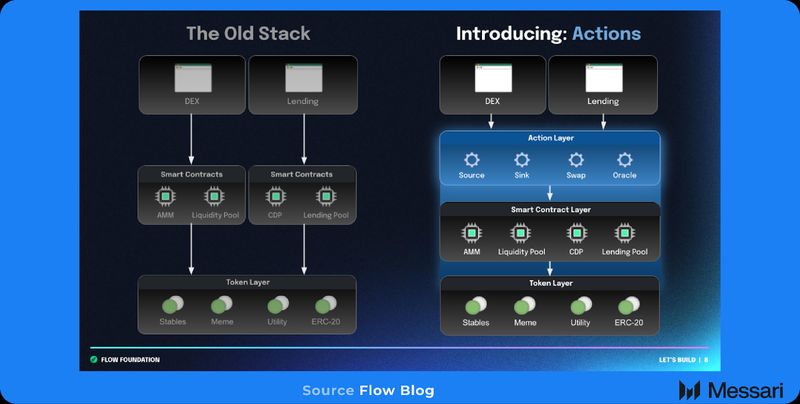
Movement’s most up-to-date improvement occurred in October 2025 when the Forte improve was activated on mainnet. This improve launched Actions, enabling onchain automation with out requiring in depth customized code. Actions are composable operations, equivalent to swaps and loans, that may be mixed into multi-step workflows. By eliminating the necessity for offchain infrastructure and relayers, Forte strengthens developer composability and positions Movement for AI-driven functions. The improve additionally lowered {hardware} necessities for node operators and launched alongside the Forte Hacks hackathon with a $250,000 prize pool, marking Movement’s most important protocol development since Crescendo.
Movement has performed a big function in onboarding customers into crypto by pioneering the ERC-721 (non-fungible) token customary through CryptoKitties in 2017 and placing NFT collectibles into the mainstream through NBA High Shot in 2021. In 2023, Disney and Dapper Labs launched Disney Pinnacle on Movement, a digital pin market that includes Disney, Pixar, and Star Wars IP, furthering Movement’s client attain. In the present day, Movement is increasing its basis in client functions into programmable client finance, constructing on years of expertise working merchandise with tens of millions of customers and actual transaction quantity. For a full primer on Movement, discuss with our Initiation of Protection.
Web site / X / Discord / Telegram
Shifting from NFTs to Shopper DeFi
Movement’s early progress got here from client functions and associate mental property (IP), with NFT-led exercise driving billions in transaction quantity, tying client exercise to onchain utilization through product launches and secondary-market demand. With the Crescendo and Forte upgrades reside, Movement has expanded its concentrate on client DeFi, particularly round stablecoin balances, funds, and transfers.
In early December 2025, Movement printed a Shopper DeFi technique that shifts the roadmap towards stablecoin-based client finance and enshrined protocols, that means shared DeFi infrastructure that the ecosystem can construct round. The plan begins with Movement Credit score Market (FCM) and a companion client yield app, Peak.Cash. Roham Gharegozlu has repeated the identical positioning in public posts and interviews, as a development from collectibles into client DeFi round stablecoins and recurring onchain routines.
Crescendo-enabled EVM Deployments on Movement
The Crescendo improve shipped to mainnet on Sept. 4, 2024, including EVM equivalence and focusing on a block time of 0.8 seconds. EVM equivalence lets Solidity builders deploy on Movement EVM utilizing customary Ethereum tooling. Whereas EVM equivalence reduces porting effort for a lot of Solidity contracts, groups nonetheless have to retest and evaluation safety assumptions on Movement, since it’s nonetheless a brand new deployment atmosphere. This enables groups to avoid wasting time by porting the core logic for actions equivalent to stablecoin transfers, swaps, lending, and vault wrappers, and as an alternative spend their time on onboarding and security. Crescendo helps client DeFi as a result of it lets apps summary charges and transaction dealing with. Movement EVM helps payment sponsorship, the place functions pay community charges on behalf of the person. The person nonetheless indicators the transaction, however they don’t want to carry FLOW to cowl fuel, which makes stablecoin transfers really feel nearer to fee flows like these on well-liked apps like Venmo or PayPal.
Forte Automation
The Forte improve was accomplished on Oct. 22, 2025, and launched Actions and Workflows as constructing blocks for repeatable, time-based execution. This provides client apps a local approach to bundle routine actions into an onchain workflow and execute them on a schedule or different situation. Earlier than Forte, groups would sometimes run this logic offchain, utilizing their very own backend companies to set off and execute scheduled actions. This strategy shifts reliability and safety obligations to every utility workforce, creating extra alternatives for execution to fail. Forte brings that recurrence onchain as a shared functionality, so apps can construct scheduled funds, financial savings sweeps, and auto-repay flows with out customized schedulers.
Shopper Use Instances
Most monetary customers don’t handle their funds on a day-to-day foundation. As an alternative, they depend on routines equivalent to deposits, transfers, and repayments that run on a schedule. Forte allows client workflows equivalent to:
- A weekly stablecoin deposit that turns right into a financial savings routine. For instance, saving $100 each seven days.
- Greenback-cost averaging right into a goal asset on a set schedule, with elective caps on worth affect or slippage.
- Scheduled invoice pay for subscriptions, the place the workflow checks a steadiness, tops up if wanted, then pays.
- Auto-repay for lending, the place compensation triggers when balances cross thresholds or when danger metrics deteriorate.
- Coverage-based guidelines, equivalent to pausing new publicity when volatility or borrowing charges exceed a restrict.
With out a protocol-native strategy, apps sometimes implement these as backend jobs that look ahead to time and state, then submit transactions. That design works, however every workforce finally ends up sustaining its personal scheduler, monitoring, and failure dealing with. Forte standardizes recurring execution natively onchain, lowering the quantity of scheduling and monitoring every workforce must handle themselves.
Stablecoins because the Shopper Wedge
Stablecoins are the first consumer-facing crypto asset as a result of they maintain a steady unit of account and assist transfers with out taking directional worth danger. For Movement, stablecoins are additionally the clearest approach to reveal that the community is transferring past NFT-led bursts towards repeat, on a regular basis utilization.
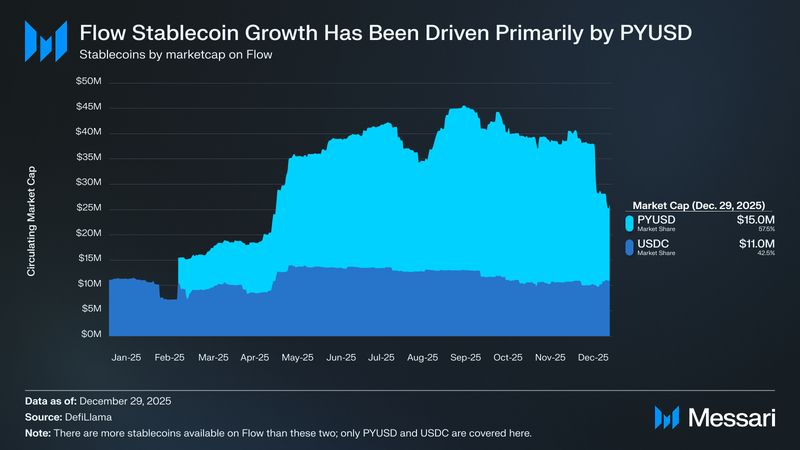
Movement’s stablecoin provide (USD) is $26 million as of Dec. 29, 2025, with PayPal USD (PYUSD) at a market share of 57.5%. Most ecosystems are dominated by Tether (USDT) and USD Coin (USDC), with smaller issuers following. The combo on Movement is extra concentrated in a single issuer, which simplifies a default greenback steadiness for client apps. Whereas this will increase dependency on issuer coverage and liquidity situations, Movement prioritizes client UX simplicity over the complexity of a multi-stablecoin ecosystem.
PYUSD’s focus influences client apps as a result of many work greatest when one stablecoin turns into the usual steadiness and switch rail, lowering fragmentation throughout wallets, liquidity, and assist flows. One dominant stablecoin allows apps to keep up balances, pricing, and recurring transfers in a single unit. Due to this, customers wouldn’t have to decide on between a number of “dollars,” and apps wouldn’t have to route routine sends via background swaps simply to make funds work. If PYUSD provide continues to develop, the PYUSD-heavy mixture of FLOW could decrease go-to-market friction for apps that desire a PayPal-branded stablecoin rail.
For stablecoins to operate as a client rail on Movement, transfers should be low-cost and predictable, and apps want dependable payment sponsorship for widespread actions. Moreover, pockets UX ought to assist client restoration patterns, equivalent to multi-device keys or social restoration, since key loss is a essential failure level. Individually, stablecoin swaps have to clear predictably at on a regular basis sizes, and customers require a transparent path to deposit and withdraw {dollars} on and off the Movement community. Shopper fee apps additionally require transaction dealing with that mimics funds. Customers ought to be capable to clearly distinguish between pending and full states, perceive why an motion failed, and retry with out risking duplicate sends.
Customers have already got a reference level for the way stablecoin funds ought to work, equivalent to TRON’s well-established USDT switch exercise and consumer-focused distribution on Solana and Base. Movement doesn’t require comparable scale within the close to time period, however it does want comparable reliability. Steady balances that switch persistently, charges that customers hardly ever discover, and stable-pair liquidity that holds up throughout volatility will decide whether or not Movement can assist client DeFi at scale.
DeFi Infrastructure for Shopper Merchandise
Swaps
Shopper stablecoin apps usually rely closely on swaps behind the scenes. Even what’s introduced to the person as a easy fee usually requires routing between stables, topping up fuel abstractions, or changing balances behind the scenes. On Movement, the primary query is whether or not stablecoin liquidity can assist routine utilization with out noticeable slippage or inconsistent execution. For Movement, what issues is whether or not steady swaps work in regular use. Small and medium conversions ought to clear with out stunning slippage or failed routing. If steady swaps can stay reliable when quantity is low, Movement can convert its current client base into repeat stablecoin conduct, as reliable, routine cash motion depends on with the ability to convert and route stables even when liquidity is skinny.
Movement already has stable-focused swap venues that make these conversions real looking. KittyPunch provides StableKitty, a low-slippage steady swap product targeted on supporting client DeFi flows, and Movement has pointed to it as one of many early liquidity facilities within the ecosystem. A second venue is Trado, which Movement has framed as a consumer-oriented DEX, with over 43,000 swaps and greater than $15.7 million in swap quantity in 2025.
Lending
Lending is the credit score layer for client DeFi, and in addition the place danger settings and person expertise begin to matter as a lot because the product itself. As soon as customers begin borrowing towards collateral, even small design decisions in danger settings and liquidation conduct can have real-world penalties. As a result of liquidation is automated, customers usually interpret it as a product failure fairly than a danger they selected to tackle. Movement is addressing this by standardizing lending towards shared, default infrastructure, beginning with Movement Credit score Market (FCM) because the default venue for wallets and apps.
FCM is the primary enshrined protocol being developed by the Movement Basis. Enshrined protocols are Movement’s time period for shared DeFi infrastructure that concentrates liquidity in a couple of central hubs. Movement additionally plans to bootstrap every enshrined protocol with a number of flywheel functions constructed by Dapper Labs or one other strategic associate, and Forte offers these apps with a transparent means so as to add recurring actions.
The worth of a shared venue like FCM is that wallets can construct one borrowing and compensation expertise and reuse it throughout apps. Nevertheless, that solely works if the expertise is predictable. Customers want clear limits, clear triggers, and a easy approach to stop liquidation via scheduled repayments or automated de-risking. Forte operationalizes security round FCM by executing compensation routines and guardrails onchain, permitting wallets to run auto-repay and de-risking options with out requiring energetic administration from the person. If it really works, FCM will develop into a reusable credit score layer throughout wallets and apps, backed by constant guidelines and security routines that buyers can belief.
Yield
Shopper yield merchandise must be regarded as financial savings merchandise with tight danger limits. Meaning the person deposits belongings and expects two issues to be true always:
- They will withdraw any quantity of their funds at any given time.
- The return ought to come from a small set of easy-to-explain sources, so a client can perceive why they’re incomes a yield with no need to grasp DeFi.
To fulfill these expectations, the app and protocol should be designed in tandem. Movement’s strategy is to pair shared yield infrastructure with a client entrance finish. Peak.Cash is positioned because the flywheel app for FCM, giving customers a easy “deposit and earn” movement whereas routing the underlying credit score and yield mechanics via the shared market. Apps like this are interesting to customers as a result of they let customers earn yield with out studying DeFi. These merchandise cut back complexity into one steadiness with one deposit and one withdrawal movement, whereas the protocol handles yield technology and danger controls. This simplicity is what customers and builders need. If the yield path is standardized via a shared market equivalent to Peak.Cash and wallets can combine a single financial savings function that works throughout a number of apps, fairly than supporting a unique vault and danger mannequin every time.
For Peak.Cash and related client yield apps, the principle constraint is that the yield path has to behave like financial savings. Shopper yield works greatest when the return comes from one in every of two locations: overcollateralized lending or a tightly constrained vault with specific limits. When the return relies on leverage, multi-step routing, or frequent rebalancing to hit a goal fee, the product stops behaving like financial savings. Customers are holding a managed place with transferring elements, and most received’t perceive why outcomes change from week to week.
Forte mitigates danger on this space by supporting repeat conduct with out customized scheduling. For instance, a person can arrange a weekly deposit, or guidelines equivalent to “keep a minimum of $1,000 in stablecoins” or “stop deposits if my balance drops to $500,” with out the workforce needing to run a separate backend service to set off transactions. Whereas this reduces operational complexity, it doesn’t make a vault inherently protected, as they nonetheless have to behave predictably. If the identical weekly motion produces a unique outcome one time to the subsequent, customers will cease believing they’ve a financial savings steadiness and begin assuming the product is doing one thing they didn’t approve.
Tokenization: Shopper belongings turning into monetary belongings
Tokenization is essential for Movement’s client DeFi push as a result of it allows balances and workflow permissions to be moveable throughout merchandise. Stablecoins are probably the most acquainted tokenized asset for customers as a result of they conceptualize how a pockets can maintain greenback worth onchain. Nevertheless, tokenization issues past stablecoins when it turns a deposit or vault steadiness right into a receipt token {that a} pockets can present and different apps can use. A receipt token is proof of a deposit the place a person deposits stablecoins right into a savings-style contract, and the receipt token represents the person’s declare on that deposit. Equally, a vault receipt token represents possession in a pool, however its worth adjustments over time because the pool earns or loses. Rewards factors additionally observe the identical idea when they’re issued as tokens, as they are often transferred and redeemed throughout merchandise, fairly than being confined to at least one utility.
Tokenization may also signify eligibility, not simply token balances. Movement already helps wallet-level proofs via the Movement Consumer Library (FCL) account proof, which lets an app confirm {that a} person controls a given pockets earlier than it allows delicate actions. For deeper eligibility checks, Movement’s EVM equivalence allows groups to deploy customary EVM attestation frameworks, such because the Ethereum Attestation Service (EAS), on Movement. This lets wallets current a credential that claims “this user qualifies” (e.g., tier, area, compliance standing, and so on.) so an app can confirm the person earlier than permitting actions, which reduces repeated onboarding and KYC-style friction for flows that don’t want full re-verification each time. Forte then turns into the execution layer for these flows. A recurring switch or deposit can confirm the credential first and solely run whereas it stays legitimate, with out requiring the workforce to function a separate offchain scheduler to implement the rule. Collectively, tokenized balances and tokenized eligibility let wallets and fee merchandise transfer cash, signify financial savings positions, and implement fundamental entry guidelines in a single movement, with fewer one-off integrations.
Protocol Safety: Proof of Possession
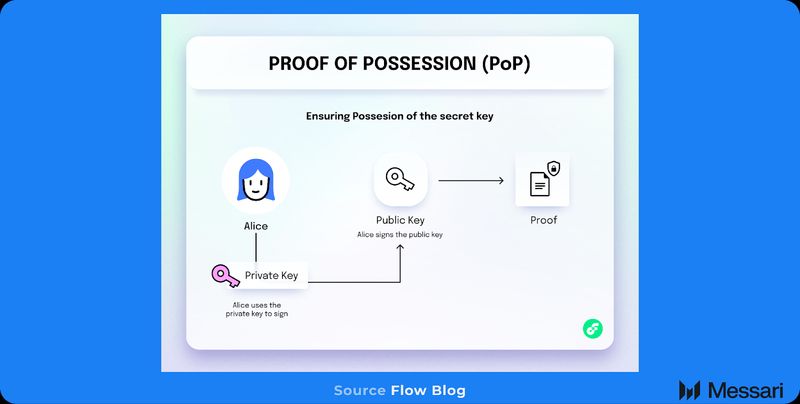
Movement has continued tightening protocol-side safety round validator participation. Movement describes its implementation of Proof of Possession as a step towards permissionless participation, which requires cryptographic proof of management over staking keys, thereby lowering key-substitution-style dangers throughout node registration. Within the context of client DeFi, this isn’t a direct person function, however it reduces protocol-layer danger for functions constructed on Movement.
Closing Abstract
Movement is leveraging its confirmed client distribution and operational expertise to drive client DeFi adoption. Forte is the clearest sign of that shift, including Actions, AI Brokers, and scheduled execution to make recurring transfers and multi-step routines one thing groups can construct instantly onchain. This helps recurring deposits, scheduled funds, and opt-in guidelines that run robotically. Crescendo helps the identical route by making Movement EVM suitable for Solidity groups and enabling payment sponsorship. Tokenization then makes balances, positions, and eligibility moveable throughout apps, additional supporting savings-like merchandise and automatic routines. Movement’s client DeFi technique ties Forte, Crescendo, and tokenization collectively via enshrined protocols, beginning with FCM and Peak.Cash to drive early utilization via a shared credit score layer.
Stablecoins are the core asset for the push towards client DeFi, and Movement’s concentrate on PYUSD creates a default greenback steadiness for customers, whereas concentrating issuer and liquidity publicity into one asset class. Future traction in client DeFi will rely upon execution high quality. Stablecoin transfers must be predictable, steady swaps have to clear persistently at on a regular basis sizes, and customers want a transparent path to maneuver {dollars} on and off Movement. As Movement pairs Forte’s recurring execution with FCM and payment-grade stablecoin reliability, the community can convert client distribution into repeat monetary conduct.
