



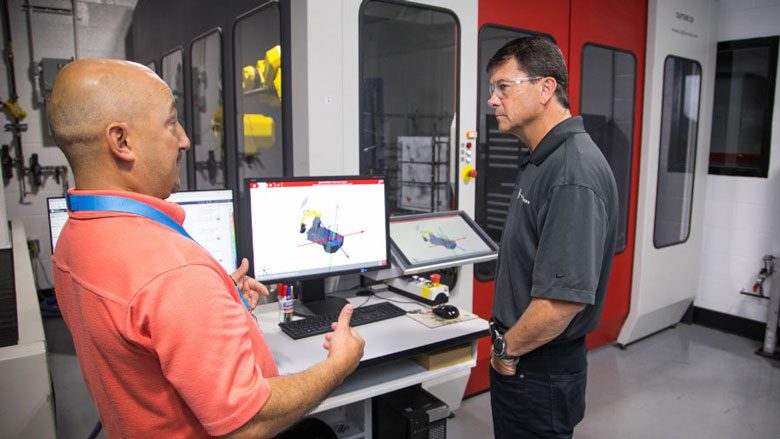
GE Home equipment has taken the primary spot in U.S. equipment manufacturing—a place earned not simply via scale, however via innovation in automation, digitization, and reshoring. By investing in superior robotics, digital manufacturing planning, and real-time knowledge visibility, the corporate is redefining what it means to make home equipment in America.
We right here at ASSEMBLY Audible are once more joined by Invoice Good, Vice President of Manufacturing and Provide Chain at GE Home equipment. In as we speak’s episode, we discover how the corporate leverages automation and digitization to optimize effectivity, speed up manufacturing, and cut back reliance on abroad provide chains. From piloting new processes in digital factories to launching its first in-house water filter line at Equipment Park, GE’s method reveals how good automation and a talented workforce can drive onshoring whereas sustaining world-class output.
ASSEMBLY:
You’ve instructed me pace wins… So how are you utilizing automation and digital instruments to extend pace? Inform us just a little bit about GE’s technique to take the primary spot in equipment manufacturing proper right here within the USA.
BILL:
One of many areas we’ve centered on since 2016 is our digitization technique. You need to get rid of issues inside your provide chain, and the way in which you do that’s via knowledge and knowledge visualization. Visualization permits us to light up the issues we’re having.
We began this journey with what we name our “brilliant factory” initiative. It centered on growing a digitization technique inside the 4 partitions of the plant—giving us visibility into knowledge on each course of in a facility, whether or not it’s an meeting line, a stamping press or an injection press. We needed efficiency visibility in every single place.
Why does that matter? As a result of disruptions occur. A press fails. An meeting line doesn’t function the way in which you count on. By pulling knowledge off PLCs in actual time, we are able to see what’s taking place and reply instantly.
We prolonged that work past the plant—giving us visibility into freight, shipments to customers, and upstream suppliers. That end-to-end visibility is essential to superior manufacturing.
Searching for fast solutions on meeting and manufacturing matters?
Strive Ask ASM, our new good AI search device.
Ask ASM
Automation is one other key piece. Automation neutralizes many international labor benefits. It takes a fraction of the employees it as soon as did to fabricate an equipment. On the identical time, we’ve grown—we’ve created greater than 4,000 jobs throughout this journey—however we’ve grow to be way more environment friendly in how we do it.
Workforce transformation is equally essential. I should purchase essentially the most superior tools on the earth, however with no expert workforce, it falls aside. So we developed what we name our worker worth proposition, centered on improvement and creating completely different varieties of labor.
Previously, a lot of the work was guide and bodily demanding. At this time, an affiliate could function a controls technician interfacing with PLCs or pc methods fairly than performing the guide job the machine now handles.
We’ve additionally redesigned our factories for flexibility—components coming in a single facet, completed items out the opposite, and the conversion course of in between engineered to be as environment friendly as doable. That’s what we’re centered on.
ASSEMBLY:
Effectivity, pace… all essential. However so is capital. Once you speak about automation and modernization, we’re speaking about critical financial funding. GE is investing $3 billion in US manufacturing over the following few years. What does that degree of funding really appear like? Paint an image for me.
BILL:
In a lot of our manufacturing vegetation, greater than 50 % of the footprint is tools. It’s not unusual for a extremely automated piece of apparatus to price $3 million. Some processes require investments of as much as $10 million.
A lot of our vegetation have been constructed within the Nineteen Fifties, so there’s infrastructure work required simply to organize a facility to obtain that tools. Then you will have the acquisition, set up, and commissioning.
We additionally make investments closely in product innovation. We would like our merchandise to be the most effective customers should purchase, and we’re always centered on delivering options that make households extra environment friendly.
Past tools and product, there’s engineering effort—the price of designing, getting ready amenities, putting in and integrating every part. These are actually the three fundamental areas of funding: amenities and tools, product, and engineering.
We’ve confirmed via automation, digitization and what we name our zero-distance philosophy you can compete efficiently in the US. I imagine we’re at an inflection level. Extra corporations are investing again into U.S. manufacturing and decreasing reliance on different international locations.
In the event you automate, digitize and construct a versatile, nimble provide chain, you’ll be able to win.
In the event you automate, digitize and construct a versatile, nimble provide chain, you’ll be able to win. We didn’t grow to be primary accidentally. We constructed a deliberate roadmap round product options, resilient provide chains and operational agility.
By means of COVID, provide chain disruptions, building booms and slowdowns, and shifting client demand, we’ve been in a position to reply.
As confidence builds, provider clusters comply with. Elements that when moved offshore start to return. As infrastructure strengthens, everybody advantages.
Manufacturing is essential to the US. There was a interval the place we believed we may perform primarily as a service financial system. Many people now acknowledge how necessary home manufacturing is.
These are good jobs. Manufacturing has a robust multiplier impact—each greenback spent returns two to 3 {dollars} to the financial system, generally extra. We’re in a resurgence of American manufacturing, and I imagine others can comply with the mannequin.
ASSEMBLY:
The brand new water filter operation at Equipment Park is clearly a giant win for American manufacturing, and I perceive that was made doable via using digital twins.
BILL:
We piloted this new method with our water filter line. We constructed the whole line within the digital world earlier than slicing the primary piece of metal.
That allowed us to work together with the system and design one thing extra environment friendly than something we had constructed earlier than. In a totally simulated 3D surroundings, our design engineers may work alongside course of engineers and simulate operations.
We even had an engineer utilizing VR glasses positioned nearly beneath the tools, relocating sensors, motors and cylinders to enhance serviceability. If we had an unplanned outage, upkeep personnel would have the ability to entry and restore tools rapidly.
No operation runs completely on a regular basis—disruptions occur. So we designed the tools, simulated human interplay, validated ergonomics, and optimized half circulation solely within the digital world earlier than bodily construct.
The outcomes have been extraordinary.
Traditionally, ramping a brand new piece of apparatus to full output takes 12 to 16 weeks. With this line, we reached full output in a single week. Inside days, you’d assume we had been working it for years.
We’re now making use of 3D simulation to further processes, and given our success with the water filter line, we like our possibilities.
ASSEMBLY:
We’re going to take listeners contained in the water filter operation at Equipment Park on the upcoming episode of ASSEMBLY Information Now. I’m very excited. However to spherical out as we speak’s dialog… Wanting on the greater image, what excites you most about GE’s automation and digitization technique, and the way does it place the corporate as a benchmark for superior manufacturing within the U.S.?
BILL:
What I like about working right here is that innovation is a part of our cloth—it dates all the way in which again to Thomas Edison. We search options.
At this time, digitization and automation are central to that. We would like essentially the most superior manufacturing vegetation in our trade.
The automation we pursue focuses on non-value-added duties—something that doesn’t immediately convert a component right into a completed good. These are the processes we goal first.
Our water filter operation, put in simply weeks in the past, is essentially the most superior and automatic method we’ve ever applied.
From modernizing our Roper facility to advancing dishwasher manufacturing and now the water filter line, we’ve constructed large confidence. We all know we are able to execute high-level automation, make our vegetation extremely environment friendly, and set the benchmark for our trade.
ASSEMBLY:
Thanks, Invoice, a lot for becoming a member of us on ASSEMBLY Audible. We’ll see you on the Manufacturing and Automation Change going down March 24-26 in Nashville, Tennessee. And also you, our listeners, are all invited to attend, and listen to Invoice in our panel dialogue on reshoring Wednesday afternoon. Thanks for being right here as we speak. I hope you’ll be a part of us once more quickly.
