



For many shoppers, a weak cellular sign is a well-known annoyance — the frozen display, the failed cost, the dropped name on the fallacious second. For some, nevertheless, it may be a matter of life and dying. So says Cédric Jarkovsky, Director, Product Improvement & IoT Enterprise at Transatel.
“Security is actually fairly serious — up to people’s safety,” he instructed IoT Insider on the side-lines of the IoT Tech Expo in London. “IoT is now utilised in very crucial use circumstances.
We offer options for governments, for mission-critical operations. However we additionally present IoT options for linked autos and healthcare. If one thing goes fallacious there, it might immediately threaten human life.”
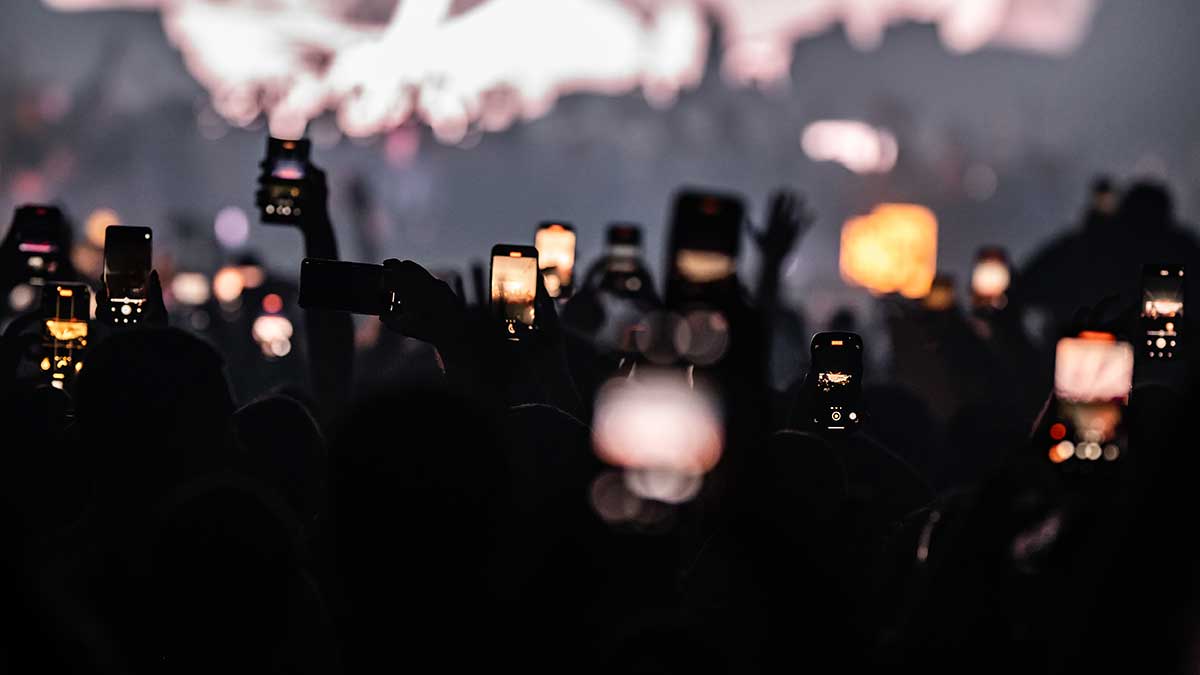
One clear instance is making an attempt to get a sign in massive crowds. With hundreds of sports activities followers or live performance goers making an attempt to make use of their units on the similar time, networks shortly develop into jammed – doubtlessly making it difficult for everybody, together with emergency providers, to speak.
To keep away from such questions of safety, Jarkovsky says community operators are working collectively to open up new avenues of connectivity.
He factors to the 2023 Rugby World Cup in France. “Massive amounts of people were gathering, and the traditional networks were saturated,” he mentioned. “We provided a solution that could seamlessly switch from the public network to a private network, so police and emergency services could maintain continuity.”
The know-how depends on SIM playing cards able to connecting to a number of networks with out altering the infrastructure of crucial personal networks. “There is absolutely no compromise on the private network security standard itself, because both networks are completely separated from one another,” he defined. “This is crucial for manufacturing, aviation, and mission-critical operations.”
Airports and airways face comparable connectivity challenges. Upkeep crews depend on personal networks for inspections, however interruptions might delay flights or threaten security. “Having the public network as a backup is critical,” Jarkovsky mentioned. “Even if technicians leave the perimeter of the private network, they remain connected. And we achieve this with a single SIM, without adding complexity to devices.”
Transatel has additionally been on the forefront of eSIM know-how, enabling distant provisioning by way of the SGP.32 customary. “Switching from profile A to profile B becomes a reality, whereas in the past it was a costly campaign,” he mentioned. “Large manufacturers, especially vehicle OEMs, are already taking advantage of this. And the orchestration is fully secure — the Remote SIM provisioning server is protected, and the SIM triggers connections safely.”
Central to Jarkovsky’s method is what he calls “security built in by design.” He warned that enterprises usually design units first and retrofit community safety later. “You still see devices in 2026 with default passwords, with bad API-to-cloud authentication,” he mentioned. “People design the device, then say, ‘Oh, by the way, I need a network.’ That’s a bad practice. If you think about the complete solution from the start, it can be more efficient, more secure, and less costly.”
One sensible instance includes utilizing SIM playing cards as a trusted route for certificates, key storage, and encryption. “We integrate with the IoT SAFE standard,” he mentioned. “Even if the device itself is simple, the network can handle advanced security elements. Some enterprises try to secure traffic at the device level, but we can implement it at the network level, simplifying device design and strengthening security.”
Synthetic intelligence is more and more central to Transatel’s safety technique. “Static rules are no longer sufficient to detect anomalies,” Jarkovsky defined. “We use machine learning and deep learning to monitor device behaviour dynamically. We can detect if a device is transmitting abnormal data, accessing the wrong application, or behaving differently from its expected profile.”
The system can incorporate system metadata — firmware model, software program stack, location — to refine anomaly detection. “It’s almost like a digital twin,” he mentioned. “We analyse the behaviour of each device and report anomalies to customers so they can act before problems escalate. It contributes directly to predictive maintenance and operational resilience.”
International deployment, he famous, requires compliance with native laws and information sovereignty legal guidelines. “In South Korea, geolocation data must remain inside the country,” he mentioned. “We deploy our own telecom infrastructure locally so critical data never leaves national borders.”
Wanting forward, Jarkovsky expects AI to develop into embedded deeper inside cellular networks themselves. “Security will be increasingly performed by AI, distributed at multiple levels, including the Edge and the core network,” he mentioned. “The goal is smarter services and stronger protection, adapting in real time to emerging threats.”
For enterprises constructing linked units, the lesson is obvious: safety can’t be an afterthought. “Our role in the ecosystem is to make security as easy as possible to consume,” he mentioned, “by combining capabilities from the device, the SIM, the network, and the security platforms. The full stack needs to work together — only then can IoT devices be truly resilient and safe.”
There’s loads of different editorial on our sister web site, Digital Specifier! Or you may all the time be a part of within the dialog by commenting under or visiting our LinkedIn web page.
