



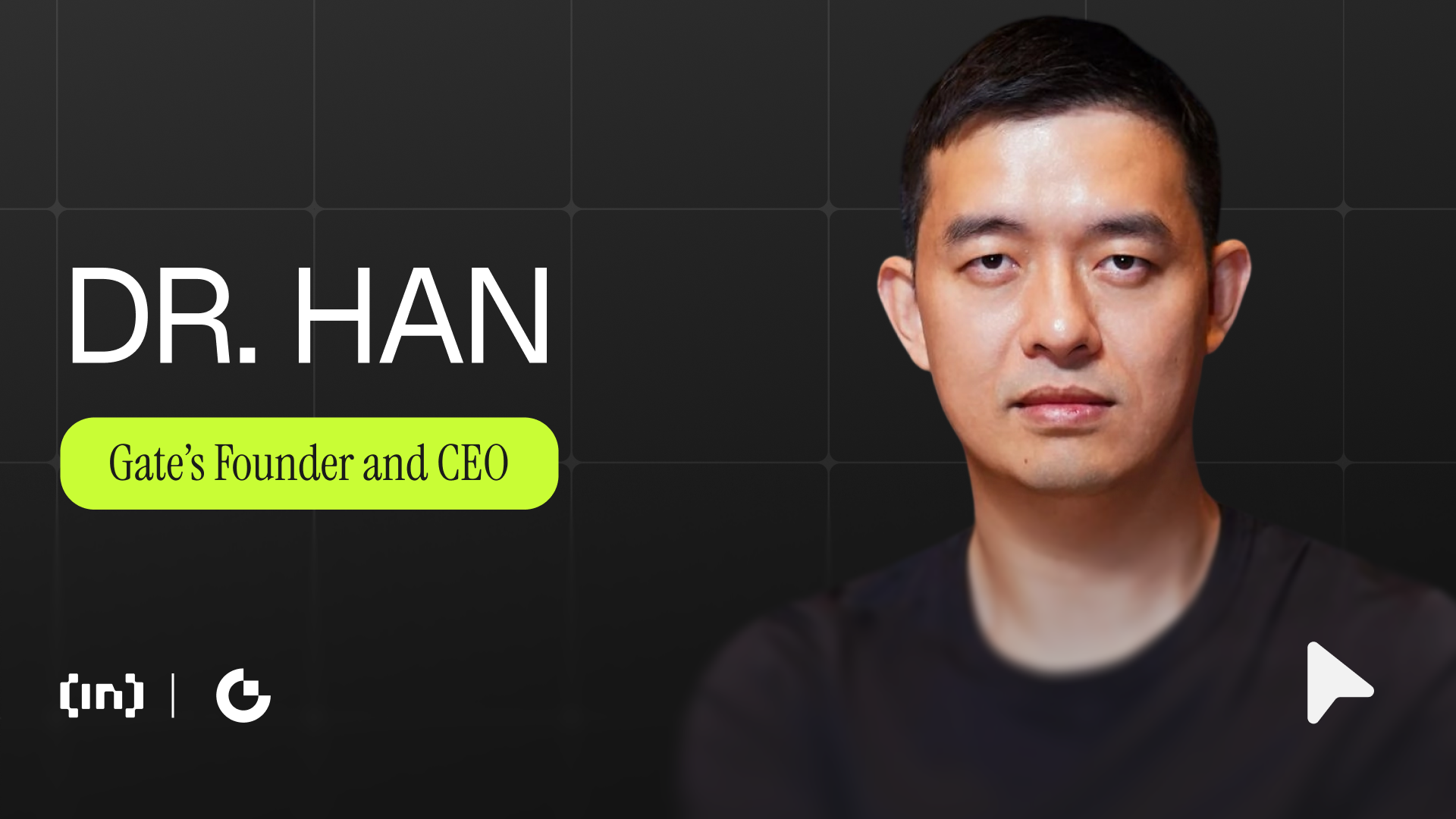
Gate has quietly turn into one of many largest cryptocurrency exchanges on the planet. Based in 2013 by Dr. Lin Han as a one-person undertaking, the platform now serves over 49 million customers, employs greater than 2,000 folks, and lists over 5,000 tokens alongside a rising suite of conventional monetary merchandise.
In an interview with BeInCrypto, Dr. Han mentioned what drove that progress, why he believes the road between crypto and conventional belongings is disappearing, and the way synthetic intelligence is about to reshape the best way folks commerce.
From Solo Developer to World Platform
Dr. Han began Gate — initially launched as Bter.com — by himself. 13 years later, the alternate gives greater than 50 services. However he’s fast to downplay the numbers.
“The number is not quite important. The most important thing is that when you build a product, you need to polish it very well. A score of 80 percent is not enough. You need 90% to 95% quality. You need to always be number one in the product,” he stated.
That product-first philosophy prolonged to asset protection early on. In 2013, Gate was among the many first exchanges to aggressively checklist altcoins, providing over 100 at a time when most platforms caught to a handful. “At that time, we were the only exchange that could do that,” Dr. Han recalled.
The following part of progress, he says, will come from regulated markets. Gate now holds licenses throughout 80 jurisdictions, together with 44 US states and protection throughout greater than 20 European nations below MiCA. The platform additionally holds licenses in Dubai, Japan, and Australia.
“We launched our platform for regulated areas last year, but this year we want to grow the users there,” Dr. Han stated, acknowledging that competing with established native gamers in Europe and different areas stays a problem. “In some areas, they have their own local players who have operated there for many years. We are the new player. We need to let more people know about us.”
Breaking Down the Wall Between Crypto and Conventional Finance
Gate has been increasing past crypto-native belongings into what the trade broadly calls TradFi integration. The alternate now gives tokenized equities, gold, silver, commodities, and inventory indices — all tradeable 24/7 on the identical platform the place customers handle their crypto portfolios.
Dr. Han described two limitations of conventional markets that drove this transfer: regional restrictions that forestall customers in lots of nations from opening US brokerage accounts, and the restricted buying and selling hours of standard inventory exchanges.
“With crypto, we can provide a system with very high accessibility. They can trade 24/7, anywhere, in any country. They have all kinds of crypto plus traditional assets together, managed in the same way. It’s much easier for them,” he stated.
He additionally pointed to a sensible profit for portfolio development. Crypto belongings are usually extremely correlated — when Bitcoin drops, most altcoins observe. Including uncorrelated conventional belongings like gold or US equities offers customers significant diversification for the primary time inside a single platform.
“Before, people could only trade crypto, and most of the assets are correlated. With traditional assets, they have another option. Gold is definitely not related to Bitcoin. You can choose silver, commodities, US stocks. There are a lot of options to manage your portfolio and lower your risk,” Dr. Han defined.
Trying additional forward, he sees the excellence between crypto and conventional belongings fading totally. “In the future, you don’t need to recognize which is crypto and which is a traditional asset. You can view them all as your asset. It will change the mindset of how users manage their portfolio.”
AI: From Interface to Infrastructure
The dialog shifted to synthetic intelligence, the place Dr. Han laid out what he calls “Intelligent Web3” — a imaginative and prescient the place AI brokers change the complicated interfaces that presently outline crypto buying and selling.
The issue, as he sees it, is simple: crypto merchandise have turn into too sophisticated, particularly for newcomers. “You see so many numbers, buttons — spot trading, futures trading, options, earnings. Which one should you use? How do you start? It’s too hard for people,” he stated. “And Web3 is even more difficult. There are more than 10,000 DApps. Millions of tokens are launched each year. You cannot recognize which token to choose.”
Gate’s strategy unfolds in two phases. The primary, already dwell, makes use of AI brokers to assist customers navigate present interfaces — checking token data, explaining platform options, and suggesting buying and selling methods. The second stage is extra bold: changing the normal interface totally.
“They don’t need to use the old interface, the old tools anymore. They just tell the AI agent what they want. The AI agent does all the other work,” Dr. Han stated. “If they want to buy Bitcoin, just say ‘help me buy Bitcoin.’ If they want to earn interest, tell AI ‘I want to put my Bitcoin to get interest.’ AI finds the best yield for you, and it’s done.”
He expects this transition to be seen inside a 12 months, and broadly transformative inside two — a timeline he considers extra life like than the five-year horizon typically cited within the trade.
“I don’t think it’s five years. Two years, at most,” he stated.
Past person expertise, Dr. Han sees AI reshaping how capital strikes by markets. He argued that human-driven capital allocation is inherently inefficient — folks maintain belongings idle whereas promising initiatives go unfunded. AI brokers, working across the clock and processing data at scale, might enhance that move.
“For one person, we cannot guarantee they can make money from that. But for the whole ecosystem, it will benefit for sure,” he stated. “AI can do the labor work for you. You can put your energy in other areas. Use your real intelligence.”Gate has already begun making use of AI internally. In response to Dr. Han, practically all front-end coding on the firm is now dealt with by AI, with back-end growth anticipated to observe quickly.
