



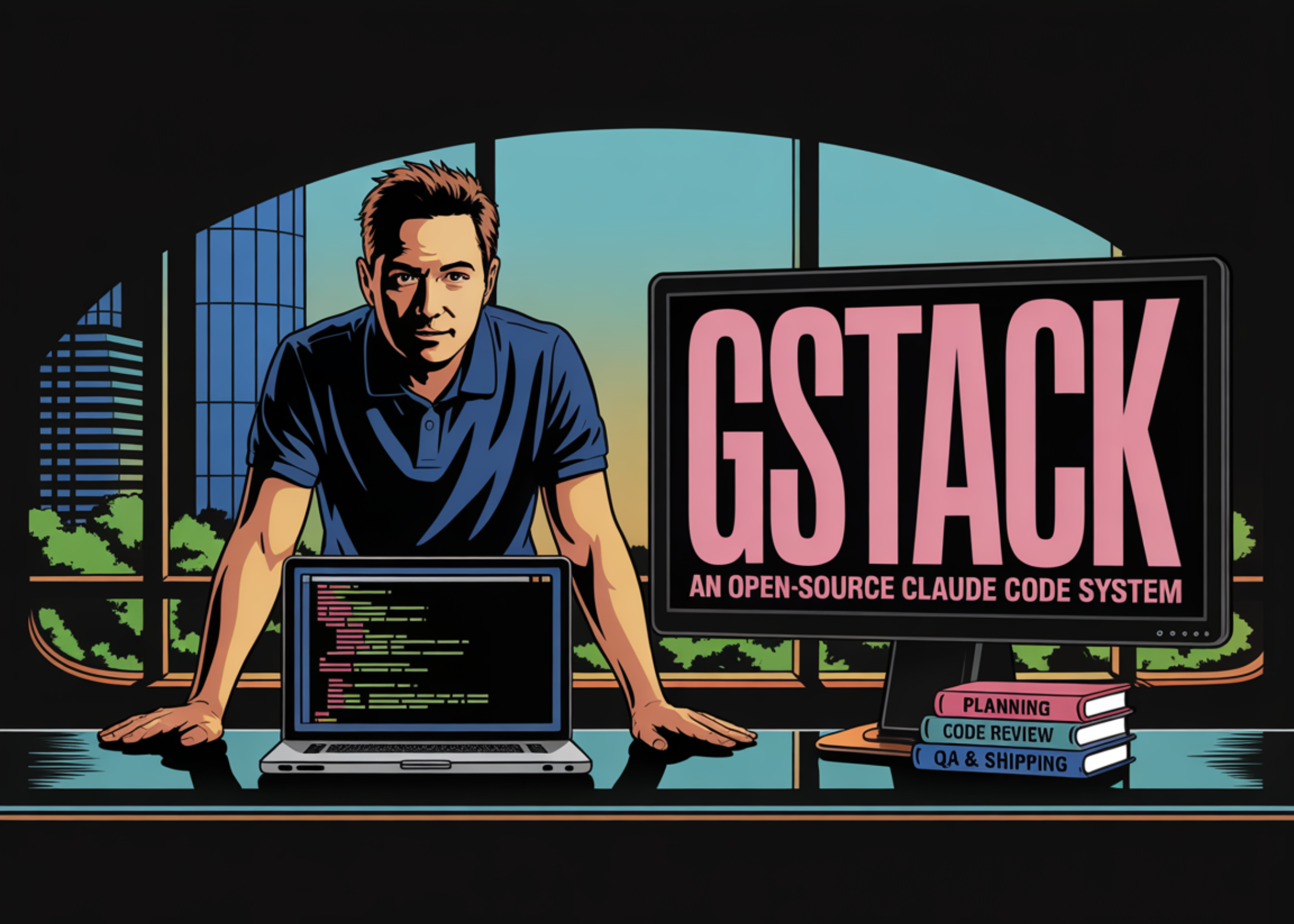
What if AI-assisted coding grew to become extra dependable by separating product planning, engineering overview, launch, and QA into distinct working modes? That’s the thought behind Garry Tan’s gstack, an open-source toolkit that packages Claude Code into 8 opinionated workflow abilities backed by a persistent browser runtime. The tookit describes itself as ‘Eight opinionated workflow abilities for Claude Code‘ and teams frequent software program supply duties into distinct modes equivalent to planning, overview, transport, browser automation, QA testing, and retrospectives. The purpose is to not change Claude Code with a brand new mannequin layer. It’s to make Claude Code function with extra express position boundaries throughout product planning, engineering overview, launch, and testing.
The 8 Core Instructions
The gstack repository at present exposes 8 predominant instructions: /plan-ceo-review, /plan-eng-review, /overview, /ship, /browse, /qa, /setup-browser-cookies, and /retro. Every command is mapped to a selected working mode. /plan-ceo-review is positioned as a product-level planning move. /plan-eng-review is used for structure, information movement, failure modes, and exams. /overview is targeted on manufacturing threat and code overview. /ship is used for getting ready a prepared department, syncing with predominant, operating exams, and opening a PR. /browse provides the agent browser entry, whereas /qa is designed for systematic testing of affected routes and flows. /setup-browser-cookies imports cookies from an area browser into the headless session, and /retro is used for engineering retrospectives.
The Persistent Browser Is the Core System
Crucial technical a part of gstack shouldn’t be the Markdown abilities. It’s the browser subsystem. gstack provides Claude Code a persistent browser and that the browser is the arduous half, whereas the remainder is principally Markdown. As a substitute of launching a recent browser for each motion, gstack runs a long-lived headless Chromium daemon and communicates with it over localhost HTTP. The reason being latency and state retention. A chilly begin prices round 3–5 seconds per software name, whereas subsequent calls after startup are designed to run in roughly 100–200 ms. As a result of the browser stays alive, cookies, tabs, localStorage, and login state persist throughout instructions. The server additionally shuts down mechanically after half-hour of idle time.
How gstack Connects Browser Automation to QA
That daemon structure issues for QA and browser-driven growth. In lots of agent workflows, browser automation is a separate debugging step or a screenshot utility. In gstack, browser entry is a part of the core workflow. The repo describes /browse because the mode that lets the agent log in, click on by the app, take screenshots, and examine breakage. /qa builds on prime of that by analyzing the department diff, figuring out affected routes, and testing the related pages or flows. The pattern movement within the repo reveals /qa inspecting 8 modified recordsdata and 3 affected routes, then testing these routes towards an area app occasion. This implies the venture is making an attempt to tie supply modifications to precise utility habits as a substitute of treating QA as a indifferent handbook move.
Set up Necessities and Undertaking Structure
The repository’s implementation decisions are additionally pretty particular. gstack requires Claude Code, Git, and Bun v1.0+. The package deal.json reveals the present model as 0.3.3, lists Playwright and diff as runtime dependencies, and compiles a browse executable from the browse supply tree. In line with the repo’s README, /browse compiles a local binary and is supported on macOS and Linux, for each x64 and arm64. The set up movement copies the repo into ~/.claude/abilities/gstack, runs ./setup, and registers the abilities for Claude Code. Groups can even copy the identical setup right into a repository-local .claude/abilities/gstack listing so the workflow is shared inside a venture.
Why the Undertaking Makes use of Bun
The structure doc explains why the venture makes use of Bun relatively than a extra typical Node.js setup. There are 4 acknowledged causes: compiled binaries, native SQLite entry, native TypeScript execution, and a built-in HTTP server with Bun.serve(). These decisions are sensible relatively than beauty. gstack reads Chromium’s SQLite cookie database straight, and Bun’s built-in database assist removes the necessity for additional native packages. The compiled binary mannequin additionally suits the repo’s set up type, as a result of customers aren’t anticipated to handle a separate runtime toolchain inside ~/.claude/abilities/.
Key Takeaways
- gstack is a workflow layer for Claude Code, not a brand new mannequin or agent framework. It packages software program supply into 8 opinionated slash-command abilities for planning, overview, transport, browser automation, QA, cookie setup, and retrospectives.
- The persistent browser daemon is the primary technical part. gstack runs a long-lived headless Chromium course of over localhost HTTP so cookies, tabs,
localStorage, and login state persist throughout instructions. - QA is tied on to code modifications. The
/qaworkflow analyzes department diffs, identifies affected routes, and exams the related utility paths as a substitute of treating browser checks as a separate handbook step. - The venture is constructed round Bun for sensible programs causes. Bun is used for compiled binaries, native SQLite entry, native TypeScript execution, and a built-in HTTP server for the browser daemon.
- gstack’s contribution is operational construction. Its predominant worth is separating product overview, engineering overview, code overview, launch, and browser-driven validation into express modes with slim tasks.
Try Repo right here. Additionally, be happy to observe us on Twitter and don’t overlook to hitch our 120k+ ML SubReddit and Subscribe to our E-newsletter. Wait! are you on telegram? now you’ll be able to be part of us on telegram as effectively.
