




A phishing marketing campaign is utilizing a faux Google Account safety web page to ship a web-based app able to stealing one-time passcodes, harvesting cryptocurrency pockets addresses, and proxying attacker visitors by means of victims’ browsers.
The assault leverages Progressive Net App (PWA) options and social engineering to deceive customers into believing they’re interacting with a respectable Google Safety net web page and inadvertently putting in the malware.
PWAs run within the browser and could be put in from a web site, similar to a standalone common software, which is displayed in its personal window with none seen browser controls.
Sufferer browser turns into attacker’s proxy
The marketing campaign depends on social engineering to acquire the mandatory permissions from the consumer below the guise of a safety examine and elevated safety for gadgets.
The cybercriminals use the area google-prism[.]com, which poses as a respectable security-related service from Google, displaying a four-step setup course of that features giving dangerous permissions and putting in a malicious PWA app. In some cases, the location may even promote a companion Android app to “protect” contacts.
In keeping with researchers at cybersecurity firm Malwarebytes, the PWA app can exfiltrate contacts, real-time GPS knowledge, and clipboard contents.
Extra performance noticed contains performing as a community proxy and inner port scanner, which permits the attacker to route requests by means of the sufferer’s browser and establish stay hosts on the community.
The web site additionally requests permissions to entry textual content and pictures copied to the clipboard, which may happen solely when the app is open.
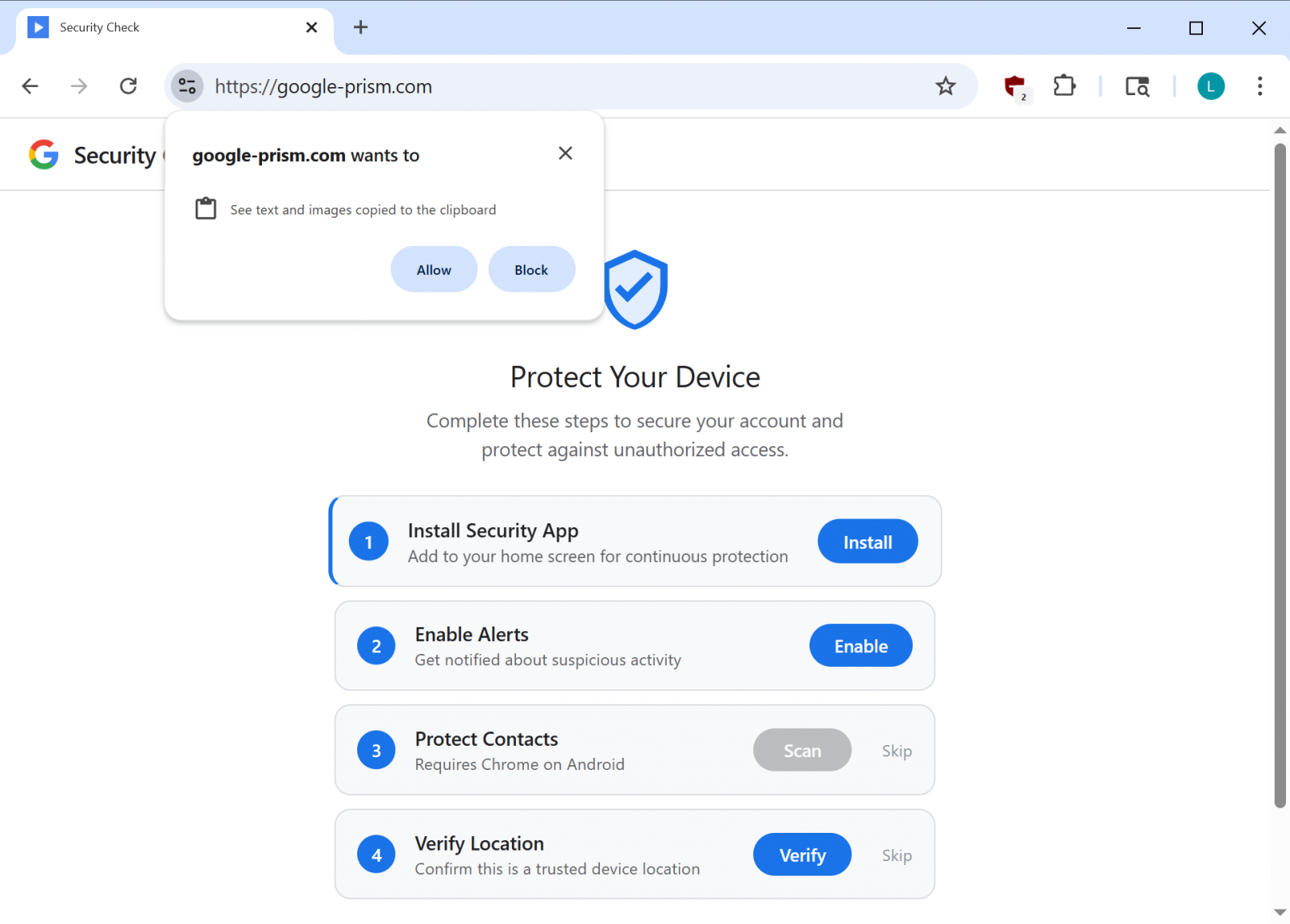
supply: BleepingComputer
Nonetheless, the faux web site additionally asks for permission to point out notifications, which permits the attacker to push alerts, new duties, or set off knowledge exfiltration.
Moreover, the malware makes use of the WebOTP API on supported browsers in an try and intercept SMS verification codes, and checks the /api/heartbeat each 30 seconds for brand new instructions.
Because the PWA app can solely steal the contents of the clipboard and OTP codes when it’s open, notifications can be utilized to ship faux safety alerts that immediate the consumer to open the PWA once more.
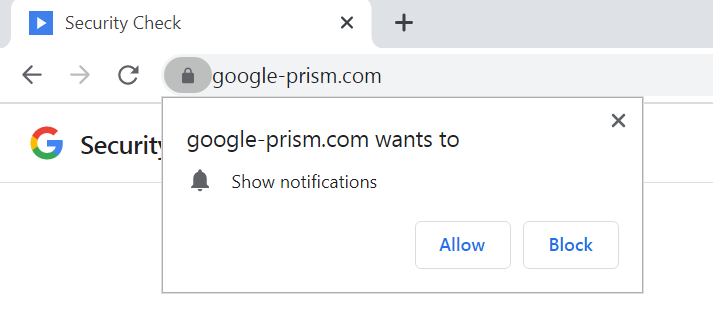
supply: BleepingComputer
Malwarebytes says that the main target is on stealing one-time passwords (OTP) and cryptocurrency pockets addresses, and that the malware additionally “builds a detailed device fingerprint.”
One other element within the malicious PWA is a service employee that’s chargeable for push notifications, operating duties from obtained payloads, and getting ready stolen knowledge domestically for exfiltration.
The researchers say that essentially the most regarding element is the WebSocket relay that permits the attacker to go net requests by means of the browser as in the event that they had been on the sufferer’s community.
“The malware acts as an HTTP proxy, executing fetch requests with whatever method, headers, credentials, and body the attacker specifies, then returns the full response including headers” – Malwarebytes
As a result of the employee features a handler for Periodic Background Sync, which permits net apps in Chromium-based browsers to periodically synchronize knowledge within the background, the attacker can connect with a compromised system for so long as the malicious PWA app is put in.
Malware Android companion
Customers who select to activate all of the safety features for his or her account additionally obtain an APK file for his or her Android gadgets that guarantees to increase safety to the record of contacts.
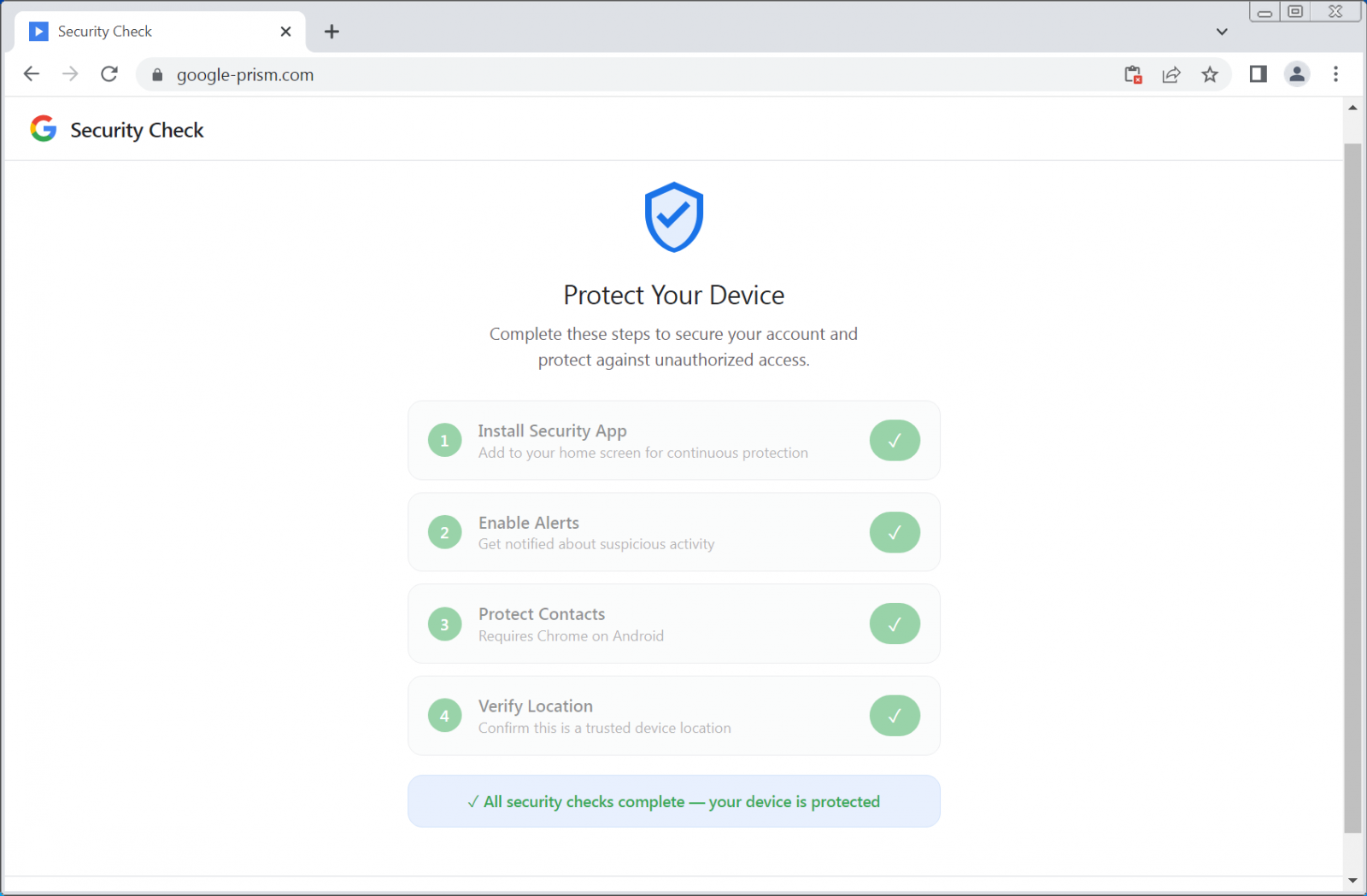
supply: BleepingComputer
The payload is described as a “critical security update, ”claims to be verified by Google, and requires 33 permissions that embody entry to SMS texts, name logs, the microphone, contacts, and the accessibility service.
These alone are high-risk permissions that allow knowledge theft, full system compromise, and monetary fraud.
The malicious APK file contains a number of parts, akin to a customized keyboard to seize keystrokes, a notification listener for entry to incoming notifications, and a service to intercept credentials crammed robotically.
“To enhance persistence, the APK registers as a device administrator (which can complicate uninstallation), sets a boot receiver to execute on startup, and schedules alarms intended to restart components if terminated,” the researchers say.
Malwarebytes noticed parts that may very well be used for overlay-based assaults, which point out plans for potential credential phishing in sure apps.
By combining respectable browser options with social engineering, the attacker doesn’t want to take advantage of any vulnerability. As an alternative, they trick the sufferer into offering all of the wanted permissions for malicious exercise to happen.
The researchers warn that even when the Android APK is just not put in, the net app can acquire contacts, intercept one-time passwords, monitor location, scan inner networks, and proxy visitors by means of the sufferer’s system.
Customers needs to be conscious that Google doesn’t run safety checks by means of pop-ups on net pages or request any software program set up for enhanced safety options. All safety instruments can be found by means of the Google Account at myaccount.google.com.
To take away the malicious APK file, Malwarebytes recommends customers search for a “Security Check” entry within the record of put in apps and prioritize uninstalling it.
If an app known as “System Service” with a package deal title com.system.sync is current and has system administrator entry, customers ought to revoke it below Settings > Safety > Machine admin apps after which uninstall it.
Malwarebytes researchers additionally present detailed steps for eradicating the malicious net app from each Chromium-based Home windows, akin to Google Chrome and Microsoft Edge, in addition to from Safari.
They word that on Firefox and Safari browsers, lots of the malicious app’s capabilities are severely restricted, however push notifications nonetheless work.

Malware is getting smarter. The Pink Report 2026 reveals how new threats use math to detect sandboxes and conceal in plain sight.
Obtain our evaluation of 1.1 million malicious samples to uncover the highest 10 strategies and see in case your safety stack is blinded.
