



The transition right into a 6G-powered world is nicely underway. Sensible cities are growing at a blinding tempo, autonomous automobiles like robotaxis are already on the street in choose areas, and with 5G having been deployed worldwide for years now, it’s time to stay up for the physical-cyber interconnectedness and stage of development that can include the following technology of community tech. However earlier than it turns into a real actuality, there are hurdles to handle.
Excessive-frequency radio waves, like these within the millimetre wave band, are at present in restricted use for 5G purposes. The millimetre band offers apparent advantages, specifically high-speed and high-capacity transmissions, that are near-essential for a lot of main forward-looking use instances throughout the 6G world of the longer term. Nevertheless, its drawbacks – together with the necessity for line-of-sight and alerts’ subsequent susceptibility to being blocked, in addition to the price of infrastructure required to make them usable – have confirmed a major impediment to improvement and adoption. These drawbacks compound in high-speed circumstances, making transit-related use instances like automobiles, trains, and vehicle-to-everything (V2X) communication much more tough to develop efficient high-frequency options for.
Particularly, high-speed environments create two most important issues for transmissions throughout the millimetre band. Firstly, they require extra antennas throughout a journey, every one in every of which wants much more candidate beams. Secondly, switching between these antennas at excessive speeds causes each propagation delays and fast modifications within the Doppler frequency, and might be simply disrupted by shielding and obstructions (like buildings or passing automobiles). The result’s a necessity for a really huge quantity of antenna infrastructure that also delivers closely degraded communication alerts.
To sort out these obstacles, NTT, Inc., NTT DOCOMO, INC. and NEC Company have developed a distributed MIMO (a number of enter and a number of output) system that suppresses degradation on the 40 GHz band (which falls throughout the millimetre wave band) inside a system with excessive numbers of antennas over a number of places. This resolution effectively selects probably the most appropriate antenna because the vacation spot, enabling quick switching and spatial multiplexing transmission. It then makes use of frequency and timing compensation measures to maintain reception frequency and timing on the mobile-terminal facet comparatively constant, whatever the surrounding circumstances. Our profitable take a look at of this novel know-how thus achieved stability for high-capacity transmissions in high-speed environments, enabling high-volume communication and information assortment with out vital degradation.
What’s MIMO, and why is it vital?
MIMO stands for “Multiple-Input and Multiple-Output.” Because the identify suggests, MIMO makes use of a number of antennas at each the transmitter (supply) and receiver (vacation spot) to extend the transmission velocity and improve reliability. It’s an alternative choice to point-to-point radio transmission programs, like multiple-input and single output (MISO), or single-input and a number of output (SIMO); these are extremely inclined to a number of kinds of sign fading, which may happen when sign fragments are distorted or misplaced totally over their journey because of noise or interference. In high-speed use instances, for instance, a cell terminal could cross by massive obstacles like buildings, or have obstacles like different automobiles cross by it, thereby blocking the sign.
Utilizing spatial multiplexing, MIMO includes producing a number of completely different variations of the identical transmission throughout quite a few impartial antennas, to then be despatched outward by way of the air for the receiver to gather. After gathering, demodulating and decoding a broad vary of alerts, the receiver combines them to create an approximation remarkably near the unique sign with few errors.
MIMO has been round for many years, and its industrial use has broadened significantly since its introduction. It’s now used closely in Wi-Fi transmission and cell phone networks, together with 5G/LTE, however some of the vital purposes are sometimes in important use instances that can’t settle for degradation of communication high quality. For instance, first responders, legislation enforcement, and army/authorities businesses usually cope with high-pressure situations that may be catastrophically disrupted if transmissions are interrupted or degraded.

How precisely does standard tech fall quick?
Excessive-frequency distributed MIMO transmission requires persistently detecting and assigning the optimum mixture of beams and antennas, primarily based on and in response to modifications within the radio communication surroundings for every cell terminal. Nevertheless, making use of standard beam-search know-how to distributed MIMO programs could be very inefficient.
The communication high quality of every attainable mixture should be noticed by transmitting a beam identification sign for every one. For every distributed antenna being noticed on this means, the beams should be switched to keep away from interference between each other. Because of this, the extra antennas there are, the extra measurement time is required to check all of them earlier than choosing the optimum antennas. Giant antenna networks result in lengthy search instances, which in flip trigger communication degradation.
One other drawback space exists throughout the communication between cell terminals and base stations. Cell terminals align the frequency and timing of alerts coming from a base station, permitting them to speak. The issue with this technique because it at present operates arises when the terminal is transferring at excessive speeds, corresponding to these housed on automobiles or trains. The propagation delay from the cell terminal, alongside modifications within the Doppler frequency because it strikes, can be completely different for each single distributed antenna each single time it switches. Because of this, communications transmissions are degraded even additional.
How does the new know-how work?
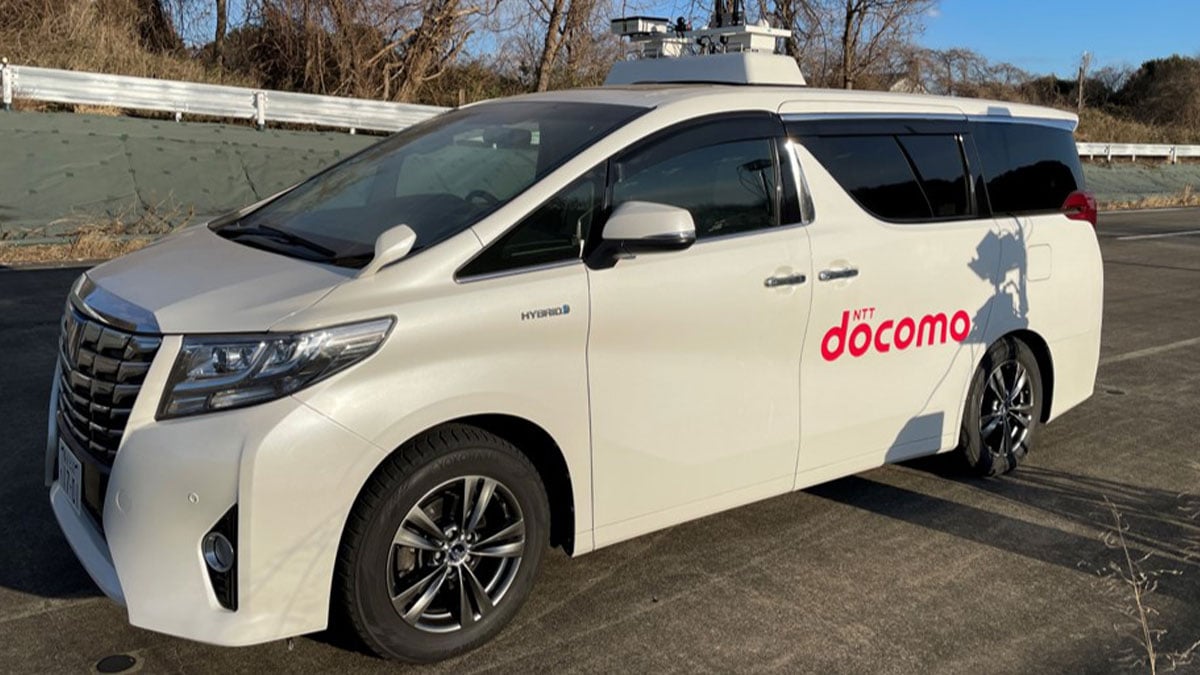
Japan at present makes use of the 28 GHz band for millimetre-wave 5G. The experiment testing this know-how was performed within the 40 GHz band, which can be amongst these used sooner or later, corresponding to 5GA and 6G cell phone networks.
NTT’s new beam search know-how makes use of the identical beam identification sign concurrently and on the identical frequency throughout a number of distributed antennas, protecting the measurement time fixed even with extra antennas. Since they’re the identical beam identification sign, there isn’t any interference, and a cell terminal can have a look at the mixed reception high quality of the beams from every antenna to choose probably the most applicable one. As such, the optimum mixture might be present in the identical period of time it could usually take with testing only one antenna, even with an increasing number of antennas concerned.
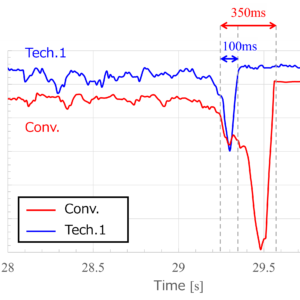
Within the take a look at, the choice time was decreased whatever the variety of antennas. The take a look at concerned 4 antennas, however it’s assumed that the know-how can carry out equally with much more. With sooner choice and with out subsequent degradation, NTT’s take a look at was capable of preserve throughput over 100 Mbps whereas slicing the drop time to 1/4 of standard applied sciences, even with obstructions like passing automobiles. In distinction, the standard technique skilled a serious drop in throughput after being blocked (shielded) by a big car passing by, which persevered till the antenna and beam had been switched.
To handle degradation because of propagation delay and Doppler frequency modifications, the new know-how permits distributed antennas to cooperate to pre-compensate for the reception frequency and timing of the cell terminal. Utilizing uplink reference alerts to measure modifications in Doppler frequency and propagation delay for every distributed antenna, the system then alerts different distributed antennas to pre-compensate for transmission frequency and timing, thereby enabling suppression of these modifications when the antennas swap.
Because of this, there are not any abrupt shifts in frequency or timing each time antennas are switched, protecting them constant on the cell terminal facet and eliminating any results perceptible to the person. When examined in a high-speed surroundings, standard know-how skilled drastic drops in throughput when the antennas switched, plummeting to simply 10 Mbps. In distinction, the brand new know-how maintained throughput at 100 Mbps utilizing millimetre waves, even on the identical excessive velocity.
Now that these issues have been solved, what does it imply for the longer term?
This new system has efficiently moved MIMO a step into the following technology by fixing key issues related to transmitting on the frequency bands required for 6G. The streamlining of MIMO tech for high-speed environments, together with automobiles and trains, will allow high-speed and high-capacity content material transmission for passengers in these automobiles with out loss, degradation, or different reductions in velocity and high quality.
V2X includes automobiles speaking with massive numbers of different programs inside their surroundings. This will embrace different automobiles, pedestrians, and infrastructure and programs inside sensible cities. As such, purposeful and dependable V2X programs aren’t solely helpful to present transportation strategies; they are going to be essential to the success and viability of autonomous driving by immediately linking self-driving automobiles to the environments they navigate by way of and the obstacles they encounter.
For autonomous driving, huge quantities of sensing information should even be collected and transmitted with out corruption or loss, which this know-how offers a confirmed technique for. This new evolution of MIMO know-how addresses a number of of probably the most vital challenges dealing with really dependable V2X communication.
Total, the demonstrated functionality of constant and reliable communication on the millimetre wave band is an important step in direction of widespread adoption of this band all through society – bringing 6G even nearer to our fashionable actuality.



By: Takuto Arai, Entry Community Service Programs Laboratories – NTT; Toshiki Takeuchi, Superior Community Analysis Laboratories – NEC Company; Satoshi Suyama, 6G Tech Division – NTT DOCOMO
This text initially appeared within the February problem of IoT Insider
