



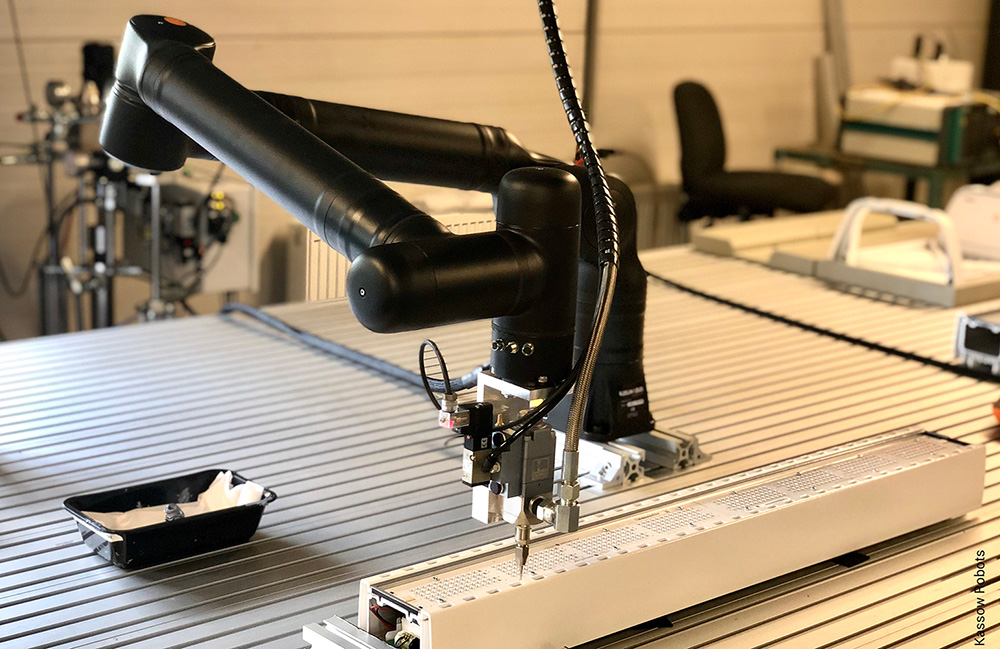
Kassow says its collaborative robots deliver accuracy, effectivity, and customization to meting out duties. | Supply: Kassow Robots
Collaborative robots are being adopted throughout manufacturing flooring as a sensible option to automate particular duties inside current manufacturing constraints. Producers want to enhance their processes throughout a number of dimensions, equivalent to making them extra constant, lowering pressure on staff, and maximizing the area they’re working with.
On the identical time, producers need to keep away from pausing manufacturing or redesigning whole strains to attain these targets. In these conditions, cobots provide a sensible path ahead when they’re built-in with a transparent understanding of how the road already operates.
Including a force- and power-limited robotic to a longtime manufacturing line isn’t so simple as inserting a robotic at a station and urgent “Start.” Current strains have a rhythm formed by operator routines, bodily layouts, and upstream and downstream dependencies. Introducing a robotic with out accounting for these realities can create extra inefficiencies as a substitute of resolving current ones.
Nonetheless, when deliberate rigorously cobots may help stabilize cycle time, cut back variation, and assist operators with out forcing main adjustments to surrounding processes.
Begin with the suitable collaborative activity
Job choice is among the most necessary preliminary choices. Collaborative robots are likely to ship essentially the most worth when assigned work that’s repetitive, predictable, and bodily demanding.
Widespread examples embrace loading or unloading components, tending machines, transferring elements between stations or dealing with routine inspection steps. These duties typically contribute disproportionately to operator fatigue and course of variability over the course of a shift, although they don’t require essential problem-solving.
Integration efforts typically wrestle when automation is layered on prime of an inconsistent activity. If operators routinely compensate for fixture variation, modify half placement, or work round tooling limitations, these points is not going to disappear as soon as a robotic is added. In lots of instances, automation makes these inconsistencies extra seen. Addressing them first permits the cobot to strengthen the station moderately than inherit its issues.
Work inside bodily constraints
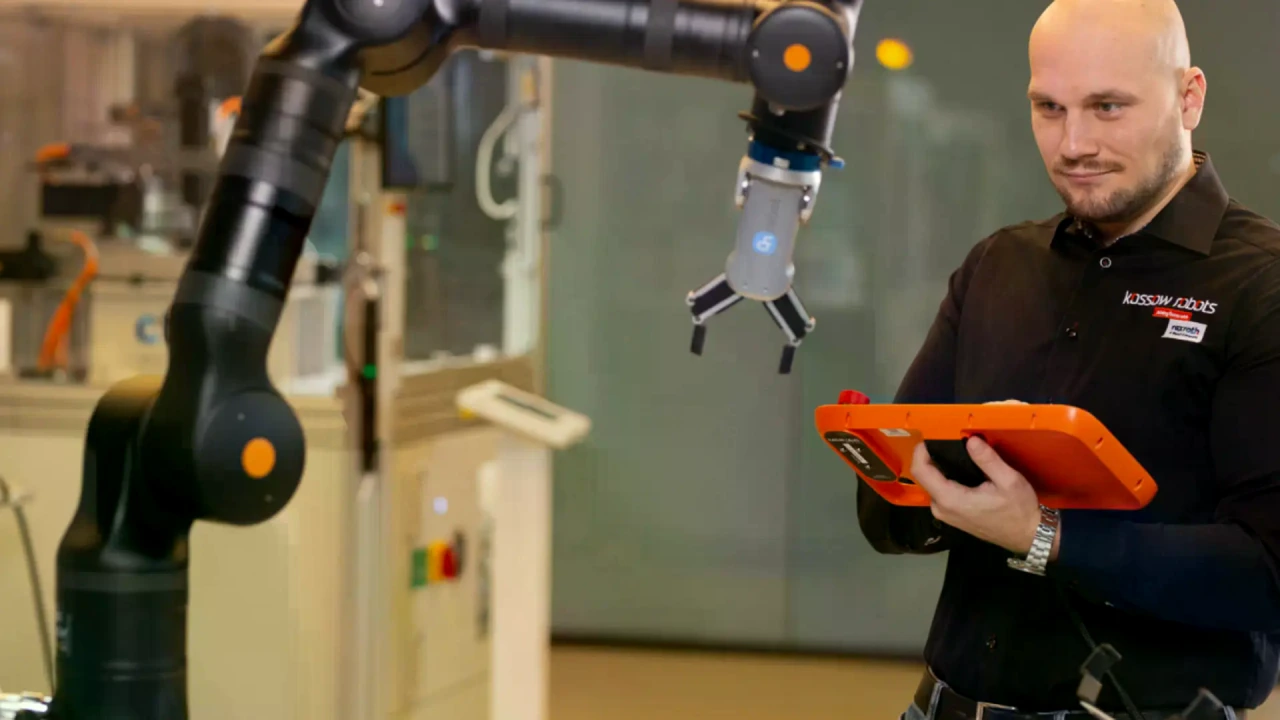
Cobots are supposed to be simply reprogrammed and tailored to completely different duties. | Supply: Kassow
House constraints are one other main issue. Many current manufacturing strains had been by no means designed with robotics in thoughts. Stations could also be tightly packed, tools placement could also be fastened, or operator stroll paths could go away little room for extra {hardware}. In these environments, a robotic’s skill to succeed in a number of interplay factors from a single mounting location turns into extra necessary than uncooked velocity or payload capability.
Cobots with prolonged attain and versatile joint configurations typically method components and machines from angles that will in any other case require structure adjustments. A further joint past a standard six-axis design can present better freedom of movement, permitting the robotic to navigate round fixtures or tooling whereas sustaining exact positioning. This flexibility permits aspect mounting or offset placement moderately than positioning the robotic straight in entrance of the station, which helps protect entry for operators and upkeep groups whereas holding the general footprint compact.
Compact bases and slender mounting options additional assist integration in space-constrained environments, significantly in older services the place flooring area is already at a premium.

Protect operator entry and materials stream
Even when a collaborative robotic automates a part of a activity, operators nonetheless load elements, take away completed components, carry out changeovers, and reply to alarms. If a robotic’s placement forces operators to succeed in awkwardly or work round it, any positive aspects in consistency are shortly misplaced. Profitable integrations permit the cobot to work alongside individuals with out interrupting how they transfer by the station.
Materials stream deserves equal consideration. A robotic might be able to attain all its programmed positions, but when its movement disrupts the pure path of components or introduces extra dealing with steps, total throughput can undergo.
In lots of instances, delays will not be attributable to the robotic’s cycle time, however by how its actions work together with the stream of fabric between processes. Cobots that may service a number of interplay factors from a single base assist keep stability and cut back pointless handoffs.
Shield cycle time and line rhythm
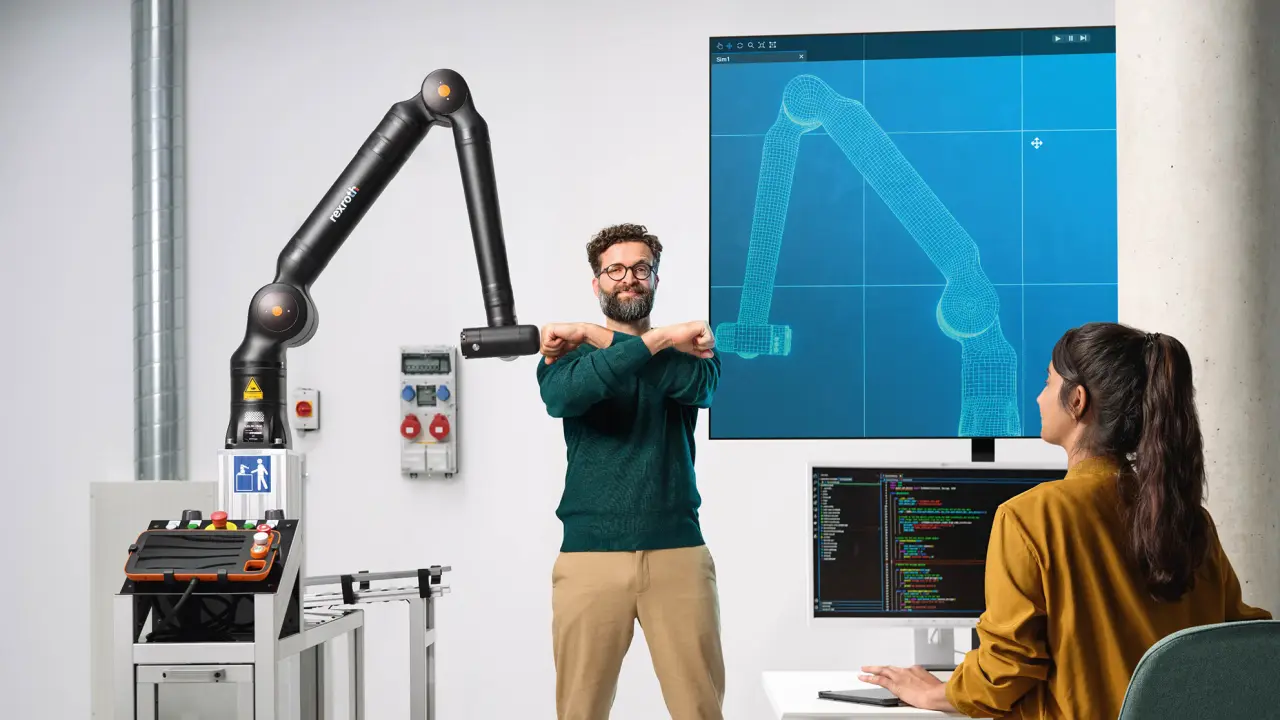
Kassow cobots have sensors that detect overload, making certain that they’ll function safely in shared workspaces. | Supply: Kassow Robots
Cycle time alignment is one other frequent problem. When a robotic performs its activity reliably, it should function at a tempo that matches the station it helps. Manufacturing strains typically run at an outlined tempo, and introducing a robotic that operates quicker or slower than surrounding processes can create new bottlenecks.
Reviewing the guide course of earlier than programming typically reveals {that a} cobot doesn’t want to finish a whole activity so as to add worth. Automating essentially the most repetitive or time-sensitive portion of the work is commonly sufficient to enhance total station efficiency.
How the cobot strikes is equally necessary. Clean, predictable motion helps operators perceive what the robotic will do subsequent and reduces hesitation when working close by. This additionally applies to how cobots resume operations after a stoppage. Operators ought to have the ability to resume manufacturing shortly after interruptions with out navigating advanced reset sequences or counting on specialised assist.
Design for collaborative change over time
Cobot integration choices also needs to account for the way the manufacturing line could evolve. Product mixes shift, volumes fluctuate, and stations change over time.
Mounting approaches and programming methods that permit a robotic to be adjusted or redeployed present a stronger return on funding past the preliminary software. Methods that permit a cobot to assist a number of positions from a single base can present flexibility when necessities change with out requiring a full reinstallation.
Collaborative robots are likely to ship essentially the most worth when they’re handled as a part of the prevailing manufacturing system moderately than an add-on. Integrations that respect operator routines, bodily constraints, and line rhythm are extra doubtless to enhance consistency with out disruption.
As producers proceed to stability productiveness calls for with restricted area and getting older infrastructure, cobots will stay a sensible device, not as a result of they substitute individuals, however as a result of they’re designed to work alongside them.
 In regards to the writer
 In regards to the writer
Dieter Pletscher is the worldwide gross sales supervisor at Kassow Robots. He has over a decade of expertise promoting robotics, and beforehand labored for Common Robots.
