




Trending
- How Apple’s Latest MacBook Update Enhances Performance and Battery Life
- Is the Latest iPhone Update Enough to Compete with Android’s Innovations?
- AI Chatbots More Accurately Understanding User Intent Thanks to New Natural Language Processing Advances
- Could the Latest Windows Update Fix Persistent Gaming Issues?
- Revolutionary AI Breakthrough Set to Transform Everyday Life As We Know It
- AI Breakthrough: This New Technology Could Change Everything We Know About Communication!
- Revolutionary AI Breakthrough Set to Transform How We Live and Work
- Revolutionary AI Breakthrough Promises to Transform Everyday Life Forever

Author: Carter

Carter
Hi, I'm Carter, a Wisconsin-based tech writer and creator. I launched this blog as a comprehensive resource to help people navigate the fast-moving tech landscape. Covering multiple facets of the industry—from software insights to digital tools—my goal is to break down complex concepts into actionable, easy-to-understand guides. When I'm not tracking the latest tech trends, I'm focused on developing my skills in business administration and digital management.

**Unpacking Armored Likho: A New Threat Actor Targeting Governments and Power Grids** In the ever-evolving landscape of cyber threats, a previously unknown adversary has emerged, conducting sophisticated campaigns against governments and critical infrastructure. Security researchers at Kaspersky have identified this actor as **Armored Likho**, a threat group employing a diverse and evolving toolkit to target entities in Russia, Brazil, and Kazakhstan. Their operations reveal a blend of financially motivated attacks and targeted cyber-espionage, marking a significant danger to both public and private sectors. ### A Hybrid Threat: Espionage and Financial Gain Armored Likho’s strategy is not monolithic; it combines broad…

**From Gimmick to Essential: How to Choose a Robot Vacuum and Mop That Actually Works** The landscape of robot cleaners has evolved dramatically. What was once a niche, novelty product—often criticized for being ineffective—is now a serious contender for hard floor maintenance. The combination robot vacuum and mop has shed its “gimmick” label and become genuinely useful for many households. However, with this maturation comes a more challenging reality: the market is flooded with options, and the loudest marketing claims don’t always translate to the cleanest floors. Choosing the right machine requires looking past the headline numbers and understanding the…
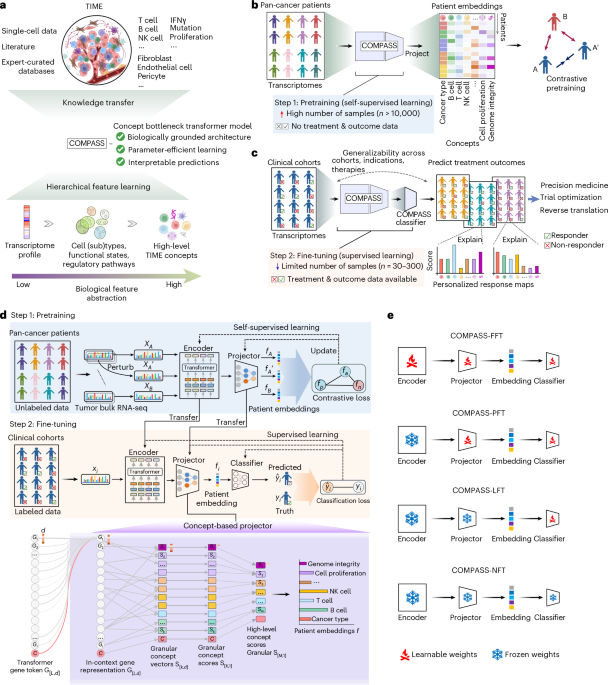
**A computational framework for predicting immunotherapy response from tumor transcriptomes** A recent study introduces **COMPASS**, a computational framework that uses tumor transcriptomic data to predict whether patients with cancer will respond to immune checkpoint inhibitor (ICI) therapy. Designed to work across different cancer types and treatment settings, the approach combines self-supervised pretraining on large public datasets with multiple strategies for supervised fine-tuning and interpretation. From a methodological standpoint, the work relies entirely on deidentified, existing datasets. No new patient data were collected and no institutional review board approval was required. The analysis pipeline includes dataset curation and standardization, model development…
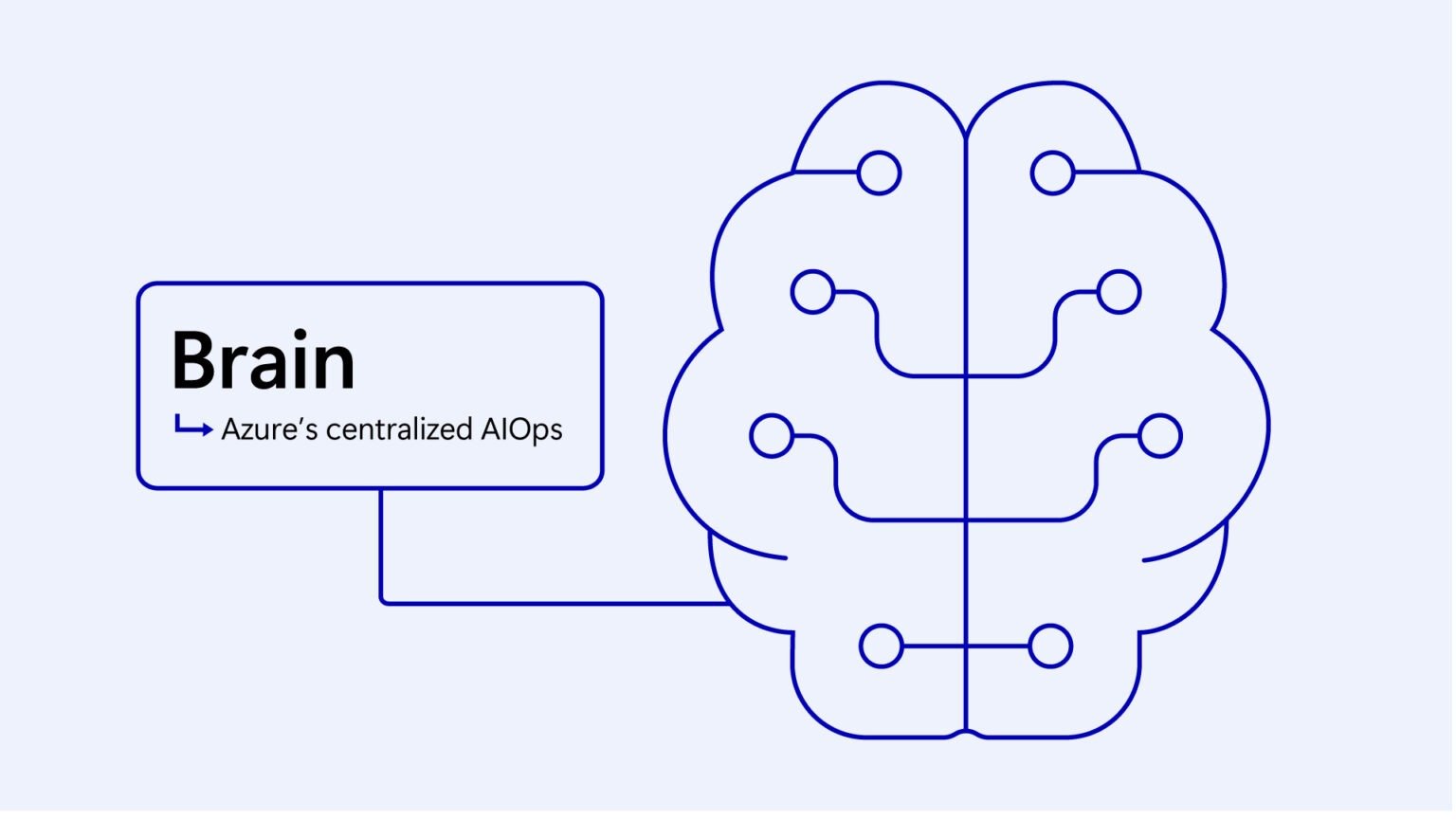
**Azure’s AI-Powered Cloud Reliability System: A New Era for Cloud Operations** Azure’s cloud infrastructure is vast and complex, spanning hundreds of services, multiple regions, and millions of customer workloads. Managing reliability at such scale is no small feat—until now. Microsoft has introduced **Brain**, an AI-powered cloud reliability intelligence system that acts as an intelligent layer atop Azure Resource Graph, unifying telemetry, AI/ML models, service dependencies, and customer impact into a single, real-time view of platform health. Rather than relying on dashboards and alerts, Brain represents a shift toward **automated, intelligence-driven reliability**. It ingests standardized service-level indicators, domain-specific telemetry, and third-party…

**How Wialon Executed a Live Fleet IoT Stress Test in the Saudi Arabian Desert** In one of the most demanding real-world environments possible, Wialon recently transformed a Dakar-inspired off-road rally into a live stress test for its fleet IoT infrastructure. The event served as a practical demonstration of how modern fleet platforms can maintain resilient, real-time operations across extreme terrain, unreliable connectivity, and complex multi-tenant systems. ### A Real-World Operational Test, Not a Simulation Last January 2026, Wialon deployed its fleet management platform during a multi-day off-road challenge across the Saudi Arabian desert. Inspired by the legendary Dakar Rally—an endurance…
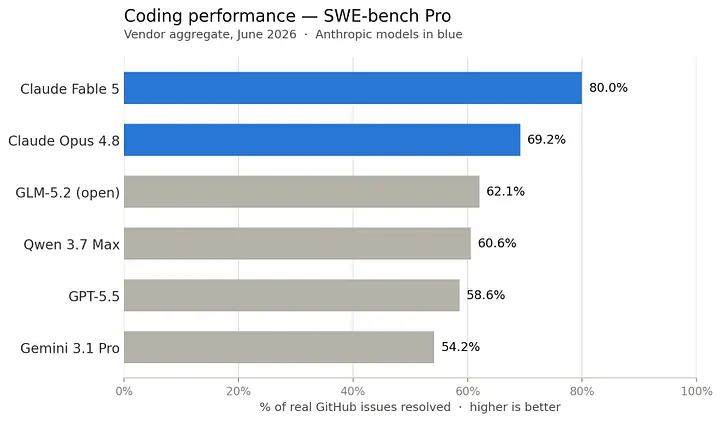
**Democratizing AI: Running a Local LLM on Your MacBook Air M4** In an era where frontier AI models are increasingly locked behind strict export controls and mounting API costs, the open-source movement has become essential for keeping AI accessible. While proprietary models from major tech labs still dominate in raw performance, the gap is narrowing rapidly thanks to a dedicated global community. More importantly, the tools now exist for you to run a capable language model entirely on your own machine—offline, privately, and for good. This article walks you through running the **Qwen 3 8B** model locally on an Apple…

**The EU’s Crypto Crackdown Has Begun: What Comes Next After MiCA’s Transition Period** The European Union’s cryptocurrency industry is entering a pivotal new phase. As of July 4, 2025, the transition period under the Markets in Crypto-Assets (MiCA) regulation has officially ended, marking the start of full enforcement. This shift means that crypto companies operating without proper MiCA authorization can no longer legally serve EU clients. For the industry, this signals a move from preparation to active compliance—or face significant consequences. **Why Enforcement Now?** MiCA was designed to create a single, harmonized regulatory framework for crypto assets across the EU.…

**North Korean Threat Actors Weaponize npm with Rollup Polyfill Impersonation Campaign** A new wave of supply chain attacks has been uncovered, with threat actors linked to North Korea leveraging malicious npm packages disguised as Rollup polyfill tools. According to a technical analysis by JFrog, the campaign utilizes lookalike packages designed to steal credentials and facilitate remote access. The primary malicious packages identified are **”rollup-packages-polyfill-core”** and **”rollup-runtime-polyfill-core.”** These packages meticulously mimic the legitimate **”rollup-plugin-polyfill-node”** project, copying not only the description and repository metadata but also the overall package structure. This high degree of similarity is intended to evade detection during routine…

**Context is King: How Avride Uses Cloud Vision-Language Models as a Safety Net for Delivery Robots** In the fast-evolving world of autonomous delivery robots, the benchmark for success is no longer just efficient navigation. While sidestepping pedestrians and traffic cones is a solved problem, the true test of real-world readiness lies in a robot’s ability to understand the deeper context of its environment. An officer on a sidewalk could be directing traffic or simply taking a walk; wet pavement could be a spill or freshly laid concrete. To solve these nuances, Avride has integrated heavy, cloud-based vision-language models (VLMs) into…

**The Wisdom of Building Small, Single-Purpose Tools: A Maintenance-First Approach to Open Source** In the world of software development, the allure of the “big framework” is powerful. It promises order, structure, and a place for everything. When faced with the challenge of regression-testing PHP runtime upgrades across seven teams’ services, the sensible-sounding move is often to build that very framework. However, as Mikhail Golikov, a Hove-based software engineer and sole QA on a backend team at a high-load e-commerce platform, discovered, the most sustainable path is frequently the deliberately humble one. Golikov’s experience is a testament to the principle that…