




Trending
- How the Latest iPhone Update Enhances User Privacy Features
- Could Meta’s Latest Privacy Features Address User Concerns Over Data Collection?
- Google’s New Search Feature Aims to Enhance Online User Experience
- Could Google’s Latest AI Feature Help Students Study More Effectively?
- Meta’s Latest Update Aims to Tackle User Privacy Concerns
- How Apple’s Latest iOS Update Enhances User Privacy Features
- Microsoft’s Latest Edge Update Enhances Privacy Features for Users
- Apple’s Latest iOS Update Introduces Features to Enhance User Privacy

Author: Carter

Carter
Hi, I'm Carter, a Wisconsin-based tech writer and creator. I launched this blog as a comprehensive resource to help people navigate the fast-moving tech landscape. Covering multiple facets of the industry—from software insights to digital tools—my goal is to break down complex concepts into actionable, easy-to-understand guides. When I'm not tracking the latest tech trends, I'm focused on developing my skills in business administration and digital management.

**USDT Returns to Bitcoin: Tether and UTEXO Pioneering Native Stablecoin on BTC via RGB Protocol** In a significant development for the blockchain and stablecoin landscape, Tether, the issuer of the widely-used USDT (Tether USD), is preparing to bring its stablecoin back to its origins—Bitcoin. Through a native implementation on the Bitcoin blockchain using the RGB protocol version v0.11.1, USDT is set to once again operate natively on the Satoshi Nakamoto network. This move, led by UTEXO in partnership with Tether, represents a major shift in how stablecoins can be deployed and utilized in the Bitcoin ecosystem. The RGB protocol, which…
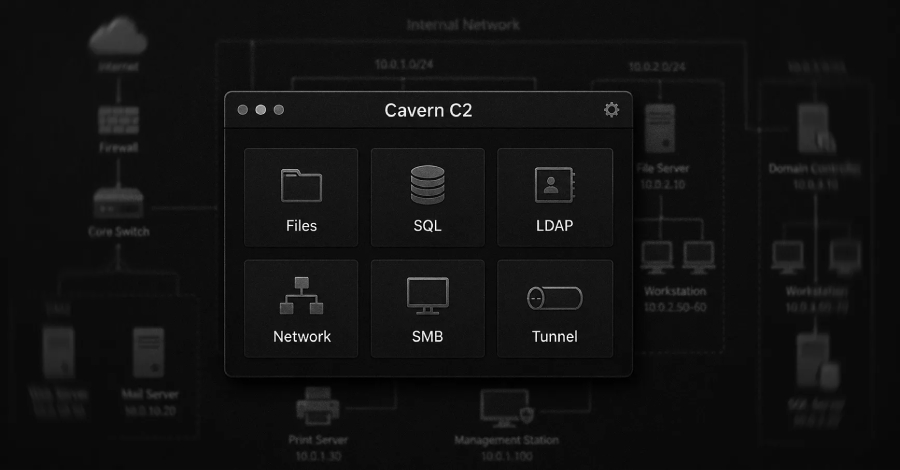
**Iranian Hackers Weaponize .NET Framework in New C2 Attack Campaign Targeting Israeli Organizations** Check Point Research has uncovered an active cyber-espionage campaign waged by an Iranian state-sponsored threat actor against Israeli targets. The operation, attributed to a cluster tracked as **Cavern Manticore**, relies on a custom, modular command-and-control (C2) framework called **Cavern (or Cav3rn)**. This framework marks a significant evolution in the group’s capabilities, leveraging uncommon .NET compilation techniques to complicate forensic analysis and evade detection. The campaign’s primary targets are **IT providers and government-sector organizations**, suggesting a sophisticated supply-chain strategy. Check Point notes strong tactical overlaps between this cluster…
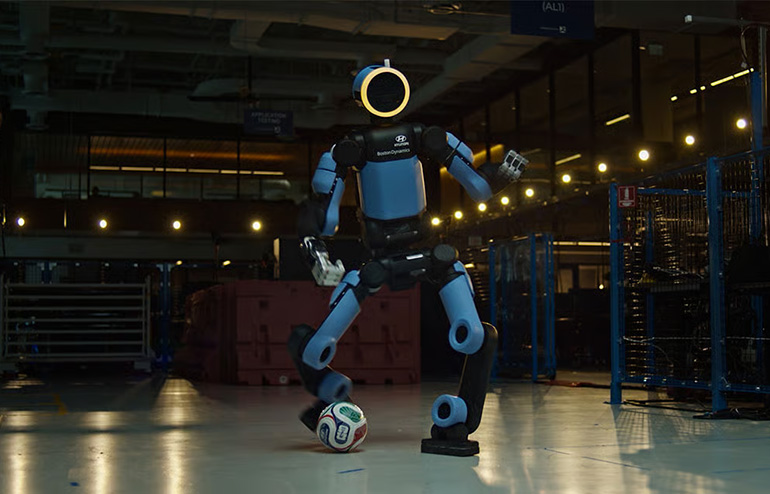
**Boston Dynamics Showcases Robot Soccer Skills and Security Applications at FIFA World Cup** Boston Dynamics, recently acquired by Hyundai Motor Co., is bringing its advanced legged robots to the 2026 FIFA World Cup, demonstrating both athletic prowess and practical security applications. The collaboration highlights how robots can perform complex, human-like tasks in dynamic environments. **Teaching Robots to Kick: The “Ghost Rabona” Technique** Alberto Rodriguez, director of robot behavior at Boston Dynamics, explained that the company sought a challenging and visually impressive demonstration for the World Cup. “The World Cup was too good of an opportunity to pass on,” he said.…

Based on the detailed information in the provided post, here is a new article that elaborates on the key points and concepts: — ## Beyond the Origin: How Workers Cache Unlocks a New Architecture for the Edge For years, Cloudflare Workers have sat *in front of* Cloudflare’s cache. This model gave developers powerful control—rewriting requests, filtering traffic, or transforming responses before they ever reached an origin server. But a fundamental shift is underway: **the Worker is becoming the origin**. Frameworks like Astro, Remix, SvelteKit, and Next.js now ship Cloudflare adapters, meaning the application *is* the Worker. There’s no separate backend…

**Comparing Bluetooth Tracker Tags: Premium vs. Budget Options** In today’s market, Bluetooth tracker tags have become essential tools for keeping track of personal items like keys, wallets, and bags. Following the success of Apple’s AirTag, many third-party alternatives have flooded the market—some premium, others surprisingly affordable. But is there a tangible difference in performance between a $40 tag and a $2.50 one? **All Tags Work—But With Varying Effectiveness** A recent hands-on test by ZDNET compared several Bluetooth tracker models, including the Apple AirTag, the Nomad Tracker Card Pro, and a budget-friendly “smart” tag. The results were both revealing and practical…

In this article, you will learn why agent accuracy degrades as a tool catalog grows, and six practical techniques for keeping tool selection accurate and efficient at scale. Topics we will cover include: Why adding more tools to an agent causes tool hallucination and accuracy loss, not just slower responses. How gating, retrieval, routing, and planning each narrow down what the model sees before it has to choose a tool. How to build fallback logic and a benchmark harness so you can measure whether any of these fixes actually worked. None of this requires a bigger model, just a smarter…

## HORIZON: An Agentic Approach to Hardware Design Verification NVIDIA Research has announced **HORIZON**, an advanced framework that automates hardware design by treating it as an iterative, version-controlled process. The system represents a significant step toward fully autonomous hardware development, using agentic workflows to evolve Register-Transfer Level (RTL) designs, testbenches, and verification artifacts. HORIZON operates by treating each hardware design task as a **version-controlled repository**, rather than a single-shot generation exercise. The process begins with a **structured Markdown harness** that defines four key components: a design goal, domain-specific knowledge, an evaluator specification, and an acceptance predicate. A bootstrap agent then…
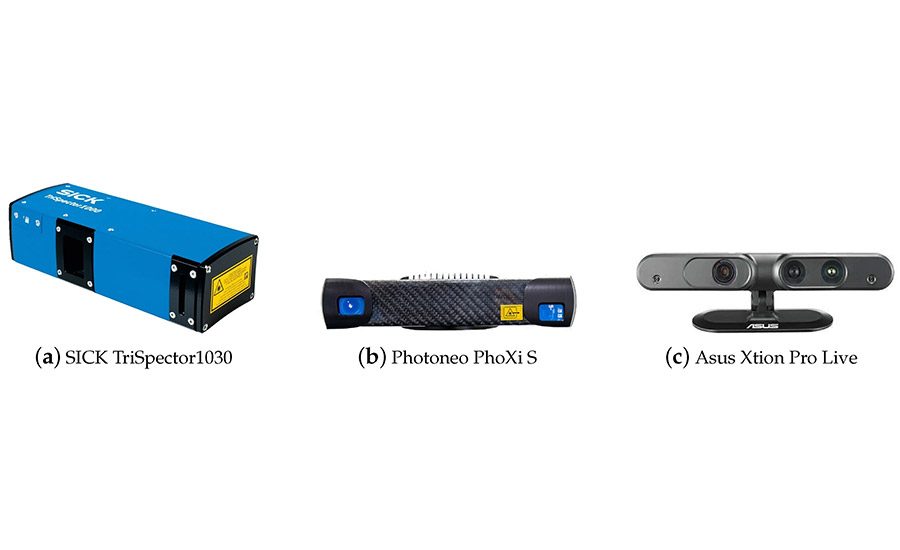
**Robotic Bolt-Tightening: How 3D Vision and Force Sensors Are Transforming Assembly Lines** In recent years, industrial robotics has evolved to handle tasks once deemed unsuitable for automation due to the need for extreme precision and human-like dexterity. One such example is tightening bolts on automotive assemblies—a process long considered too intricate for robots. According to a recent industry report, **robots are now capable of performing these high-precision tasks under the demanding conditions of car manufacturing**, thanks to advances in 3D vision systems and force sensing (Assembly Magazine, 2026). The shift is particularly evident in automotive assembly lines, where repetitive and…

**Over 150,000 Apply for AI-Guided Masturbation Study: A Surge in Demand for AI Companions** In a surprising turn of events, Joi AI’s recent campaign for an AI-guided masturbation study has captured global attention. Launched in May, the initiative aimed to recruit participants for a month-long study involving daily surveys and the use of Joi AI’s “Daily Guided Masturbation” feature. The campaign quickly went viral, attracting over 150,000 applications—an unexpected response that forced the company to expedite the creation of a public selection process. ### A Global Response Julie Levin, Head of Brand and Communications at Joi AI, revealed that the…

**Navigating the Complexities of Modern Risk Management: A Business-Aligned Approach** In today’s volatile business environment, characterized by dynamic threat landscapes and emerging technologies like AI and quantum computing, traditional risk management methods are becoming increasingly obsolete. Periodic risk assessments, once deemed sufficient, are now inadequate. Organizations must adopt a more continuous, connected approach to risk lifecycle management, ensuring that risks, controls, and potential business impacts are constantly evaluated and aligned with business objectives. **The Limitations of Traditional Risk Assessment** The example of the movie *Moneyball* illustrates a critical lesson: having data is not enough; it’s essential to know which data…