



Trending
- Microsoft’s New AI Features Aim to Enhance Office Productivity
- How the Latest iPhone Update Enhances User Privacy Features
- Could Meta’s Latest Privacy Features Address User Concerns Over Data Collection?
- Google’s New Search Feature Aims to Enhance Online User Experience
- Could Google’s Latest AI Feature Help Students Study More Effectively?
- Meta’s Latest Update Aims to Tackle User Privacy Concerns
- How Apple’s Latest iOS Update Enhances User Privacy Features
- Microsoft’s Latest Edge Update Enhances Privacy Features for Users

Author: Carter

Carter
Hi, I'm Carter, a Wisconsin-based tech writer and creator. I launched this blog as a comprehensive resource to help people navigate the fast-moving tech landscape. Covering multiple facets of the industry—from software insights to digital tools—my goal is to break down complex concepts into actionable, easy-to-understand guides. When I'm not tracking the latest tech trends, I'm focused on developing my skills in business administration and digital management.
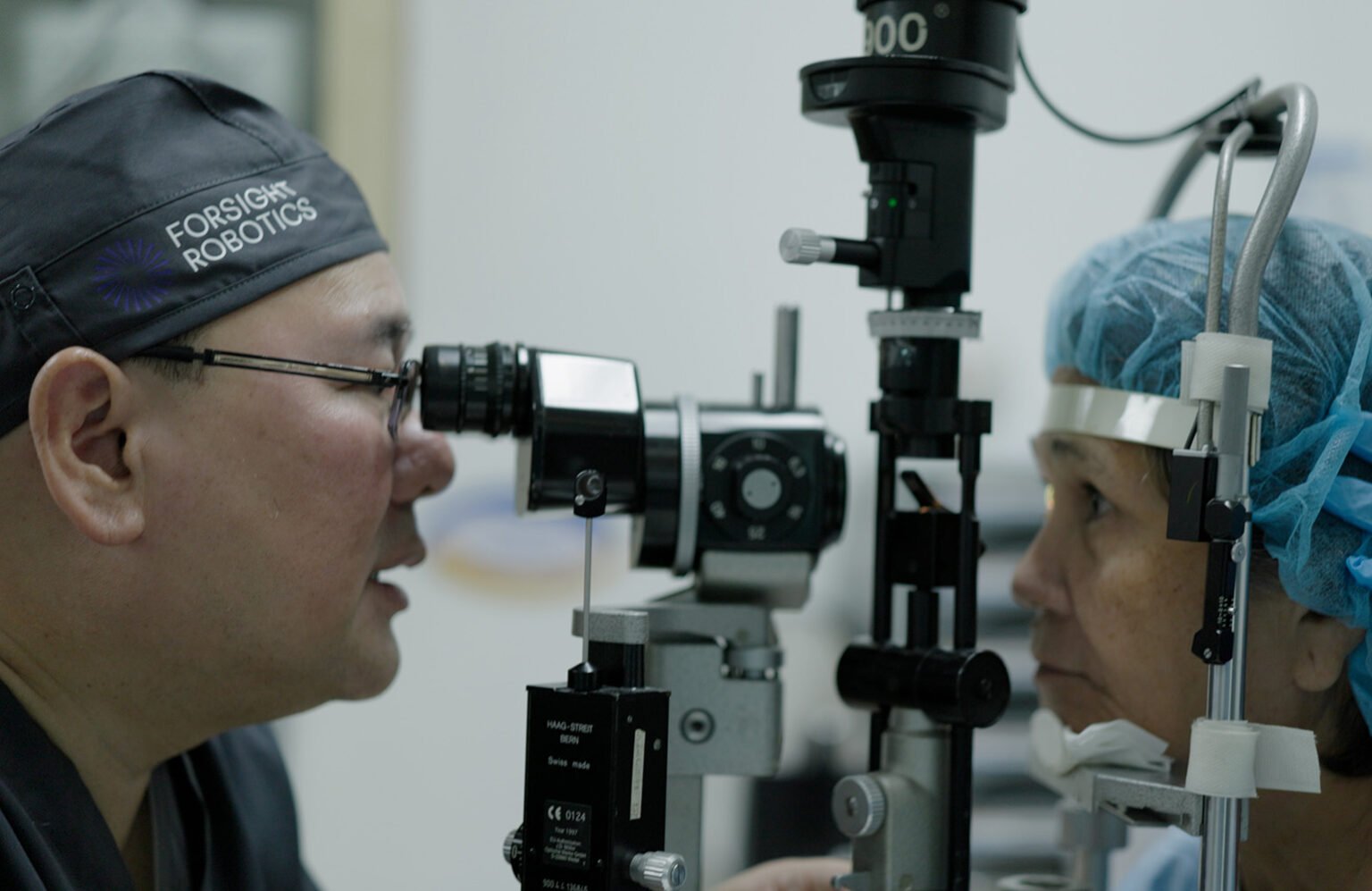
**The Future of Eye Surgery: Robotics and AI Tackle Cataract Procedures** Cataracts are the world’s leading cause of blindness, and the only effective treatment is surgery. However, a significant global shortage of trained surgeons makes these procedures difficult to access. In response to this challenge, companies like ForSight Robotics are exploring how robotics and artificial intelligence (AI) can assist in making cataract surgery more accessible and consistent. ForSight Robotics has developed the JASPER Platform (formerly known as ORYOM), a system designed to assist surgeons at every step of a cataract procedure. According to Dr. Joseph Nathan, the company’s co-founder and…
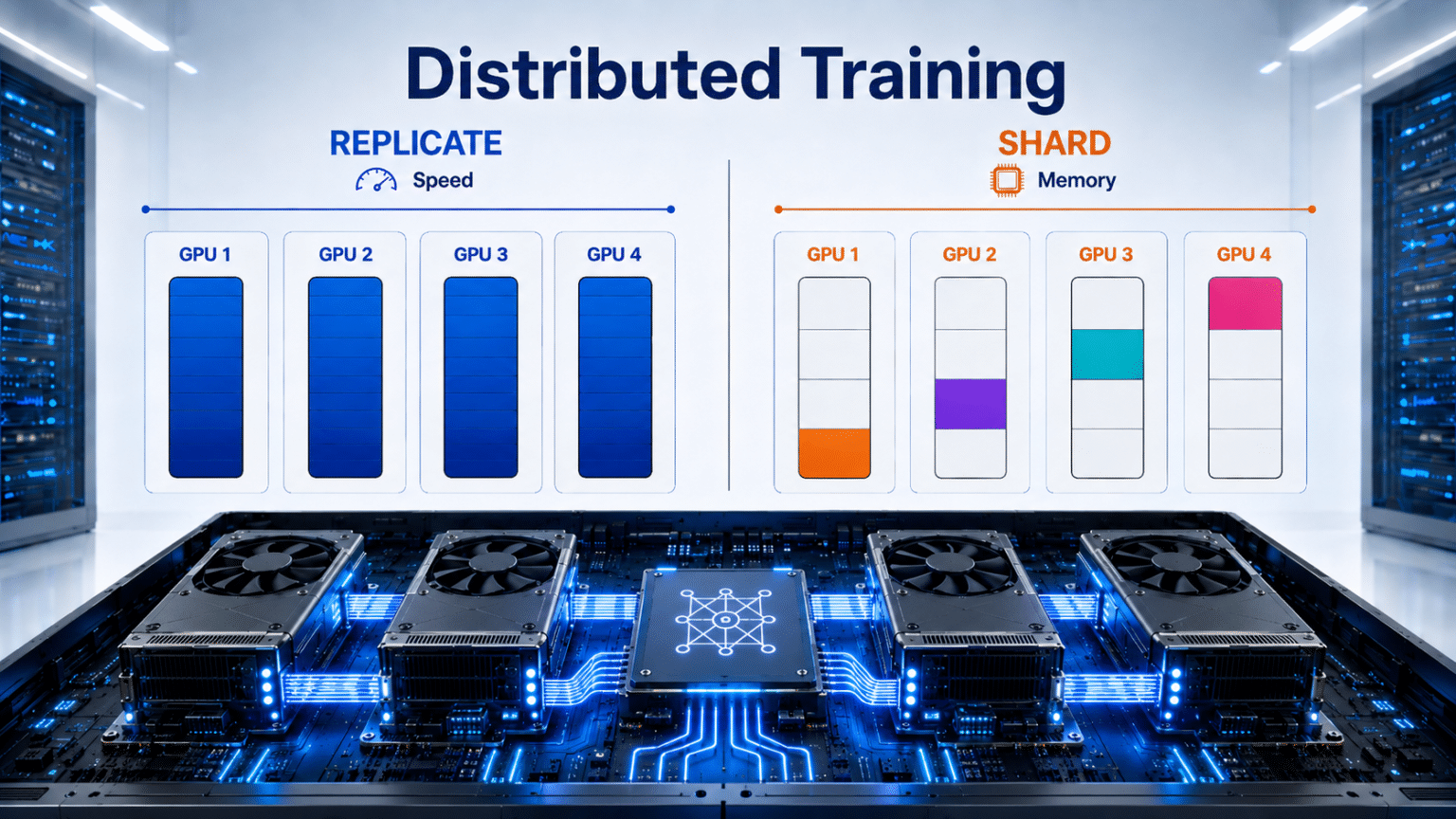
## Understanding Distributed Training Strategies and Hardware Effects Modern deep learning workflows often require distributing training across multiple GPUs. At a high level, adding GPUs seems simple: replicate the model and data, and wait for faster completion. While this works for many scenarios—particularly when the model fits on a single GPU—training large foundation models introduces new challenges around memory constraints and communication overhead. When models exceed single-GPU memory capacity, simply adding more GPUs with full replication is insufficient. The model, its gradients, and optimizer states must be split across devices. This leads to a spectrum of strategies, from Distributed Data…

**From Voice Notes to Searchable Knowledge: How I Stopped Losing Important Ideas** Voice recording has always been my ideal method to capture ideas. It’s basically like skipping the hassle of formatting and organising the text. However, as I became more and more engaged with recording ideas, I faced a problem I didn’t expect. My voice notes felt like they had been lost in the abundance of recordings. It became extremely hard to locate specific notes I had recorded. That’s when I decided to take a turn that changed everything. I began to convert my voice notes from Clideo. Suddenly everything…

**OpenAI’s GPT‑5.6 Launch Is a Direct Response to Anthropic’s Momentum** In a flurry of announcements, OpenAI has rolled out a new set of models and tools that appear calibrated to counter the buzz surrounding Anthropic’s recent releases. The moves include three new GPT‑5.6 variants, clearer benchmarking comparisons, and an agentic desktop productivity feature that directly parallels Anthropic’s Claude Cowork. **Three New Models: Sol, Terra, and Luna** OpenAI’s new models follow a celestial naming scheme that maps closely to GPT‑5.5 tiers: – **Sol** – Flagship model designed to compete with Anthropic’s Fable 5, roughly equivalent to GPT‑5.5’s “thinking” mode. – **Terra**…
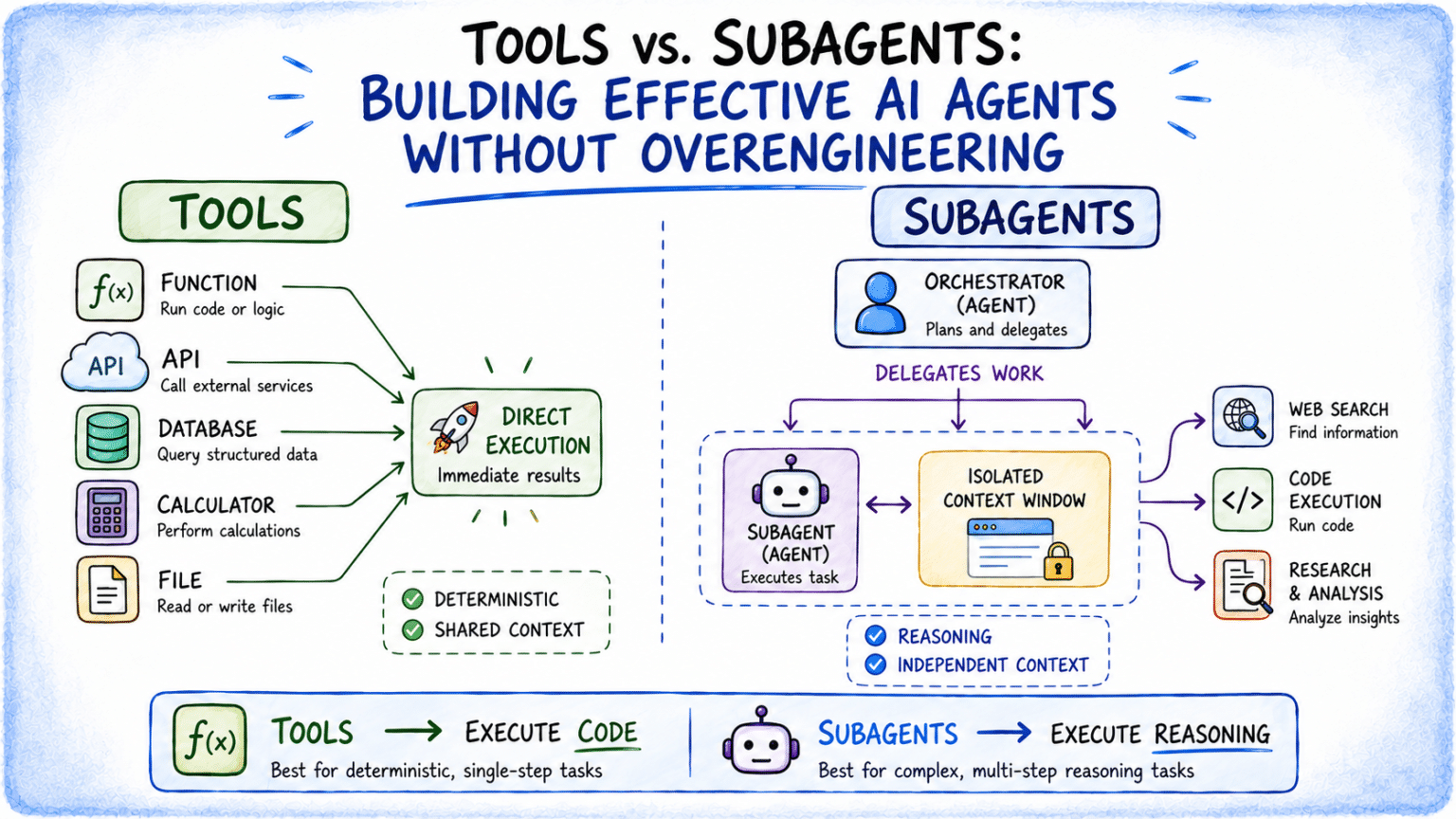
Here is a new article based on the provided post content: — ## Choosing Between Tools and Subagents in AI Agent Design When building AI agents, one of the most important architectural decisions is determining how to delegate work. Should a capability be implemented as a **tool**, or does it require a full **subagent**? Understanding the distinction—and the tradeoffs—helps teams avoid unnecessary complexity while building systems that are both powerful and maintainable. This article explains what tools and subagents are, when each is appropriate, and how to apply a simple decision framework to prevent overengineering your agent architecture. ### What…

**UK Announces Dual Cybersecurity Initiatives: AI-Powered Defense and Firm Commitments** In a decisive move to bolster its digital defenses, the UK government has launched two significant initiatives on July 7, 2026, signaling a major shift in national cybersecurity strategy. These announcements, made public on the same day, highlight the government’s urgent effort to counter increasingly sophisticated cyber threats using artificial intelligence and firm regulatory norms. The first initiative, **Cyber Shield**, was detailed by the National Cyber Security Centre (NCSC). This ambitious project aims to build a national-scale, collaborative defense system powered by **frontier AI and “agentic” artificial intelligence**. The core…

**OpenAI Drops GPT-5.6 Sol and New Models in Crowded AI Race** OpenAI has officially launched its new GPT-5.6 Sol model, making it available to the public after a brief two-week preview that was previously restricted to about 20 trusted partners under the oversight of the U.S. Department of Commerce. The release introduces a fresh naming strategy for the company, marking the first time OpenAI has assigned names—Sol, Terra, and Luna—to its models instead of relying on numerical designations. These names denote capability tiers, with Sol as the flagship, Terra positioned as the cost-effective alternative that matches GPT-5.5 at half the…
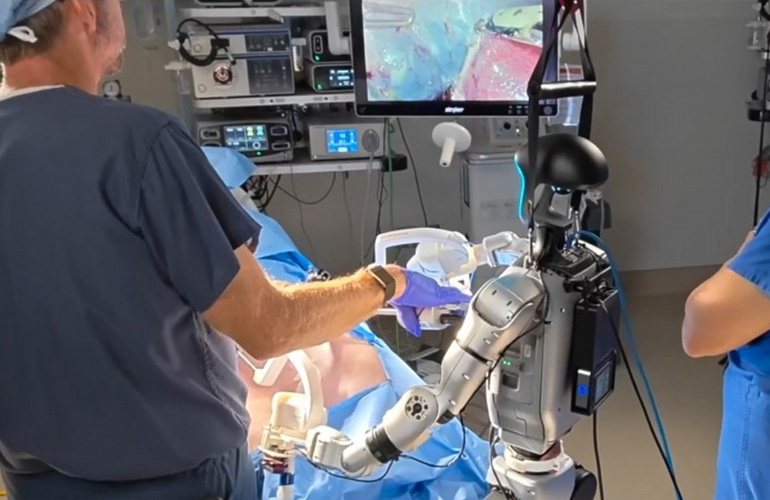
**The Dawn of Versatile Humanoid Surgeons: A New Era in Robotic Surgery** In a groundbreaking development that reads like science fiction, a team of researchers has successfully used teleoperated humanoid robots to perform complex surgical procedures. This landmark achievement, detailed in a recent study, marks a significant step toward revolutionizing surgical care and addressing global healthcare disparities. The pioneering work was conducted by researchers at the University of California San Diego. In a series of preclinical trials on large non-primate mammals, they achieved two major firsts. In the first procedure, a single humanoid robot worked in tandem with a human…

**Post-Quantum Cryptography: Current Landscape and Near-Term Realities** The digital world’s foundation—public-key cryptography—is under threat. For decades, RSA and Elliptic Curve Cryptography (ECC) have secured our communications and identities. However, these classical algorithms are vulnerable to sufficiently powerful quantum computers. While large-scale, fault-tolerant quantum computers capable of breaking RSA and ECC do not yet exist, experts believe they will arrive sooner than previously anticipated. The cryptographic community’s answer is **post-quantum cryptography (PQC)**—algorithms designed to withstand both classical and quantum attacks. The U.S. National Institute of Standards and Technology (NIST) has led a multi-year standardization effort, culminating in the selection of **ML-KEM**…

**Harnessing IoT for Smarter Forex Trading: Real-Time Data at Your Fingertips** The landscape of forex trading is undergoing a quiet revolution. Internet of Things (IoT) technology is transforming how traders access, process, and act on market information, offering a significant edge in a fast-paced environment. By connecting smart devices directly to live data streams, traders can monitor news feeds, financial indicators, and social media sentiment seamlessly, enabling more informed and timely decisions. ### Understanding IoT in the Financial Market At its core, the Internet of Things refers to a network of everyday objects connected to the internet to share and…