



# How Robotics and AI Are Transforming the Timber Industry
A California-based technology company has secured $7 million in new funding to accelerate the use of artificial intelligence in forestry operations. With this round of investment, the company has now raised a total of $14 million since its founding. The latest round was co-led by two venture firms and attracted additional support from a dozen investors focused on climate, energy, and industrial technology.
## Solving a Growing Workforce Crisis
The timber and forestry sector is facing a serious labor shortage. The work demands long, grueling hours in remote and rugged terrain, and fewer young workers are choosing to enter the field. Experienced operators are retiring faster than new talent can replace them, and the physical toll of operating heavy machinery takes a significant toll on workers’ bodies.
This technology company sees a solution. By combining remote human control with automated capabilities, their systems allow experienced operators to manage multiple machines from a comfortable control center — no need to sit in a cab bouncing over stumps and rocks for ten hours straight.
## What the Technology Does in the Field
The company’s systems are already being used in logging operations across the southeastern United States. In the past six months alone, machines equipped with their technology have transported over 100,000 tons of timber.
Their approach centers on a hybrid model: machines handle repetitive, well-defined tasks on their own, while skilled operators step in remotely to manage complex situations and unexpected challenges. On average, machines using this technology run between 10 and 14 hours per day at active job sites.
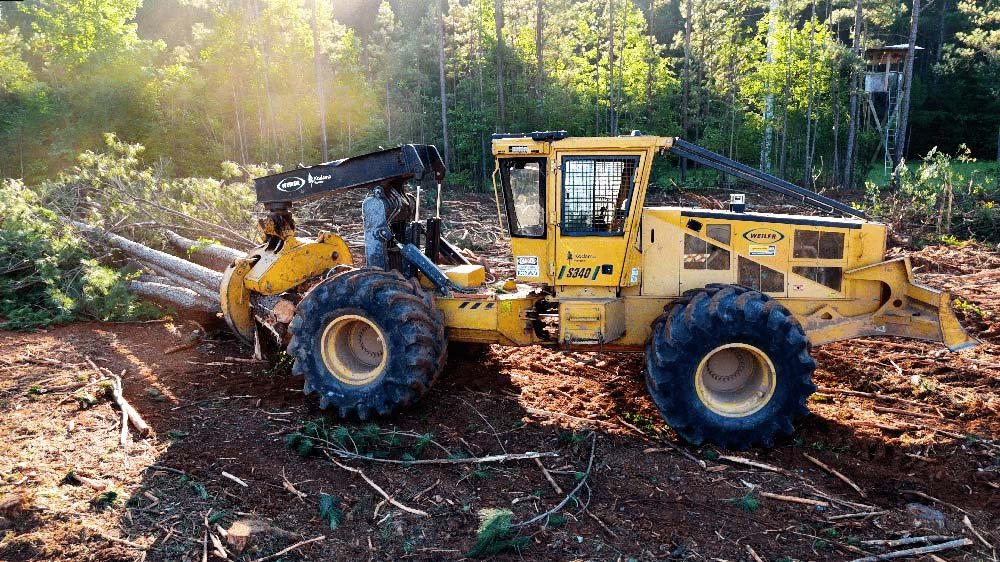
Currently, the technology is deployed on skidders — the large machines that use a gripping claw to pick up felled trees and drag them to a central collection area for loading onto trucks. The company has plans to extend its systems to other machines in the fleet, including cutting and loading equipment.
## Data-Driven Improvement
The company generates roughly one terabyte of training data every single day from its remotely operated machines. This continuous stream of information — gathered across different terrains, weather conditions, and operating environments — feeds back into the system, making the machines smarter and more capable over time.
The company started with remote operation as its foundation and gradually layered in autonomy, a strategy leaders say has proven to be the right approach. The vast amount of real-world data now gives them a significant edge in developing reliable, off-road autonomy.
## Working With Existing Equipment
Rather than building new machines from scratch, the company integrates its technology directly into forestry equipment manufactured by some of the world’s largest equipment companies. This approach allows logging operations to adopt new capabilities without replacing their existing fleets, preserving the value of their current investments.
The company’s leaders note that working directly with original equipment manufacturers gives them access to built-in sensors and diagnostic systems that would be difficult or impossible to replicate with aftermarket add-ons.
## Safety and Productivity Gains
Operators and site managers who have used the technology report meaningful safety improvements. Removing people from the cab of heavy machinery in unpredictable forest environments significantly reduces the risk of injuries from rollovers, flying debris, and other hazards.
Looking ahead, the company envisions using its real-time data — including machine location, fuel consumption, and equipment stress — to further optimize how logging sites are organized and how machines coordinate with one another, replacing the current reliance on radio communication and manual coordination.
—
## Frequently Asked Questions (FAQ)
**Q: What kind of forestry work is this technology used for?**
A: The technology is currently focused on plantation timber operations, which involve managing tree farms for commercial wood production. It is also being explored for wildfire prevention through forest thinning and for wildfire suppression support.
**Q: How does supervised autonomy differ from fully autonomous operation?**
A: Supervised autonomy means the machines can perform routine tasks on their own, but a human operator oversees the work and takes control when situations become complex or unexpected. This hybrid approach combines the efficiency of automation with the judgment of experienced operators.
**Q: Where is this technology currently deployed?**
A: The systems are actively being used in commercial logging operations across the southeastern United States, with particular focus on Georgia and surrounding states.
**Q: What types of machines use this technology right now?**
A: The primary machines currently equipped with the technology are skidders, which move felled trees from the cutting area to a central landing zone. The company plans to add support for cutting machines and loaders in the future.
**Q: How much data does the system generate?**
A: Each remotely operated machine generates approximately one terabyte of training data per day, covering operating conditions, machine performance, and operator decisions.
**Q: Why is the forestry industry adopting this technology now?**
A: The industry faces a combination of rising demand for timber and forest management, a shrinking workforce of experienced operators, and the harsh physical realities of the job — all of which make automation an attractive solution.
**Q: Who are the investors behind this funding round?**
A: The latest funding round was co-led by Konvoy Ventures and Breakwater Ventures, with additional investment from Blue Forest Asset Management, NYA Ventures, Breakthrough Energy Ventures, Congruent Ventures, Dangerous Ventures, M1C, and several other firms.
—
## Conclusion
The forestry industry is at a turning point. An aging workforce, demanding physical conditions, and growing demand for timber and land management are creating real challenges — but also real opportunities for innovation. Robotics and artificial intelligence are stepping in to fill the gap, offering a way to make logging safer, more efficient, and more sustainable. By working within the existing equipment ecosystem and combining human expertise with machine capability, this technology is demonstrating that the future of forestry can be both high-tech and practical. As deployments expand and more data flows in, the potential for further breakthroughs in how forests are managed and protected will only continue to grow.
Thank you for reading
