



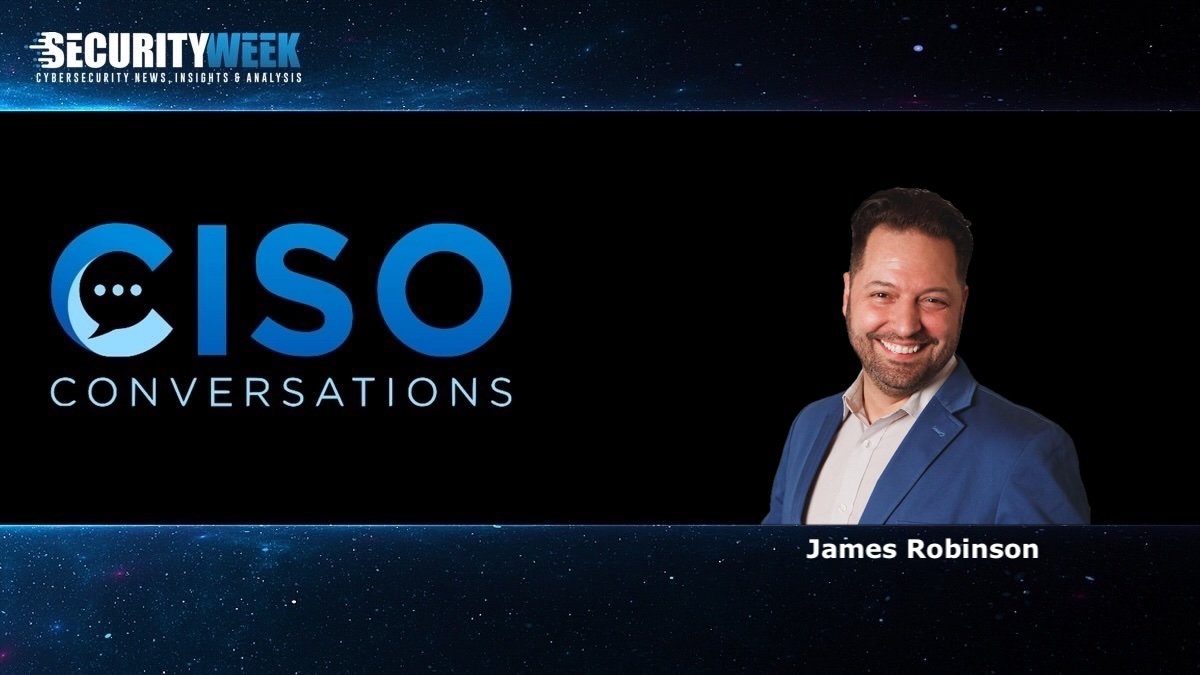
# From the Track to Cybersecurity: How One Leader Became a CISO Against All Odds
## A Sporty Kid Finds an Unexpected Calling
Growing up in Central Illinois, James Robinson was never the kid hunched over a textbook. He was on the track team, and he’d be the first to admit that academics wasn’t his strongest suit — especially English class. But life had a funny way of guiding him. His English teacher also happened to be the track coach, which kept him motivated enough to get through school.
When the principal suggested pursuing a vocational or trades path instead of a traditional four-year university, Robinson took the leap. A friend was already enrolled in an electronics engineering program, and Robinson followed suit. That school happened to be part of the Cisco Networking Academy, and that single connection changed everything.
Robinson threw himself into the program with unmatched enthusiasm. In the late 1990s, while still in high school, he was teaching himself networking at home, getting online, and studying relentlessly. That program opened a door he never knew existed — and he ran through it.
## How a Career in Security Almost Didn’t Happen
After earning his Cisco Certified Internetwork Expert (CCIE) credential, Robinson landed a role as a network engineer at State Farm Insurance by the early 2000s. But when he tried to move to Cisco itself, the dot-com crash got in the way. Cisco’s stock crashed from over $80 to below $10, and thousands of employees were let go. Robinson stayed at State Farm — and that turned out to be a blessing in disguise.
At State Farm, someone suggested he explore the emerging world of security. Around the same time, during his Cisco interviews, he met someone from AT&T who described the radical idea of shutting off internet connections for safety reasons. That concept clicked. Robinson saw where the industry was heading and decided to pursue it.
He became a technical security analyst at State Farm — and from there, his career in cybersecurity took off and never looked back.
## A Career Built on Curiosity and Persistence
Robinson’s career path is a masterclass in continuous growth. Here’s a snapshot of his professional journey:
– **Anheuser-Busch (2006)** — Systems engineer focused on information protection and security architecture
– **Emerson Electric (2008)** — Product security assurance manager and product security officer
– **Websense (2012)** — Security architecture and strategy officer
– **Optiv (2015)** — VP of third-party risk management
– **Netskope (2018–present)** — Deputy CISO, then CISO in 2024
At Netskope, Robinson stayed in his deputy role for over five years — more than twice his average tenure in previous positions. That patience paid off, and today he serves as the Chief Information Security Officer.
## The Mindset That Sets Great Security Leaders Apart
Robinson credits much of his success to the advice he’s received and the lessons he’s learned along the way. Here are some of the guiding principles he lives by:
– **Get close to the business.** Understand how it works, what drives its success, and where it struggles. Security isn’t a silo — it’s deeply tied to the organization as a whole.
– **Don’t dismiss strange behavior as stupidity.** Sometimes people are doing things that seem odd simply because you don’t have the full picture. Pause and look deeper.
– **When a door opens, walk through it.** Robinson rarely stayed in one position for more than two years early in his career, and he credits that willingness to take chances with shaping his path.
– **Never stop learning.** “Learning is fun when you’re in the right job,” he says.
– **Cherish the journey, not just the destination.** At a recent CISO summit, Robinson met a fellow CISO who had accomplished everything she’d set out to do — and didn’t know what came next. Robinson encourages everyone to appreciate each step of the process.
## Building a Team That Makes a Difference
As a CISO, Robinson prioritizes one quality above all when building his security team: curiosity. He looks for people who are genuinely hungry to learn and who will go the extra mile.
He shares the story of a healthcare worker who wanted to break into cybersecurity. Robinson told him there were no openings available — but suggested he apply for an internship at the company’s St. Louis office. The man relocated without hesitation. That persistence and dedication are exactly what Robinson values.
He also tells the story of a fresh graduate from Northern Indiana who was told to apply for opportunities elsewhere. She said yes, moved to St. Louis, and is now a pen tester on his team — running attack simulations, penetration tests, and vulnerability assessments. Her willingness to start from scratch and keep going is the kind of attitude Robinson looks for in every hire.
Robinson is also honest about the importance of certifications — but he emphasizes that mindset matters even more. Formal degrees have their place, and Robinson himself never finished his university degree. But he sees that as a choice he made without regrets, not a limitation. He’s now considering going back to school, with his kids keeping him on a long timeline.
His message is clear: certifications are helpful, but attitude and persistence are what truly set people apart.
## What Keeps a CISO Up at Night
Despite what you might expect, Robinson doesn’t lose sleep over cyberattacks or data breaches. Instead, his late-night thoughts center on his team.
He worries about whether he’s getting the best performance out of himself and his people, whether team culture is thriving, and whether every team member feels recognized and connected to him. He reflects on whether he’s being the kind of leader who makes time for the people around him — because the best leaders he’s ever had weren’t always his own managers.
Even when asked about artificial intelligence — one of today’s biggest topics in cybersecurity — Robinson’s response was refreshingly grounded. “If it keeps me up, it’s because I’m trying to learn more about it,” he said. “It’s the excitement of AI rather than the danger of AI.” He believes the human element — team culture, team performance — remains the most important factor, at least for now.
Security incidents come and go, he explains. They’re the job, and you handle them. The real work is building something lasting.
—
## Frequently Asked Questions (FAQ)
**Q: What does a CISO do?**
A CISO, or Chief Information Security Officer, is the executive responsible for overseeing an organization’s entire information security strategy. This includes protecting data, managing risk, leading security teams, and ensuring the company stays ahead of emerging threats.
**Q: How did James Robinson get started in cybersecurity?**
Robinson started as a network engineer after completing vocational training and earning a Cisco CCIE certification. A suggestion from a colleague at State Farm Insurance led him to explore security, and he never looked back.
**Q: Does Robinson have a university degree?**
No. Robinson chose a vocational and certification-based path instead of attending a traditional university. He doesn’t regret this decision, though he is now considering completing his degree in the future.
**Q: What advice does Robinson give to aspiring security professionals?**
Robinson emphasizes curiosity, persistence, and a willingness to learn. He encourages people to seek out mentors, build strong friendships in the workplace, and focus on the journey rather than rushing to the destination.
**Q: Why is team culture so important to Robinson?**
Robinson believes that a strong, healthy team culture is what drives real results in security. He prioritizes recognizing individual contributions, staying connected with team members, and creating an environment where people feel supported and valued.
**Q: What does Robinson think about AI in cybersecurity?**
He views AI with excitement rather than fear. While he acknowledges that AI could eventually change the role of a CISO, he believes the focus for now should remain on building and empowering teams.
—
## Conclusion
James Robinson’s story is a powerful reminder that career paths are rarely straight lines. From a sporty high school student in Central Illinois to the CISO of a major cybersecurity company, his journey shows that curiosity, adaptability, and a genuine love for learning can take you farther than any traditional roadmap ever could. His emphasis on team culture, mentorship, and enjoying the process — not just the outcome — offers valuable lessons not just for cybersecurity professionals, but for anyone building a career they love.
Thank you for reading
