



# How a Cryptocurrency Platform Became a Target of International Sanctions
The United Kingdom recently imposed economic sanctions on a cryptocurrency payment platform called Cryptomus, accusing it of playing a central role in funding some of the world’s most dangerous online criminal enterprises. The move highlights how digital payment systems can be exploited to evade international financial restrictions and funnel money toward illicit activities.
## What Is Cryptomus?
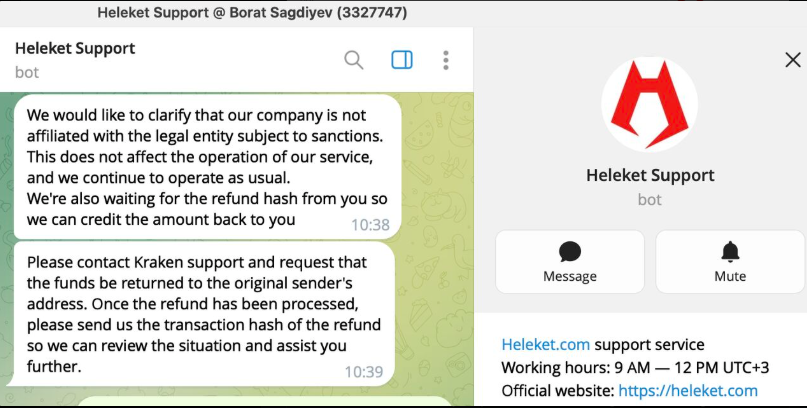
Cryptomus is a virtual currency exchange and payment processing service that has operated under several different names over the past few years. It first appeared on the scene in 2022 and has since rebranded multiple times — most recently operating under the name Heleket. Experts describe it as a “chameleonic” platform because of its ability to constantly reinvent itself while continuing to offer essentially the same services.
The platform positioned itself as a payment gateway for cryptocurrency transactions, allowing users to convert digital currencies into fiat money and move funds across borders with minimal oversight.
## Why Did the UK Impose Sanctions?
On October 8, the United Kingdom officially sanctioned Cryptomus for processing payments that directly benefited the Russian government and its financial institutions. The sanctions were part of a broader effort to disrupt the financial networks that help Russia bypass existing economic restrictions imposed by Western nations.
The UK sanctions do three key things:
– **Freeze** any Cryptomus assets held in British banks
– **Bar** UK-based companies from conducting any business with the platform
– **Extend** to virtual currency services as well as traditional financial dealings
Other platforms were also sanctioned alongside Cryptomus, including VexPay, TokenSpot, and a service called Tsunami Payments. Together, these platforms formed a broad infrastructure that authorities say supported Russia’s wartime economy.
## How Big Was the Operation?
The scale of Cryptomus’s activity is staggering. According to blockchain analysis firms that have studied the platform’s transaction history, Cryptomus processed more than $7 billion in transactions since it launched in 2022. These transactions weren’t limited to everyday cryptocurrency trading — they included payments linked to ransomware groups, narcotics trafficking networks, darknet marketplace operators, fraud schemes, and even human trafficking organizations.
One blockchain intelligence company reported that the number of illicit counterparties connected to Cryptomus grew to over 900 in a single month during late 2025. In terms of illegal funds processed, Cryptomus surpassed even the cryptocurrency mixers that are traditionally associated with money laundering.
## The Name-Changing Game
Cryptomus has a well-documented pattern of rebranding itself whenever it runs into regulatory trouble. After Canada imposed a record fine of CAD $176 million against the platform for anti-money laundering violations, Cryptomus did not shut down. Instead, it launched a parallel service under the name Heleket that offered the same no-know-your-customer (no-KYC) payment processing.
The Canadian fine, while record-setting, proved largely ineffective. As one blockchain investigator noted, a monetary penalty does not stop a cryptocurrency processor from continuing its operations. The distinction between a fine and a sanction is significant — sanctions effectively kill a business by cutting it off from the global financial system.
## Who Is Really Behind It?
The ownership structure behind Cryptomus is complex and raises additional red flags. Investigators discovered that the sole shareholder of Cryptomus’s parent company, Certa Payments, was a 25-year-old Ukrainian woman. She also served as the head of several other companies, including one called WS Management and Advisory Corporation.
That particular company claimed to be the exclusive regulatory authority overseeing licenses for cryptocurrency, foreign exchange, and online gaming businesses incorporated in the Western Sahara — a disputed region in northwest Africa that is not widely recognized as a sovereign nation.
Experts say this arrangement gave Cryptomus and similar platforms a veneer of legitimacy, as they could point to licenses issued by what appeared to be a recognized regulatory body, even though the underlying authority was questionable at best.
## A Historic Moment in Enforcement
The UK sanctions are notable for another reason: they represent the first known instance of a “Five Eyes” country sanctioning a cryptocurrency operation that was incorporated within another Five Eyes jurisdiction. The Five Eyes alliance includes Australia, Canada, New Zealand, the United Kingdom, and the United States — nations that share intelligence and cooperate on security matters.
This development signals a growing willingness among Western governments to pursue cryptocurrency platforms across jurisdictional boundaries, rather than relying solely on penalties that can be easily ignored or absorbed.
## Frequently Asked Questions
**Q: What are economic sanctions?**
A: Economic sanctions are government-imposed restrictions that prohibit businesses and individuals within a country from conducting financial transactions with a targeted entity. They can include freezing assets, banning trade, and cutting off access to banking services.
**Q: Why do cryptocurrency platforms attract sanctions?**
A: Cryptocurrency platforms can offer a degree of anonymity and cross-border流动性 (liquidity) that makes them attractive for moving illicit funds. When these platforms fail to implement proper anti-money laundering controls, they can become conduits for ransomware payments, drug trafficking, and other criminal enterprises.
**Q: What is KYC, and why does it matter?**
A: KYC stands for “Know Your Customer.” It is a set of regulations that require financial institutions to verify the identity of their users. Platforms that skip KYC make it easier for criminals to move money without being traced.
**Q: What happens when a platform is sanctioned?**
A: When a platform is sanctioned, its assets in the sanctioning country are frozen, and businesses within that country are prohibited from working with it. This effectively cuts the platform off from the mainstream financial system and makes it nearly impossible to operate legally.
**Q: Has Cryptomus stopped operating?**
A: Following the UK sanctions, reports indicate that the platform’s support services went offline and transaction processing was severely disrupted. However, the long-term impact depends on whether other countries follow the UK’s lead and enforce similar restrictions.
## Conclusion
The UK sanctions against Cryptomus mark an important turning point in how Western governments address the misuse of cryptocurrency platforms for illicit purposes. By targeting the financial infrastructure rather than simply issuing fines, authorities are sending a clear message: platforms that facilitate cybercrime, drug trafficking, and sanctions evasion will face real consequences.
The case also underscores the need for stronger international cooperation when it comes to regulating the digital asset space. Cryptocurrency operates across borders by design, and so must the enforcement efforts meant to keep it from being exploited by criminals.
As blockchain analysis firms continue to uncover the full scope of these platforms’ activities, it is likely that more regulatory actions will follow — and the era of unchecked, no-oversight cryptocurrency processing may be drawing to a close.
Thank you for reading
