



# Meta’s New Frontier: Understanding Muse Wonder and Muse Wonder Full
Meta has officially introduced its most advanced AI models to date: Muse Wonder and Muse Wonder Full. Designed specifically for personal and professional AI agents, these models are built to tackle long-running, complex tasks such as coding, legal analysis, and financial modeling. By focusing on sustained computer use and deep context management, Meta is directly competing in the high-stakes arena of autonomous AI agents.
## What Sets These Models Apart?
Both Muse Wonder and Muse Wonder Full come with a massive 1-million-token context window. This means they can process and remember vast amounts of information across a single conversation. They also accept multiple input types, including text, images, video, and audio, though their output remains text-based.
Two key behaviors define how these models operate:
* **Active Memory:** This allows the model to carry user context across conversations and pull back specific details exactly when a task requires them.
* **Active Focus:** This enables the model to keep working on difficult tasks, try alternative approaches, and check in before taking important actions.
For developers, this translates to models that can plan long tasks, delegate work to sub-agents, and navigate browsers and desktop applications independently.
## Availability and Pricing
Muse Wonder is currently live and accessible to developers through the Meta Model API and the Muse Code command-line interface. It operates on Meta’s cloud infrastructure and supports macOS, Linux, and Windows.
Muse Wonder Full is a premium offering restricted to paid Muse Code plans. While Muse Wonder offers a straightforward pay-per-token pricing structure—$4 for input and $20 for output per million tokens—Muse Wonder Full requires a subscription to either the Power plan ($50 per month) or the Maximum plan ($200 per month).
## How Does It Perform?
Meta has published benchmark results for Muse Wonder Full, Muse Wonder, and several competing models from other leading AI labs. The results show a mixed but impressive performance profile:
* **Strengths:** Muse Wonder Full leads the pack in the DeepSWE software engineering benchmark and dominates the internal MemoryBench, scoring the highest among all models tested at 85.6. It also shows strong performance in the Harvey LAB-AA legal benchmark.
* **Weaknesses:** Despite its strengths in memory and certain coding tasks, Muse Wonder Full trails behind Claude Opus 5.5 in several critical areas, including ProgramBench, OSWorld, and Terminal-Bench. These gaps highlight that while the model is powerful, it still faces stiff competition from established rivals in specific agentic and programming tasks.
## Getting Started
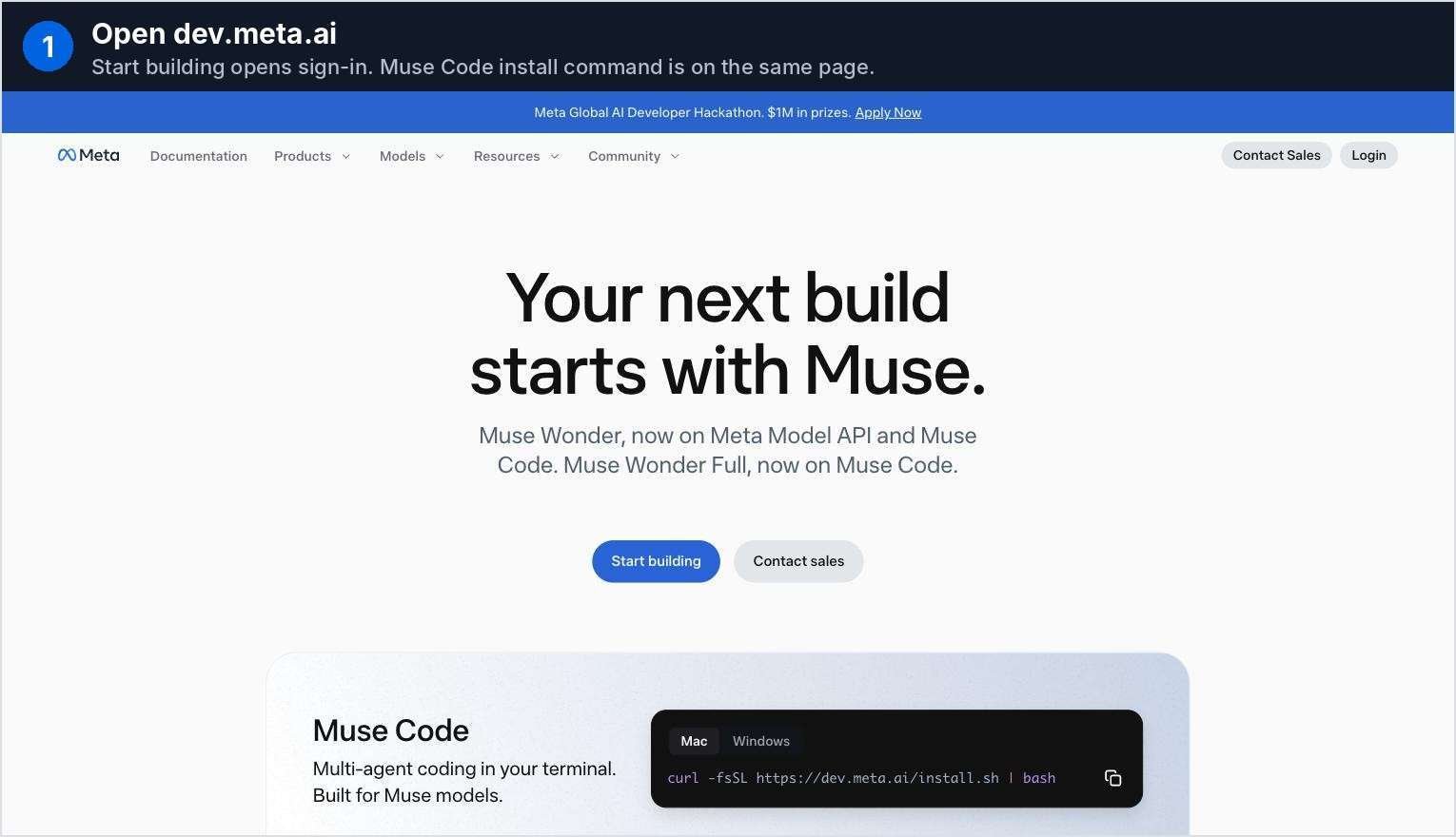
To start using Muse Wonder, developers can visit the Meta developer portal to sign in, set up billing, and generate an API key. The API is compatible with the OpenAI SDK, making it easy to integrate into existing workflows. Alternatively, developers can install the Muse Code CLI and switch to the Muse Wonder model directly from their terminal.
—
## Frequently Asked Questions (FAQ)
**Q: Are Muse Wonder models open source?**
A: No, neither Muse Wonder nor Muse Wonder Full are open weights models. They are closed systems accessible only through Meta’s API and CLI.
**Q: Can Muse Wonder Full be used on the standard API?**
A: No, Muse Wonder Full is limited to the premium paid Muse Code plans and cannot be accessed through the standard Meta Model API pricing tier.
**Q: What types of files can I feed into Muse Wonder?**
A: Muse Wonder accepts text, images, video, and audio as input, making it highly versatile for multimodal tasks.
**Q: How does Muse Wonder compare to Claude Opus 5.5?**
A: While Muse Wonder Full excels in memory retention and certain software engineering benchmarks, Claude Opus 5.5 currently leads in areas like general programming logic (ProgramBench) and desktop agent tasks (OSWorld).
**Q: Are the parameter counts for these models disclosed?**
A: No, Meta has not disclosed the number of parameters for either Muse Wonder or Muse Wonder Full.
—
## Conclusion
Meta’s launch of Muse Wonder and Muse Wonder Full signals a strong commitment to the future of autonomous AI agents. With its massive context window, multimodal capabilities, and unique “Active Memory” and “Active Focus” features, Muse Wonder offers a compelling tool for developers tackling long-term, complex projects. While it may not yet dethrone the competition in every benchmark, its performance in memory and specialized coding tasks positions it as a formidable new player in the AI landscape.
Thank you for reading
