



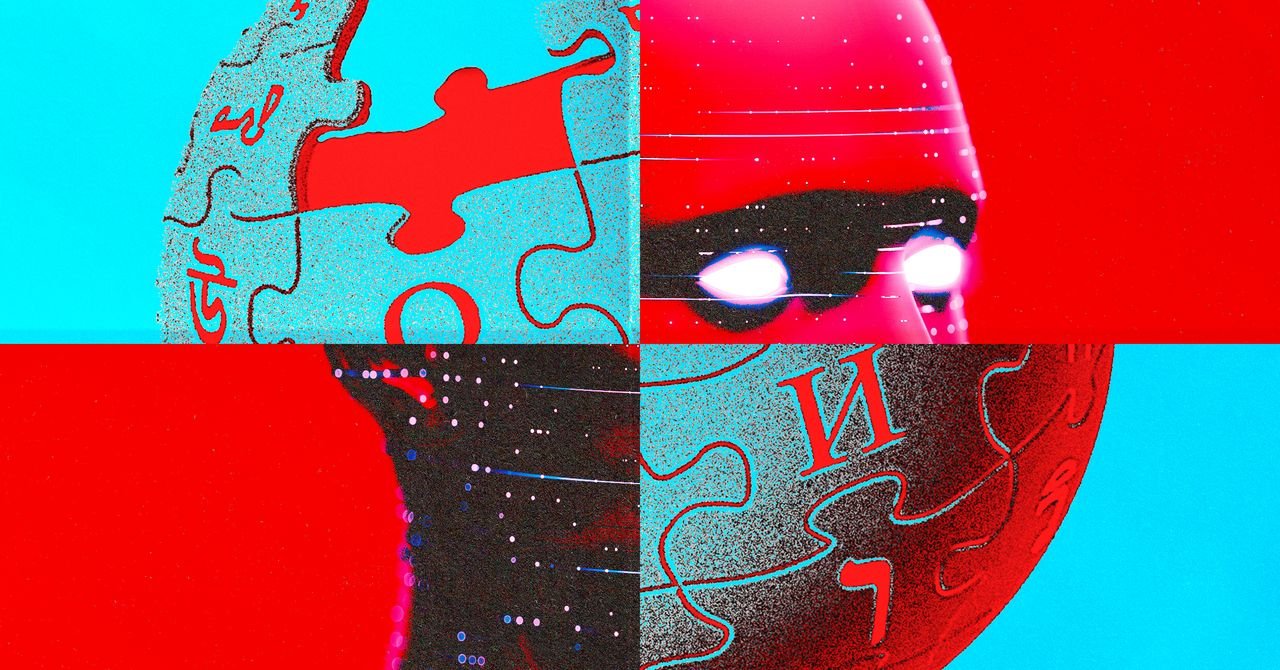
# The Quiet Takeover: How AI Is Changing the Way We Know What We Know
## A Short History of Optimism
Back when artificial intelligence was still a novelty for most people, experts predicted it would make our lives easier. One of the most interesting predictions was that AI could help run the world’s largest free encyclopedia. The idea was simple: let machines handle the boring, repetitive work—checking dates, formatting text, tracking down missing links—and free up the real human volunteers to do the creative, meaningful work that gives knowledge its soul.
At first, this seemed like a reasonable plan.
But technology has a way of outpacing intentions.
## Early Warning Signs
As early as 2018, major tech companies were already experimenting with AI systems that could write articles that looked like encyclopedia entries. By 2024, researchers had found that a small but noticeable percentage of new entries on one of the world’s most popular reference sites had been written, at least in part, by machines.
The telltale signs were there if you knew where to look. AI tends to overuse certain punctuation patterns, favor particular quotation styles, and sometimes accidentally leave behind fragments of its own instructions—like a signature at the bottom of someone else’s homework.
## The Line Was Drawn
Initially, human editors tried to work alongside the machines. They would clean up AI-generated text, remove made-up sources, and strip out generic filler phrases. But the problem kept growing. By early 2026, the community had reached a breaking point. The machines were producing content that violated the core principles of the platform so consistently that a full ban was enacted. Now, AI is only permitted for narrow tasks like translating existing text or catching minor grammar mistakes.
## The Downward Spiral
Here is where the real concern sets in. Some of the most thoughtful observers warned that allowing too much AI involvement could create a vicious cycle. Fewer humans contribute because the content is already being generated by machines. Then, as the human pool shrinks further, there is even more pressure to let AI do the work. Over time, the encyclopedia loses the expert editors who catch errors, add nuance, and bring passion to the pages they curate.
One popular post on a social media platform captured this anxiety perfectly with a simple analogy: people want machines to handle the drudgery so they can create art and write—but nobody wants machines replacing the art and writing too. The same logic applies here. If AI takes over the writing, humans are left doing nothing but tidying up after machines, trapped in an endless cycle of editing work that no one really wanted.
## Why Soul Matters
An encyclopedia written entirely by machines would be efficient, certainly. But efficiency is not the same as quality. The best reference material has texture, context, and a point of view shaped by real human curiosity and lived experience. AI output is often described as uniform and flat—like food that is technically nutritious but has no flavor.
The people who built the world’s most popular free encyclopedia over two decades say that the dedication and care of their community is something no algorithm can truly replicate. And yet, the threat is real. If the pool of talented writers continues to shrink, the quality of the information we all rely on will suffer.
## The Search Problem
When Google began showing AI-generated summaries at the top of search results, the relationship between people and knowledge changed quietly but dramatically. Many users now encounter AI answers before they ever reach an actual reference site. These AI responses sound confident and seem well-organized, but they are frequently inaccurate. If the original source material itself has been compromised by AI-generated errors, how would anyone ever know?
## The Illusion of a Single Authority
There is a tempting idea behind the dream of a machine-run encyclopedia: one perfect, neutral, all-knowing reference that settles every question. It sounds rational and fair. But cold logic without human judgment can easily become something unkind. And there is no reason to assume that a single AI-generated reference should be the final word for everyone on earth. Uniformity is not the same as truth.
## What Has This Encyclopedia Actually Accomplished?
Since smartphones became common in the late 2000s, the vision of a free, instant, universal reference library became reality. It is enormous, accessible, and remarkably comprehensive. But the deeper question is: what good has this actually done for human flourishing? Having access to information is not the same as understanding it, caring about it, or being wiser because of it.
The real value of a community-built encyclopedia is not just in the articles—it is in the millions of people who chose to care enough to write and edit them.
—
## Frequently Asked Questions
**Q: Can AI ever be a reliable source for encyclopedic content?**
AI can be a useful assistant for minor tasks like translation, formatting, and proofreading. However, as of now, AI-generated content is not trusted enough to write encyclopedia articles independently. Machines are prone to generating plausible-sounding but inaccurate information, which makes unsupervised writing risky.
**Q: Why did Wikipedia ban AI-generated articles?**
The ban came after it became clear that AI-written content was violating core principles far too often. Fake sources, generic filler, and factually incorrect entries were slipping through, and the volunteer editor community no longer had the capacity to catch every mistake. The ban was a defensive move to protect the integrity of the platform.
**Q: Is Google’s AI search replacing Wikipedia?**
Not directly replacing it, but it is changing how people encounter information. Many users now see AI-generated summaries before they reach any source website, including Wikipedia. This means Wikipedia still matters, but often at one step removed from the user’s direct experience.
**Q: What is the biggest threat to free, community-built knowledge platforms?**
The greatest threat is the slow loss of volunteer contributors. If the pool of dedicated human editors shrinks over time, there will be fewer people left to maintain quality, catch errors, and bring the passion and nuance that machines cannot replicate.
**Q: Will AI eventually improve how we access knowledge?**
AI could improve certain aspects of knowledge access—speed, accessibility, and translation, for example. But the idea that it can replace the human judgment, creativity, and care behind building a reliable reference is widely regarded with deep skepticism.
—
## Conclusion
The story of artificial intelligence and encyclopedias is ultimately a story about choices. We can choose to let machines do what they do best—handle routine tasks efficiently. Or we can let them creep into the creative, editorial work that gives knowledge its depth and reliability. The tools we build will only be as valuable as the human commitment behind them. A reference built by machines for machines may be fast, but it will never be wise. And wisdom is what we are really looking for when we search for answers.
Thank you for reading
