



# Revolutionizing Global Hardware Production: AI and Algorithmic Optimization in Modern Manufacturing
Modern semiconductor manufacturing operates at a scale that defies traditional management. With global production facilities relying on thousands of suppliers, the logistics of moving a product from raw silicon to a finished data center system require unprecedented coordination. Companies are now turning to advanced artificial intelligence and algorithmic optimization to navigate this intricate web of dependencies, ensuring that every compute tray, processor, and memory module arrives exactly when needed.
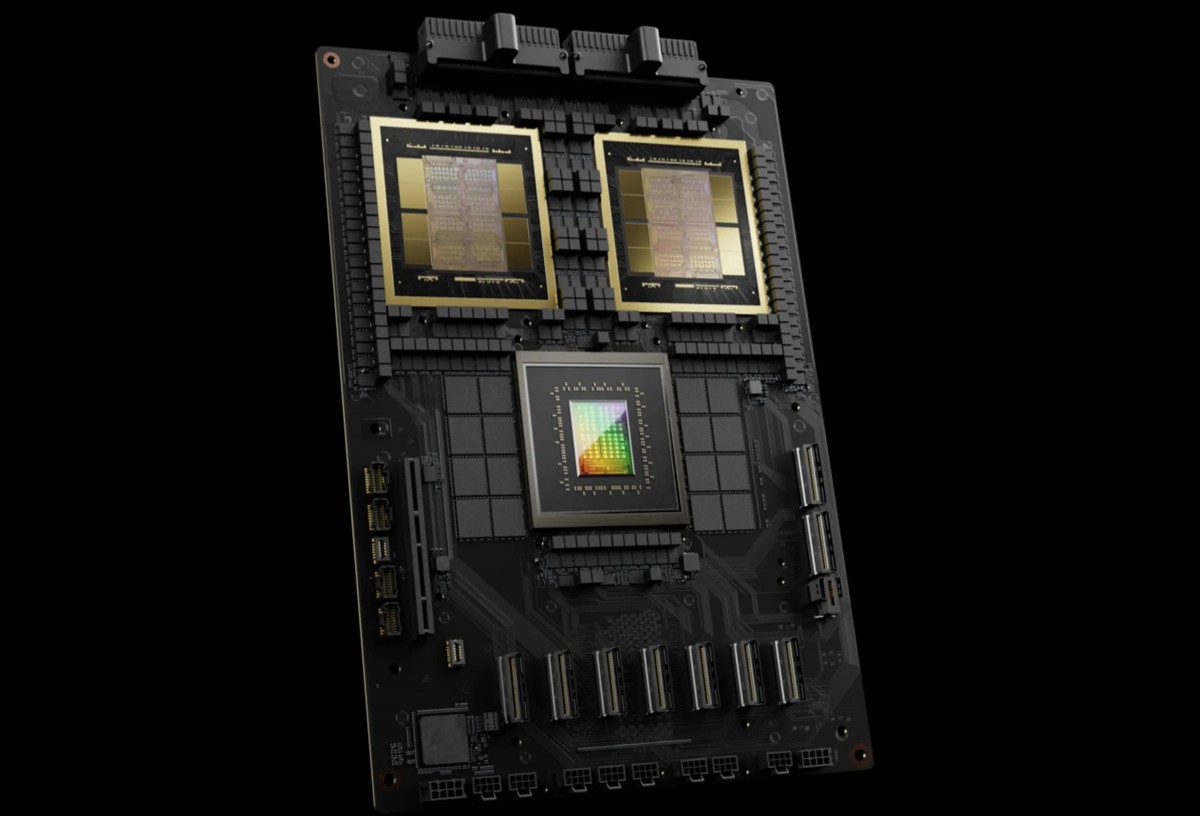
To understand the magnitude of the challenge, consider the architecture of a single high-performance computing rack. These units contain multiple compute trays, each demanding a precise combination of central processors, graphics accelerators, and high-bandwidth memory components sourced from a global network of suppliers and design partners. As organizations develop next-generation hardware platforms, the required supply network is expanding, doubling in complexity compared to previous generations. Assembly lines cannot move forward until critical components arrive through designated supply channels, whether from direct inventory, consignment arrangements, or external vendors. When a single essential part is delayed, the entire production timeline stretches, a metric often referred to in the industry as the duration between receiving raw materials and shipping finished sub-assemblies.
To manage these weekly rolling allocation horizons, operations teams are deploying specialized digital command centers. These platforms map out facilities, supplier commitments, component stocks, and production targets as interconnected nodes. By feeding this operational data into a GPU-accelerated optimization engine, planners can formulate complex distribution models as mixed-integer linear programs. The objective is straightforward: minimize the time between material receipt and shipment. The solver evaluates constraints across every tier of the bill of materials, not only generating weekly delivery schedules but also pinpointing active factory bottlenecks, such as regional assembly capacity limits conflicting with raw material availability.
Mathematical optimization, however, cannot account for the chaotic reality of global logistics. Human planners rely on qualitative variables—supplier call transcripts, regional weather forecasts, partner email threads, and shifting geopolitical landscapes—that traditional algorithms ignore. To bridge this gap, organizations are fine-tuning open-weight Mixture-of-Experts language models on historical operational records. By processing years of planning data through privacy-preserving pipelines and balancing real-world examples with synthetic disruption scenarios, these models learn to interpret the unstructured context that dictates supply chain realities. The fine-tuning process keeps base model weights frozen while applying low-rank adaptations to ensure the model remains specialized and efficient, even running on relatively modest hardware accelerators.
The results of this hybrid approach have been striking. Fine-tuned models have demonstrated massive leaps in allocation accuracy, significantly outperforming both larger, un-tuned counterparts and their base versions. In production environments, the AI achieves high accuracy in predicting optimal allocation paths, though forecasting long-term production risks remains a challenge. Continuous learning is baked into the system: operational choices, planner overrides, and observed factory outputs are fed back into the central data architecture. This feedback loop is designed to eventually train reinforcement learning systems that score recommendations based on allocation precision and compliance. However, strict isolation protocols ensure that production models never undergo live, unmonitored retraining, maintaining safety and reliability in high-stakes manufacturing environments.
### Frequently Asked Questions
**Q: Why is hardware supply chain management so complex?**
A: High-performance computing hardware requires thousands of specific components—such as processors, accelerators, and memory modules—sourced from a vast global network of suppliers and design partners. A delay in a single component can halt the assembly of an entire rack, making precise, real-time coordination essential.
**Q: What is the primary goal of the optimization models used in manufacturing?**
A: The primary objective is to minimize the duration between a facility receiving raw materials and finished sub-assemblies departing for final assembly. By doing so, manufacturers can accelerate the transition from production line to operational data center systems.
**Q: How do AI models handle unpredictable real-world factors like weather or geopolitics?**
A: Unlike traditional mathematical models, specialized AI systems are trained on qualitative operational records, including email exchanges, weather forecasts, and geopolitical events. This allows the models to factor in unstructured, real-world disruptions when recommending allocation schedules.
**Q: What safety measures prevent AI from disrupting live production?**
A: While AI recommendations are continuously evaluated and refined using historical and synthetic data, production models remain strictly isolated from live and unmonitored retraining. Human oversight and validation steps ensure that automated scheduling adjustments do not introduce new risks to the manufacturing process.
### Conclusion
The integration of GPU-accelerated mathematical optimization and specialized artificial intelligence models is reshaping how global hardware is manufactured and delivered. By combining rigorous constraint-based scheduling with the nuanced understanding of qualitative, human-driven data, modern manufacturing operations can navigate unprecedented levels of complexity. As supply networks continue to grow in scale, this hybrid approach of human oversight backed by advanced algorithms will be critical for keeping the world’s most advanced technology moving from the factory floor to the data center.
Thank you for reading
