



# Why the Costliest Wildfire Season Isn’t Necessarily the Biggest: A New Era of Fire Management Needs New Tools
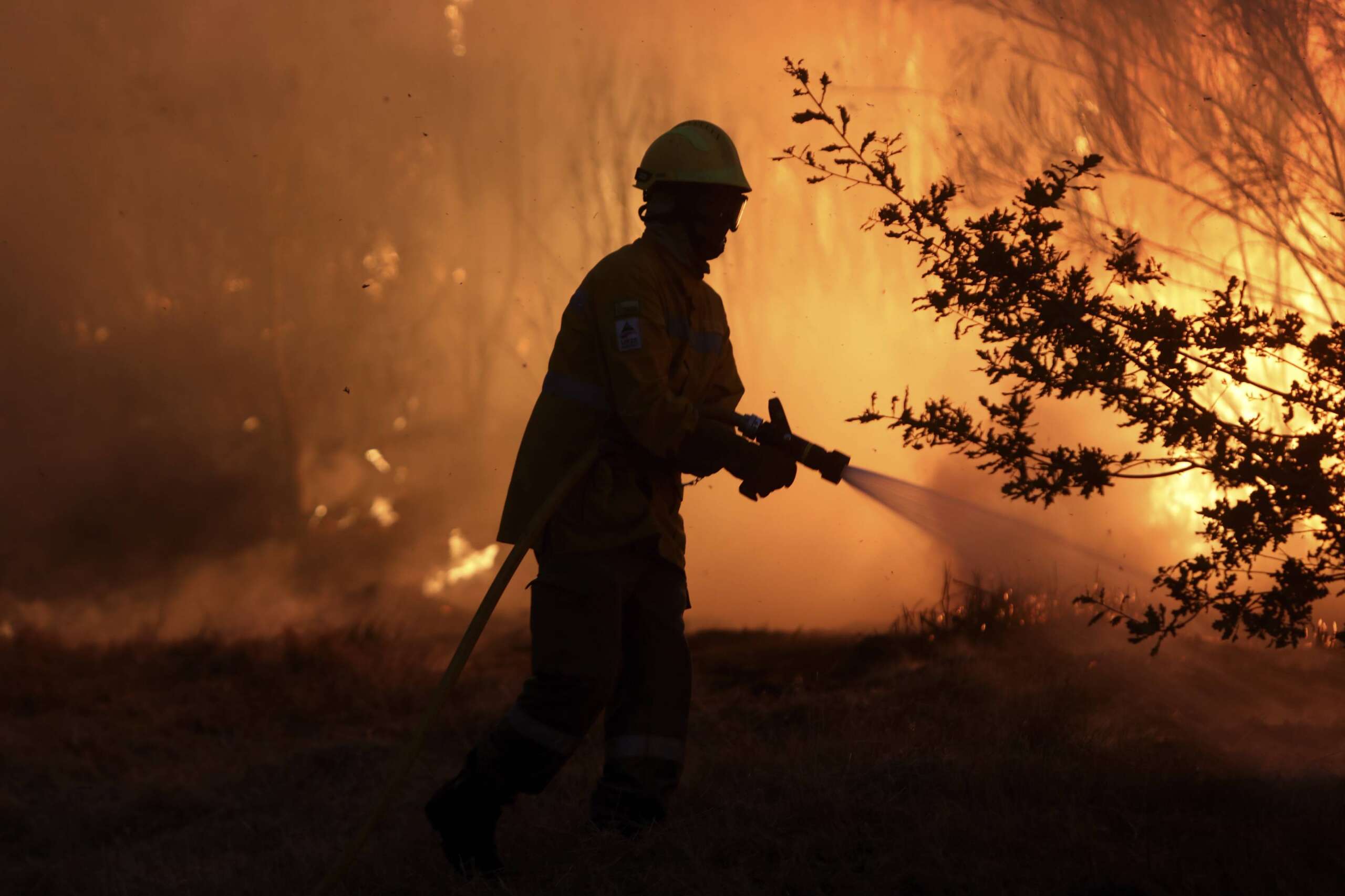
Wildfire disasters around the world are teaching a sobering lesson: the sheer number of acres lost tells only part of the story. In recent years, fire seasons that burned less land overall have nevertheless produced greater economic losses, more destroyed communities, and more strained emergency response systems than their more expansive predecessors. This shift is reshaping how scientists, policymakers, and fire management professionals think about risk — and about the tools needed to confront it.
## A Changing Threat Landscape
The modern wildfire environment is defined by accelerating development in fire-prone areas, more frequent periods of extreme drought, and climate-driven shifts in weather patterns. When a fire ignites near a growing population or near critical infrastructure such as power grids, water systems, or transportation corridors, the consequences can far exceed what historical acreage-based metrics would predict.
Smoke and embers from large fires have also demonstrated the ability to travel across international borders, degrading air quality in regions hundreds of miles from the original blaze. This interconnected impact means that wildfire preparedness can no longer be treated as a local or regional concern alone — it is a shared challenge with global dimensions.
## The Speed Factor
One of the most daunting aspects of wildfire behavior is its velocity. Under the right combination of drought conditions, high temperatures, low humidity, and powerful winds, a fast-moving fire front can advance at astonishing speeds, sometimes giving residents and responders mere minutes to act. These conditions can shift evacuation routes, overwhelm containment strategies, and exhaust available resources in a matter of hours.
Traditional wildfire management practices remain vital. Firefighters, controlled burns, and established land management techniques form the backbone of any credible defense strategy. But the increasing complexity and speed of modern fire events demand supplementary capabilities that can process vast amounts of information and generate actionable insights faster than human teams alone can manage.
## Emerging Technologies in Fire Prevention and Response
A growing portfolio of advanced technologies is showing promise across every phase of wildfire management — from early detection to real-time response and long-term planning.
**Early Detection with AI-Enhanced Monitoring**
Networks of intelligent camera systems powered by artificial intelligence are being developed to identify smoke plumes or ignition points far earlier than traditional watchtower or satellite-based methods. Earlier detection translates directly into faster response times, which can mean the difference between a contained incident and an unfolding disaster.
**Aerial and Ground-Based Mapping**
Unmanned aerial vehicles — commonly referred to as drones — can fly into areas that are too dangerous or inaccessible for manned aircraft. They can map fire perimeters in real time, track how a blaze is spreading, and relay updated terrain and fuel data to incident commanders. This capability is especially valuable during nighttime operations or in heavily forested regions where visibility is limited.
**Predictive Modeling**
Advanced computer models that simulate fire behavior using real-time weather data, fuel moisture levels, and topography are helping planners anticipate how a wildfire might evolve over the coming hours or days. These models allow decision-makers to pre-position resources and issue more accurate evacuation warnings.
**Quantum Computing for Optimization**
Perhaps one of the most forward-looking tools is quantum computing, which is uniquely suited to solving complex optimization problems that involve many interacting variables. In wildfire management, quantum computing techniques have been applied to determine the most strategic placement of fuelbreaks — strips of land where vegetation is removed or reduced to slow a fire’s advance. In practical tests, these quantum-powered approaches compared favorably with conventional methods, and they offered land managers greater flexibility to balance competing goals such as minimizing land disruption, protecting communities, and maintaining ecological health.
These technologies are not intended to replace the expertise of firefighters, forest ecologists, or emergency planners. Rather, they serve as force multipliers — enhancing the speed, precision, and effectiveness of the people and practices already on the front lines.
## Policy and Collaboration
Recognizing the urgency of these technological opportunities, government leaders in multiple countries have begun taking steps to accelerate their adoption. Executive directives have been issued calling for federal agencies to integrate advanced detection and response technologies into their wildfire management programs. Legislative proposals have moved through parliamentary and congressional processes, aiming to create pathways for private-sector innovation and public-sector deployment to work together.
Those proposals emphasize the importance of real-world testing. Technologies developed in laboratories must be tested under actual field conditions — alongside existing hazardous fuels reduction projects, training exercises, and live incident responses — before they can be scaled into routine operations. Collaboration between technology developers and operational agencies is essential for bridging the gap between innovation and implementation.
## Looking Ahead
The challenge of wildfire management is not going to diminish. Climate trends, land-use changes, and expanding communities in fire-prone regions all point toward a future in which the demand for smarter, faster, and more precise wildfire response will continue to grow. Investing in technology today is an investment in the resilience of communities, ecosystems, and economies that are already under pressure.
The time to build, test, and refine these tools is now — so that they are ready to be deployed the moment they are needed.
—
## Frequently Asked Questions (FAQ)
**Q: Why can a wildfire season with fewer acres burned still be more costly?**
A: The economic impact of wildfires depends heavily on where fires occur, not just how much land they consume. Fires that reach densely populated areas, critical infrastructure, or high-value natural resources can cause disproportionate damage relative to their size.
**Q: What role does climate play in increasing wildfire risk?**
A: Prolonged drought, higher temperatures, reduced humidity, and shifting weather patterns all contribute to drier vegetation and more fire-prone conditions. These factors can also cause fires to spread more rapidly once ignited.
**Q: How do AI-powered detection systems work?**
A: AI-enhanced camera networks analyze visual data continuously, looking for signs of smoke or fire. When a potential ignition is detected, alerts are sent to response teams, often faster than traditional reporting methods.
**Q: Can quantum computing really help with wildfire management?**
A: Quantum computing is particularly effective at solving optimization problems with many variables. In wildfire contexts, it has been used to calculate the best placement of fuelbreaks, balancing protection goals with environmental and land-use considerations.
**Q: Will technology replace firefighters and land managers?**
A: No. Technology is designed to complement and enhance the work of trained professionals. It provides better information, faster, so that firefighters and land managers can make smarter decisions with limited resources.
**Q: Why is bipartisan support important for wildfire policy?**
A: Wildfires do not respect political boundaries or partisan lines. They affect rural and urban communities, public and private lands, and national economies alike. A sustained, bipartisan approach ensures that technological investments are stable and long-term rather than dependent on short-term political cycles.
**Q: How can communities prepare for wildfires beyond relying on new technology?**
A: Communities should maintain defensible space around structures, use fire-resistant building materials, participate in local evacuation planning, and stay informed about fire danger ratings in their region. Personal preparedness remains a critical layer of defense.
—
## Conclusion
The era of measuring wildfire severity solely by acres burned is coming to an end. As fires grow more destructive and more complex in their impacts, the need for smarter, technology-driven approaches to detection, prediction, and response becomes increasingly clear. From artificial intelligence cameras to quantum computing optimization, the tools are becoming available — but only if governments, private companies, and communities commit to investing in them, testing them, and deploying them at scale. The cost of inaction is measured not just in dollars, but in homes, lives, and landscapes that cannot be replaced.
Thank you for reading
