



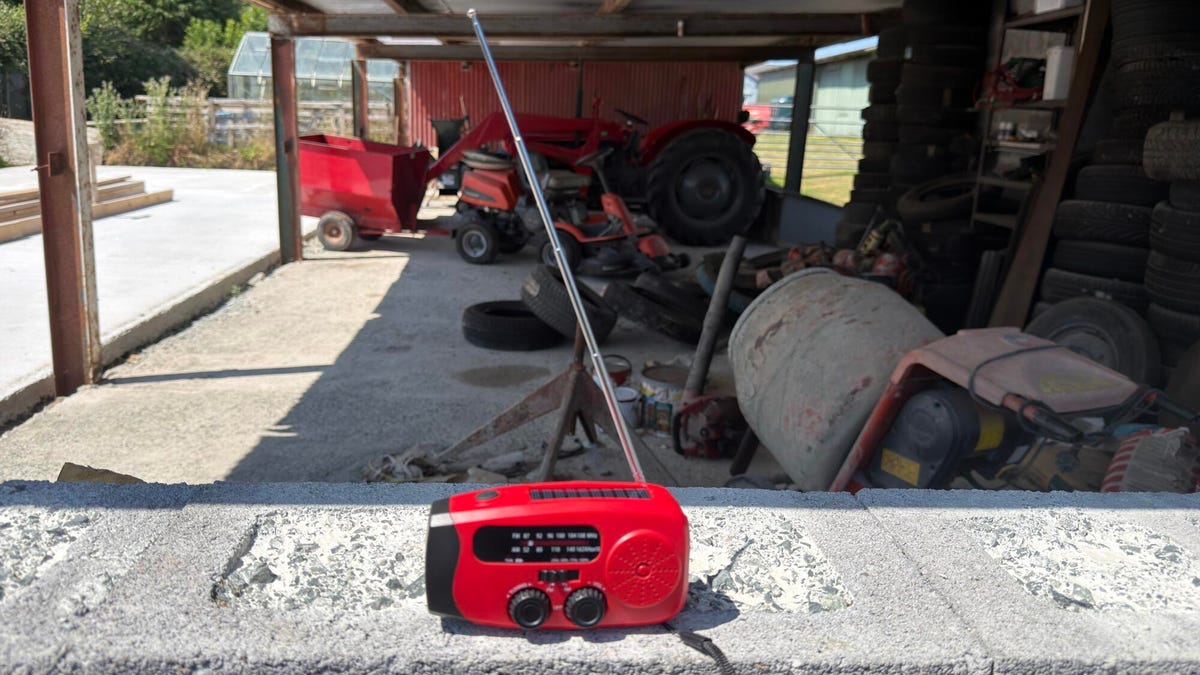
**Emergency Solar Hand Crank NOAA/AM/FM Radio Review: Is It Worth the Buy?**
In an age dominated by 5G, satellite internet, and smartwatches that can make calls, the humble AM/FM radio might seem outdated—relic of a bygone era when dinosaurs roamed (or so we think). Yet, when emergencies strike, these “old-school” devices prove their worth. With wildfires, storms, and power outages becoming all too common, having a reliable radio is as essential as storing water, food, and first-aid supplies.
This review takes a closer look at a popular budget-friendly emergency radio—an Amazon-recommended device that promises AM/FM reception, NOAA weather alerts, solar charging, and even a hand crank for backup power. Priced under $15, is it a worthy addition to your emergency kit? Let’s find out.
—
### **Key Features at a Glance**
This compact radio packs a surprising number of features for its price:
– **Tri-source charging:** USB-C, solar panel, and hand crank
– **Multiple bands:** AM, FM, and NOAA weather radio
– **Built-in power bank:** Can charge small devices in emergencies
– **Integrated flashlight:** 3 LED levels, including a surprising SOS siren
– **Portability:** Lightweight (0.51 lbs) and compact (5.1 x 2.1 x 2.4 inches)
– **Durability:** IPX3-rated (splash-resistant, not waterproof)
—
### **Pros and Cons**
#### ✅ **Pros**
– **Affordability:** Competitively priced at around $14
– **Versatile charging options:** Ideal for long-term emergencies
– **Strong reception and sound quality:** Loud, clear speaker with good tunability
– **Dual functionality:** Works as both radio and power bank
– **Includes NOAA weather band:** Critical for real-time emergency updates in the U.S.
#### ❌ **Cons**
– **No headphone jack:** Limits private listening
– **Hand cranking is slow:** Requires significant effort for minimal power
– **Power bank is limited:** Too small for full smartphone charges
—
### **Why You Need an Emergency Radio**
The FCC mandates that AM and FM stations broadcast Emergency Alert System (EAS) messages, including severe weather warnings, AMBER alerts, and civil emergencies. But beyond AM/FM, the **NOAA weather band** is indispensable—it provides 24/7 updates from the National Weather Service, covering 90% of the U.S.
Unlike standard radios, NOAA weather radios are dedicated to emergency broadcasts, ensuring you stay informed when cell towers fail or internet access is lost.
—
### **Charging: Sun, Crank, or Plug**
– **USB-C:** The fastest option, fully charging the radio in about 4 hours
– **Solar panel:** Effective but slow—requires steady sunlight and repositioning throughout the day for optimal charge
– **Hand crank:** A true workout. Five minutes of vigorous cranking yields about 20 minutes of radio use—best reserved for true emergencies
While the solar and crank options are impressive for sustainability, they’re not practical for regular use. Still, they provide peace of mind when the power grid goes down.
—
### **The Radio Performance**
Despite its low price, this radio delivers:
– Clear, powerful audio
– Smooth volume control
– Reliable tuning across AM, FM, and NOAA bands (U.S. models)
– Long battery life (4–5 hours on a full charge)
It’s not a powerhouse, but it’s more than capable for emergency communication and background news updates.
—
### **Final Verdict and Buying Advice**
At under $20, this solar hand crank radio is a smart, affordable addition to any emergency kit. While the power bank and hand crank are no substitute for modern conveniences, they’re invaluable during prolonged outages. The NOAA weather band alone makes it worth the purchase for U.S. residents.
However, if you’re serious about emergency preparedness and want advanced features like stronger batteries, multiple power options, or rugged durability, consider investing in a higher-end model like the **Midland ER310**.
For most people seeking a reliable, low-cost “just-in-case” solution, this budget radio does exactly what it promises.
—
### **FAQ**
**Q: Does this radio work outside the United States?**
A: Yes, but the NOAA weather band may not be available depending on your region. Some models are region-specific, so check before purchasing.
**Q: How long does the battery last?**
A: Approximately 4–5 hours on a full charge, depending on usage and brightness level.
**Q: Can I use it while charging?**
A: Yes, the radio can operate while charging via USB-C or solar.
**Q: Is the hand crank difficult to use?**
A: It requires significant manual effort—about 30 minutes of cranking to achieve a quarter charge. It’s functional but not efficient.
**Q: Is it waterproof?**
A: No, it’s IPX3-rated, meaning it’s resistant to light splashes but not immersion in water.
—
### **Conclusion**
In a world of constant connectivity, it’s easy to overlook simple tools that keep us safe when systems fail. This emergency solar hand crank radio reminds us that resilience doesn’t always have to be high-tech—sometimes, it’s as simple as a crank, a panel, and a dial. For under $15, it offers reliable emergency communication, essential weather updates, and multiple charging options. Whether you’re a casual prepper or simply want peace of mind, this radio is a small investment with potentially big returns.
