



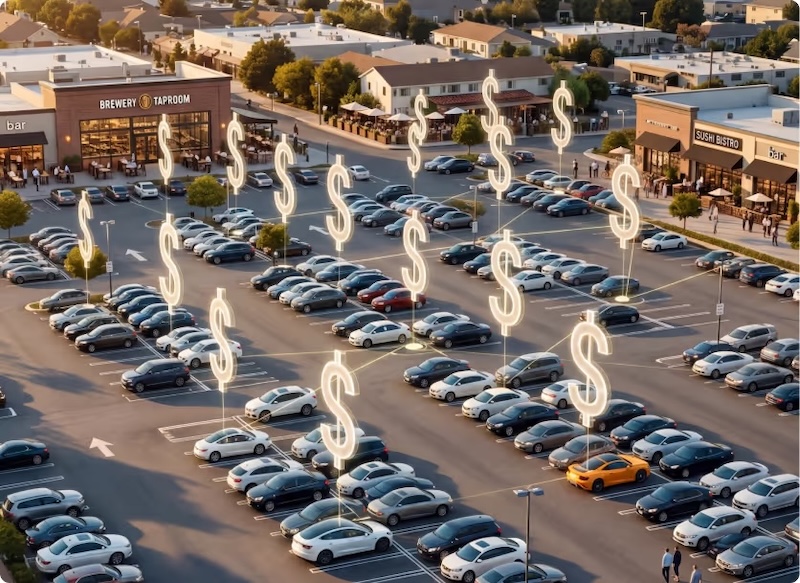
**Transforming Parking Operations: How Data-Driven Pricing and Digital Tools Boost Revenue and Efficiency**
Parking is often treated as a static utility—flat rates, fixed hours, minimal oversight. But that mindset overlooks a critical truth: **parking demand fluctuates with events, work patterns, weather, and nearby activity**. Treating every hour of parking as equally valuable leaves money on the table and strains operational resources. Forward-thinking operators are now adopting smarter tools that align pricing, access, and enforcement with actual demand—turning parking into a measurable, revenue-optimizing asset.
—
### The Hidden Problem: Revenue Gaps in Traditional Parking Models
Many parking facilities operate on outdated assumptions, leading to two common pitfalls:
– **Underpricing during peak demand**: Busy lots filled with event-goers, commuters, or travelers generate significant revenue—only to see it slip away due to low or flat rates.
– **Overpricing during slow periods**: When demand dips, rigid pricing can drive customers away, reducing utilization and overall yield.
Without real-time insight into usage patterns, operators can’t adjust quickly. The result? Lost income, inefficient labor, and frustrated users.
A modern **parking management system** changes this by integrating pricing, access control, payments, and enforcement with live usage data. This gives operators the visibility to capture fair revenue from every space—without adding staff at the gate.
—
### Smarter Pricing That Reflects Real Demand
One-size-fits-all pricing is outdated. Demand varies by user type:
– Commuters
– Restaurant and retail visitors
– Airport travelers
– Event and stadium crowds
Each group behaves differently, so parking strategy should too. Instead of a fixed rate, flexible rules allow managers to:
– Increase prices during high-demand windows
– Lower rates to boost occupancy during off-peak times
– Encourage longer stays when appropriate or turnover when needed
This dynamic approach balances **maximum revenue** with **high space utilization**—without compromising accessibility.
—
### Faster, Frictionless Payments That Improve Cash Flow
Slow or complicated payment processes cost revenue. When kiosks are slow, cards are declined, or instructions are confusing, drivers abandon payment—often unintentionally.
Modern parking systems streamline this with:
– Mobile-friendly checkout
– Text-based payment links
– QR code scanning
– Contactless options
Each transaction ties together:
– License plate data
– Session time
– Payment details
This not only speeds up payment but also creates a clean audit trail—reducing disputes and simplifying reconciliation.
—
### Reducing Hardware Costs and Dependence on Physical Infrastructure
Traditional hardware—gates, ticket printers, kiosks, cash boxes—comes with significant costs:
– Upfront investment
– Ongoing maintenance
– Periodic replacements
– Risk of downtime
A single stalled machine can create backups within minutes.
Mobile-led payment reduces reliance on physical infrastructure. Staff spend less time handling cash and machines, and more time supporting customers and managing exceptions. The result? **Lower operational risk, fewer service interruptions, and stronger net income**.
—
### Leaner Staffing, More Strategic Oversight
Manual payment collection ties up staff in repetitive, time-sensitive tasks—scheduling, cash handling, counts, and security. During busy events or rush hours, this becomes unsustainable.
Digital tools shift attendants’ roles toward:
– Customer support
– Exception handling
– Enforcement based on verified data
This improves efficiency, protects margins during all demand levels, and reduces human error.
—
### More Consistent, Data-Driven Enforcement
Unpaid parking often seems minor—until monthly reports reveal significant losses. Automated tools improve compliance through:
– License plate recognition
– Timestamped entries and exits
– Photo documentation
– Expiration alerts
Drivers receive reminders before time runs out, encouraging voluntary payment. When violations occur, staff have clear evidence—reducing conflicts and supporting fair, consistent enforcement.
—
### Real-Time Visibility for Faster Decision-Making
Delayed reports mean reactive decisions—and lost revenue. Live dashboards now provide instant insight into:
– Space occupancy
– Payment volumes
– Permit usage
– Violation trends
– Location-specific performance
Managers can:
– Adjust pricing on the fly
– Respond to event surges
– Compare site performance in real time
Quick access to accurate data means quick corrective action—especially important during short, high-value demand windows.
—
### Capturing Event Revenue Without Chaos
Events compress parking activity into a few high-intensity hours. Without preparation, operators risk lost income and chaos at entry.
Effective strategies include:
– Pre-sold parking passes
– Temporary, event-based pricing tiers
– Digital entry tracking
– Pre-scheduled staffing plans
This reduces cash handling, improves customer flow, and ensures accurate revenue tracking—plus clearer post-event settlements with partners or vendors.
—
### Parking as a Strategic Asset, Not a Cost Center
When payment, pricing, and enforcement are modernized, parking’s role changes. What was once seen as a support function can become a **value driver**:
– Higher net operating income
– Improved tenant and guest satisfaction
– Easier permit management and validation
– Stronger asset valuation
Better parking performance contributes to the overall financial health of the property—making it easier to justify investment and attract quality tenants.
—
### Building a Culture of Accountability Through Reporting
Reliable reporting transforms parking from intuition-based operations to a disciplined business function. Useful metrics include:
– Daily revenue
– Average ticket value
– Occupancy rates
– Refunds and waivers
– Violation and permit trends
– Event performance
These figures help operators test pricing changes, spot inefficiencies, and compare locations. Over time, data-driven decisions replace guesswork—leading to continuous improvement.
—
### Improving the Customer Experience While Increasing Compliance
Better revenue control doesn’t have to mean a worse experience. In fact, clarity and convenience **increase compliance**:
– Clear, visible signage
– Simple, fast payment steps
– Accurate permit enforcement
– Timely reminders and notifications
When drivers understand the process and trust its fairness, they’re more likely to pay promptly—and return in the future.
—
### Scaling Parking Operations Across Multiple Locations
Growth becomes difficult when every site uses different tools, processes, or pricing structures. A unified platform enables:
– Consistent rates and roles
– Standardized reporting
– Centralized enforcement oversight
– Local flexibility where appropriate
This makes training easier, improves comparability, and supports efficient expansion—without adding administrative burden.
—
### Conclusion: Parking Done Right
A stronger parking operation starts with **visibility, discipline, and alignment with real-world demand**. Owners can boost revenue from existing spaces while reducing waste in staffing, hardware, and manual processes.
Pricing should reflect actual usage. Payments should be fast and fair. Enforcement should be consistent and documented. And reporting should turn every day’s activity into actionable insight.
When these elements work together, parking stops being an overlooked cost center and becomes a **measurable, valuable asset**.
—
**Original Source:**
Parking demand rarely moves in a straight line. It rises before events, dips during slow workdays, and changes again by weather, access, and nearby activity. Many operators still price spaces as if every hour carries equal value. That approach leaves income uncollected and labor stretched thin. Better tools give owners clearer visibility, tighter controls, and practical ways to manage parking as a revenue-producing asset.
[https://www.paycomm.net/transforming-parking-operations-how-data-driven-pricing-and-digital-tools-boost-revenue-and-efficiency/](https://www.paycomm.net/transforming-parking-operations-how-data-driven-pricing-and-digital-tools-boost-revenue-and-efficiency/)
