



**Article: SGP.32-Compatible eSIMs Signal a Shift to Enterprise Orchestration in Cellular IoT**
The landscape of cellular connectivity for IoT devices is evolving beyond simple data plans. The growing complexity of global deployments—spanning manufacturing, regulatory compliance, and long-term maintenance—has created a demand for more sophisticated lifecycle management. In response, Soracom has moved its SGP.32-compatible IoT eSIM and Connectivity Hypervisor orchestration capability from pre-order to commercial availability.
This release marks a significant step for IoT fleets that require remote SIM profile control across different regions, operators, and extended device lifecycles. For many modern connected products, the SIM card is no longer just a connectivity component; it is a critical asset in the device’s operational lifecycle. Devices may be built in one country, activated in another, and then moved across borders, all while needing to maintain service long after initial commercial roaming agreements have changed.
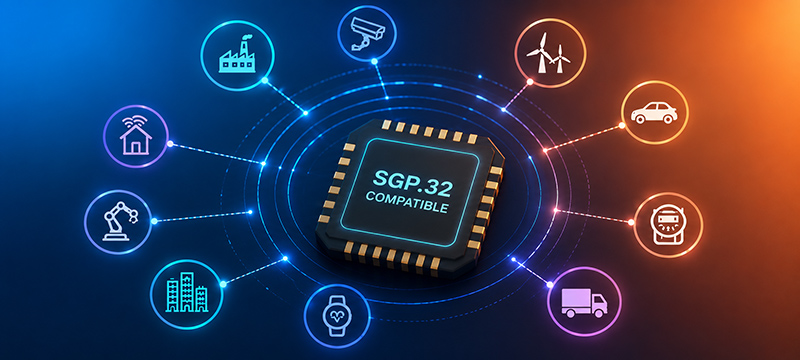
SGP.32, a GSMA remote SIM provisioning standard designed specifically for IoT, is central to this shift. Unlike earlier eSIM standards, which were often tailored for automotive use cases or assumed the presence of a user interface, SGP.32 is built for “headless” devices that lack screens and local user interaction. It is designed to allow enterprises to manage which connectivity profiles are active and when, a capability particularly relevant for vehicles, utility meters, asset trackers, and connected medical devices that are expected to function for many years.
Soracom’s implementation combines these SGP.32-compatible eSIMs with its Connectivity Hypervisor, which utilizes SGP.32 eSIM IoT Manager functionality to add, remove, manage, and switch between multiple operator profiles on remote SIMs and eSIMs. The system is built on standard eUICC, eIM, and SM-DP+ components and is compatible with third-party mobile network operator profiles.
What sets this release apart is its focus on orchestration rather than just programmability. While many eSIM announcements highlight global coverage or programmability, Soracom is positioning this offering around the ability to manage multiple connectivity profiles through an API and console. This links remote SIM provisioning with automation rules based on deployment region, regulatory requirements, or specific application needs.
The practical implication is that connectivity planning can become a software-controlled lifecycle process. Original Equipment Manufacturers (OEMs) can now manufacture a single SKU and switch connectivity profiles later in the field, rather than producing different variants for different countries or operators. This does not eliminate the need for operator agreements, but it shifts the decision-making point from production planning to operational profile management.
However, it is important to note the boundaries of this orchestration. While Soracom’s Connectivity Hypervisor aims to provide unified management of connections from multiple operators through a single control plane, broader availability for end customers depends on partner operators completing profile integrations for resale through the Soracom platform. The architecture is designed for multi-operator control, but its practical reach will be determined by operator-side integration.
For OEMs, the most immediate benefit is SKU simplification and the flexibility to ship devices before finalizing the connectivity profile. For enterprises and industrial users, the appeal lies in treating connectivity profiles as managed assets that can be switched based on geography, regulation, or application. System integrators may also benefit from the API-based approach, which can reduce custom provisioning logic when deploying devices across multiple countries.
Ultimately, Soracom’s commercial availability reflects a broader transformation in cellular IoT: remote provisioning is moving from a telecom back-office function into the enterprise IoT operations stack. While this shift does not make every deployment simple, it provides device owners with a more flexible mechanism to manage connectivity across long-lived, unattended fleets.
***
**Citation:**
Kavinsky, M. (n.d.). *Soracom Brings SGP.32 IoT eSIM Orchestration to Commercial Availability*. IoT Business News. Retrieved from https://iotbusinessnews.com/WordPress/wp-content/uploads/2026/07/SGP32-eSIM.jpg
