



Follow ZDNET: Add us as a preferred source on Google.
Top points from ZDNET
- Nations across the globe are looking to reduce their dependence on American technology firms.
- Open source serves as the foundation for achieving digital independence.
- The US is against the push for digital sovereignty, though this stance finds little support beyond its borders.
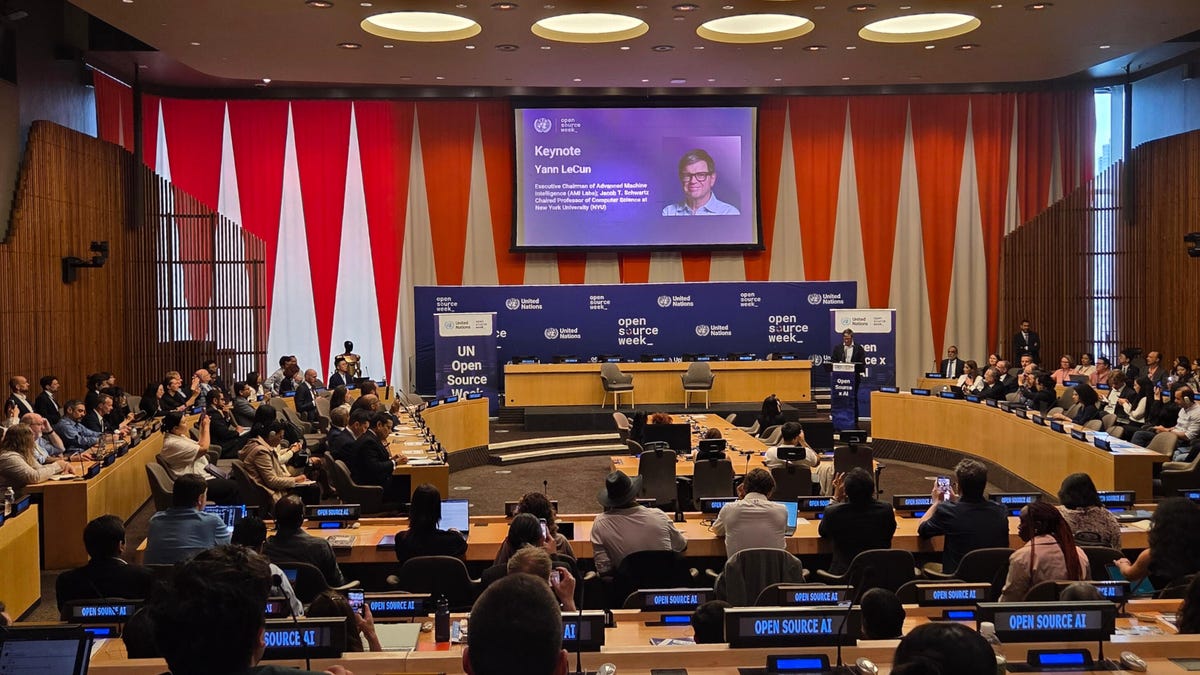
NEW YORK – During the United Nations Open Source Week, the idea of digital sovereignty shifted from being a mere policy catchphrase to becoming a concrete action plan. Ministers and technology experts spanning Germany, Ireland, Morocco, Tanzania, and numerous other nations detailed how open source, interoperability, and open AI are turning into prerequisites for nations seeking control over essential digital systems.
The new understanding is that digital sovereignty isn’t about constructing entirely separate national technology systems, but rather about having ownership of data and infrastructure along with the flexibility to switch vendors and models without disrupting vital services. They further concurred that open standards and open source represent the only viable path forward.
Also: 98% of IT leaders seek digital sovereignty: SUSE is making it a reality for businesses worldwide
The push for digital sovereignty extends well beyond Europe. Many countries in the Global South have grown weary of relying exclusively on the ecosystems provided by Microsoft, Google, or Amazon Web Services.
Tanzania: ‘Moving from passive recipients to active builders’
Tanzania provided the most vivid and actionable definition of digital sovereignty throughout the event. Angellah Jasmine Kairuki, Tanzania’s Minister for Legal and Constitutional Affairs, began her address with a direct and pointed question: “Who genuinely owns the systems that our citizens rely on?” For far too many nations, she noted, the reality has been “a license authored by someone else, a platform whose inner workings we cannot examine, a reliance on external parties that we are unable to sever.”
Kairuki presented Tanzania’s embrace of open source as a transition “from being passive recipients of technology… to becoming active creators of technology,” and contended that “this captures what digital sovereignty truly looks like – not isolation, but sovereignty over our own systems; not subservience, but partnerships defined on our own conditions.”
Also: How sovereign is your digital posture? This Red Hat solution delivers an answer in minutes
She reinforced her words with concrete statistics: over 90% of Tanzania’s government-run systems are now powered by open-source solutions, supported by a legal foundation that encompasses the 2020 e‑Government Authority Act, a Personal Data Protection Act enacted in 2023, cybercrime legislation, and domain-specific regulations – all centered on shared national infrastructure and open interfaces.
The country has additionally redirected spending from proprietary software licenses toward developing its own people. Kairuki reported that Tanzania has equipped approximately 500 public servants as “a collaborative network of digital creators – citizens developing solutions for fellow citizens” – who run and continuously refine the systems they build.
Her message directed at fellow Global South governments was unambiguous: with appropriate governance, committed leadership, and a skilled workforce, “establishing autonomous digital infrastructure isn’t something only wealthy nations can accomplish – it’s attainable for every country willing to make that choice.”
Sovereignty in AI
In the AI arena, Sergio Gago, the CTO of Cloudera in Germany, addressing a gathering focused on AI sovereignty and interoperability, cautioned that when data, infrastructure, and control are heavily consolidated among a small number of providers, any AI system built on top of that foundation will “simply replicate all those underlying biases more rapidly and at an even larger scale,” and he argued that “we tend to talk as if AI starts with models… but it doesn’t. It starts with data and infrastructure – and, crucially, with institutions and people.”
Gago’s central assertion was that “interoperability is a prerequisite for participation” while “sovereignty is a prerequisite for continuity.” He outlined what genuine AI sovereignty and “private AI” should entail for organizations: having clear answers to seven practical questions, including “Where is your data actually stored?”, “Who has access to it, and under what terms?”, “Can we swap out models instantly while our systems keep running?”, and “Can we keep operating if a provider adjusts its business or political stance?”
Unmistakably, as the Trump administration’s recent decision to block Claude Fable 5 and Mythos 5 from deployment paths demonstrated, the answer is “No.” If your AI workflow can be disrupted by the arbitrary decision of a government, you truly cannot count on it as reliable.
Also: The surprising way AI has become significantly more valuable for open-source developers
From Gago’s perspective, real sovereignty “doesn’t equate to isolation or narrow-minded technological nationalism.” Instead, it represents “the capacity to engage in a global ecosystem without ceding control to other parties’ terms and conditions,” and achieving this calls for open formats, open processing engines, and open orchestration – not merely the release of model weights layered on top of proprietary cloud environments and proprietary data foundations.
Gago called for “genuine open source AI” that extends across data formats, metadata catalogs, computational engines, governance frameworks, and safety tools, empowering both public and private entities to “bring AI to their data” whether housed on-premises, in sovereign cloud environments, or in public clouds, rather than funneling sensitive data into black-box external platforms.
Europe and Ireland: Sovereignty as flexibility and strength
European policymakers and practitioners leveraged the week to develop a more nuanced understanding of sovereignty, characterizing it as “flexibility and resilience” within an extensively interconnected global ecosystem rather than a competition with winners and losers.
Ireland’s newly appointed Government CIO, Louise McKeever, provided a crisp definition from the government’s vantage point: to her, digital sovereignty means “a government’s capacity to retain command over its digital infrastructure, data, and technological assets” amid the realities of cross-border information flows, artificial intelligence, and geopolitical instability – which elevates it to “a matter of national security” as much as it is a technology concern.
Also: France abandons Windows in pursuit of digital sovereignty – and its new Linux-based environment is materializing
McKeever emphasized that sovereignty is “about having choices and being resilient,” rather than “manufacturing every piece of technology ourselves,” and linked it directly to Ireland’s Better Public Services 2030 initiative, which aspires to make virtually all public services fully accessible and widely used online.
Within that strategy, open source is how Ireland deepens its control, resilience, security, and internal expertise – evident in policies such as the agriculture ministry’s “open source first” technology stack and shared digital foundations like a government digital wallet, all engineered around principles of privacy, citizen empowerment, and cross-agency reuse.
On the policy front, European advocates like Dr. Sachiko Muto of OpenForum Europe underscored that digital sovereignty “is being framed not as a zero-sum contest,” but as “placing user agency at the center of the conversation” and diminishing the reliance of critical infrastructure on any single nation or single vendor.
OSPOs and ‘sovereign technology agencies’: Turning words into working systems
If Kairuki’s address grounded digital sovereignty in moral and political terms, the Open Source Program Office (OSPO) for Good track devoted much of its discussions to the institutional machinery: constructing the operational frameworks that make sovereignty durable. Throughout that panel, OSPOs were characterized as “the bridge between policy and open source,” and, as Arun Gupta, Nvidia’s Director of Open Source Ecosystem and Developer Platform, put it, “the mechanism” that enables institutions to move from aspiring toward digital sovereignty to truly attaining it.
Also: Why AI tokens will drive enterprise cloud costs through the roof once again
For example, OSPOs can align open-source
Open Source Program Offices offer structured paths that align with an organizational mission and long‑term architecture, instead of depending on piecemeal adoption. They can also give legal and procedural protection to civil servants who want to contribute code, participate in upstream projects, or collaborate with the private sector but face unclear regulations. In addition, they can serve as “tech diplomats” who link OSPOs in different countries, forming what one speaker described as a “diplomatic corps of open‑source professionals” to share solutions and jointly fund maintenance work.
According to Germany’s Sovereign Tech Agency (ZenDiS) Director, Adriana Groh, OSPOs can support upstream open‑source projects as the foundation for digital sovereignty initiatives. She argued that governments cannot treat open‑source volunteers as “involuntary suppliers” of critical components; instead, they should treat foundational open source as they would roads and bridges — infrastructure that the public sector has a responsibility to maintain, not only consume.
Groh proposed a two‑layer perspective: a cooperative layer where states, companies, and communities co‑fund and co‑maintain shared components, and a competitive layer where vendors and agencies build differentiation on services that sit on top.
Within that framework, sovereignty means having genuine choices in the competitive layer because the cooperative layer is stable, open, and supported by collective resources. Without that structure, dependence on a small number of hyperscalers and major vendors becomes deeply embedded.
Vendors, hyperscalers, and infrastructure
Industry representatives acknowledged that AI introduces a new dependency stack — GPUs, energy, and capital‑intensive infrastructure — that software openness by itself cannot address. However, they maintained that keeping the software and orchestration layers open remains the most effective available lever for sovereignty.
This openness also means there is no obligation to rely on American‑based hyperscalers and data centers for AI. Gupta highlighted a growing network of “local sovereign cloud partners” operating Nvidia’s stack within their own countries, and emphasized that his role is to “ensure that stack remains open source,” spanning from the kernel through orchestration to generation frameworks, so governments retain control over compute, data, and skills while still working with major hardware vendors.
Also: 5 ways to grow your business with AI — without leaving employees behind
Nextcloud CEO and founder Frank Karlitschek challenged the claim that only US hyperscalers can deliver “future‑proof” infrastructure, arguing that “there’s also a bit of a marketing problem” and pointing out that large numbers of Nextcloud instances and other workloads already operate at scale on non‑hyperscaler infrastructure.
He and others argued that a more decentralized infrastructure ecosystem, constructed on open platforms, is fully technically viable; the barriers are lack of political will, outdated procurement processes, and insufficient investment in public and community capacity.
Converging digital sovereignty
Throughout the week, presenters emphasized that “digital sovereignty” should not be mistaken for national isolation. Kairuki captured the central theme in a statement that many later repeated: the goal is “ownership within partnership, not independence,” and “when we open our solutions, we multiply them — let’s place our citizens, not our vendors, at the very center.”
Ireland’s McKeever expressed a similar view, describing it as “maintaining meaningful control, choice, and resilience” over the technologies that underpin public services, while European officials stressed the importance of “strategic dependencies” — having “more than just one” provider and serving as an active participant in shared infrastructure ecosystems.
Gago expanded the concept into the AI sphere: sovereignty as the capacity to switch models, migrate workloads, and audit systems without losing operational continuity, and to “take part in a global ecosystem without submitting to someone else’s terms of service.”
Where countries still differ is in how far and how quickly to pursue this agenda, and how much funding to commit. But at the UN this week, there was unanimous agreement that “digital sovereignty without open source is a contradiction in terms.”
The United States has taken note of this global shift toward open source and digital sovereignty, and the Trump administration does not appear to share that enthusiasm. In a statement directed at the UN gathering, Jacob Helberg, Under Secretary of State for Economic Affairs, wrote that nations pursuing digital sovereignty would only reach “a kind of synchronized mediocrity — a planet of subscale clones, each heroically reconstructing last year’s breakthrough while breakthroughs themselves move forward without them.” He added, “While others rebuild the present, American firms will be inventing the future.”
At the United Nations, this America‑first viewpoint was met in a dismissive manner. As one individual who requested anonymity put it, “Open source is what builds the future — not the fantasy of American exceptionalism.”
