




This week, CryptoQuant — a firm specializing in cryptocurrency data analysis — pushed back against the dominant narrative surrounding Michael Saylor’s Strategy, calling on the company to halt Bitcoin acquisitions and instead rebuild its cash buffer. The advisory came after Strategy’s dividend coverage window shrank dramatically, from approximately seven years down to a mere 14 months.
Strategy isn’t on the brink of a liquidity crisis just yet, but CryptoQuant’s alert draws attention to the financial architecture underpinning its Bitcoin ambitions. As cash reserves dwindle and dividend commitments mount, Strategy’s capacity to keep fueling new purchases is coming under sharper examination.
In other developments this week’s Crypto Biz covers: CBOE is exploring the launch of perpetual Bitcoin and Ether futures, Chainlink is partnering with banks in Europe and South Korea on stablecoin-driven foreign exchange settlement, and Zcash mining operation Fortitude is preparing to list on Nasdaq through an unconventional merger with a healthcare firm.
CryptoQuant calls on Strategy to stop buying Bitcoin as dividend coverage slides to 14 months
Earlier this week, CryptoQuant contended that Strategy’s aggressive Bitcoin buying spree has grown increasingly hard to maintain, pressing the company to shore up its cash position after dividend coverage contracted to just 14 months — a steep drop from roughly seven years.
CEO Ki Young Ju noted that Strategy’s cash standing has weakened as yearly dividend payouts ballooned to $1.2 billion, driven by large issuances of STRC preferred shares offering an 11.5% yield. Although Strategy’s cash reserve climbed back to roughly $1.4 billion following recent sales of MSTR shares, it’s still down 38% on the year after the firm bought back $1.5 billion worth of its 2029 senior notes.
The cautionary advice arrives as Strategy’s funding model encounters further headwinds. STRC preferred shares recently dropped as much as 17.5% below their $100 par value, constraining the company’s option to raise new capital through additional preferred equity offerings.
Strategy’s cash reserve and dividend coverage. Source: CryptoQuant
CBOE weighs turning Bitcoin and Ether futures into perpetual contracts
The Chicago Board Options Exchange (CBOE) is considering a plan to transform its ongoing Bitcoin and Ether futures into perpetual futures, according to a Wall Street Journal report.
The prospective shift follows recent regulatory developments after the US Commodity Futures Trading Commission gave Kalshi the green light for crypto perpetual futures and laid out a roadmap for other registered exchanges to offer comparable products.
CBOE rolled out its ongoing Bitcoin and Ether futures last December, featuring contracts stretching as far out as 10 years. Unlike conventional futures, perpetual contracts carry no expiration date, enabling traders to hold leveraged positions for as long as they wish. They were originally popularized by crypto derivatives exchange BitMEX and have since gained widespread adoption across both centralized and decentralized trading venues.
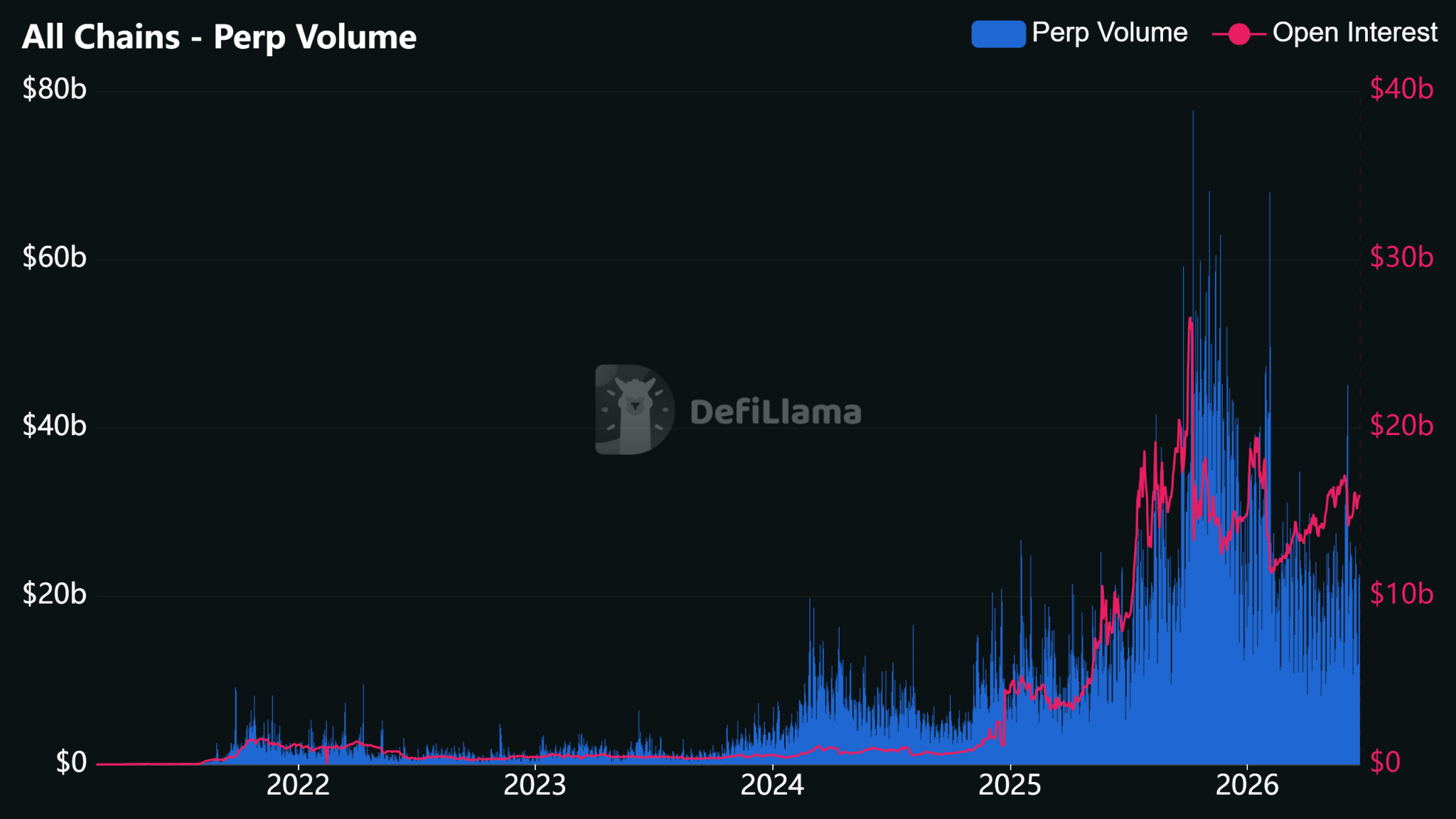
Perp volumes have surged across DeFi exchanges. Source: DeFiLlama
Zcash miner Fortitude to debut on Nasdaq via merger with HeartSciences
Zcash miner Fortitude Mining Holdings is preparing to become a publicly traded company through an all-stock merger with medical technology firm HeartSciences, uniting two enterprises from completely unrelated sectors.
The deal will give Fortitude access to a Nasdaq listing without going through a traditional initial public offering, while HeartSciences’ current shareholders will hold a minority interest in the merged entity. Once the transaction closes, the combined business will carry the Fortitude name and is anticipated to trade on Nasdaq under the ticker TUDE, pending regulatory sign-off.
The news propelled HeartSciences shares up as much as 91% on Tuesday. Prior to the merger announcement, the healthcare firm had yet to turn a profit, posting an $8.77 million net loss in fiscal 2025 even as it continued to advance its product pipeline.
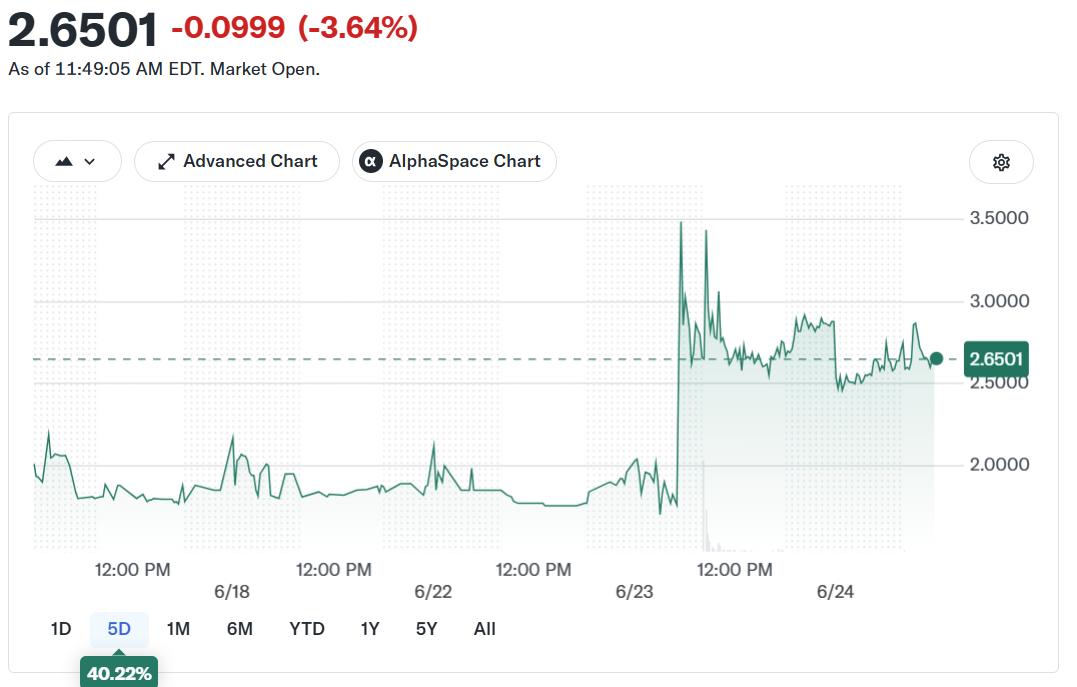
HeartSciences stock. Source: Yahoo Finance
Chainlink teams up with European and Korean banking groups to study stablecoin FX settlement
Chainlink has entered a cross-border banking collaboration with financial institutions from Europe and South Korea to examine whether regulated euro and won stablecoins could facilitate real-time foreign exchange settlement.
Known as Project Pangea, the working group includes South Korean digital asset infrastructure firm FairSquareLab, the Unified Korea Alliance (UniKA), Qivalis and Chainlink, all working together to assess atomic swaps powered by blockchain-based settlement technology.
Rather than deploying a live payment network right away, Project Pangea will investigate how tokenized currencies could enhance wholesale financial markets, where the global foreign exchange market processes an estimated $9.6 trillion in daily trading volume. The initiative signals rising enthusiasm among banks for leveraging stablecoins and tokenized deposits to overhaul cross-border payments, cut down on friction and boost overall efficiency.
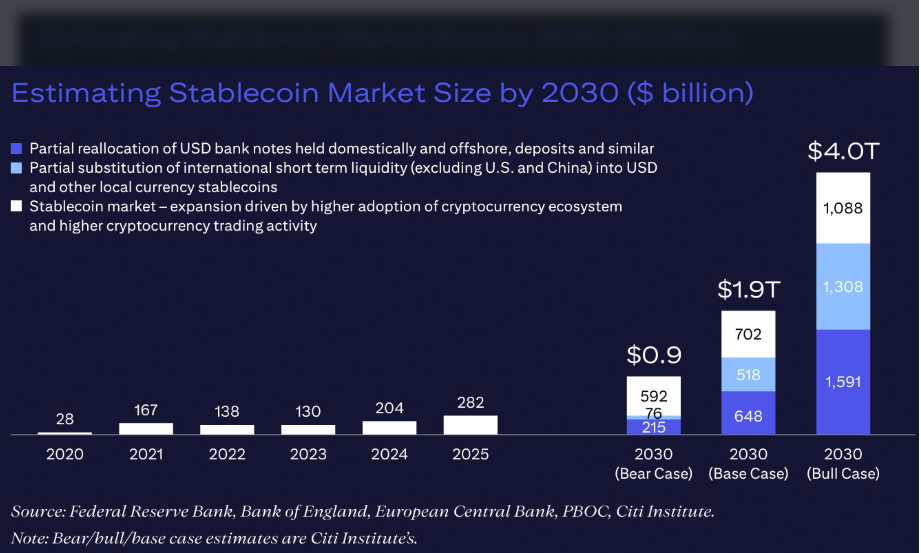
In an optimistic scenario, the stablecoin market could expand to $4 trillion by 2030. Source: Citigroup
Crypto Biz is your weekly briefing on the business side of blockchain and crypto, delivered straight to your inbox every Thursday.
