



British self-driving startup Wayve is turning heads in London after launching its autonomous driving technology on the city’s streets this spring. The company stands as the sole UK-based contender in London’s robotaxi competition, going up against Chinese firm Baidu and Alphabet’s Waymo.
Established in 2017, Wayve employs end-to-end artificial intelligence to achieve Level 3 autonomous driving capabilities. This method gives vehicles “human-like reasoning,” steering clear of dependence on high-definition maps or highly localized geospatial mapping. This sets it apart from rivals like Waymo, which generally relies on intricate mapping and vast amounts of data to function.
In a conversation with MOVEmnt.net, Kaity Fischer, VP of Commercial and Operations, explained:
“What truly sets Wayve apart from other autonomous technology firms is our distinct technological approach. We utilize what we call end-to-end AI to equip vehicles with intelligence capable of driving in any city, anywhere, at any level of autonomy—from driver assistance systems, where you can oversee your own vehicle and it will transport you from point A to point B quite smoothly and safely, all the way to fully driverless technology, or what we refer to as Level 4, which is robotaxi.”
In conventional autonomous driving setups, hardware and software are closely linked. Wayve’s AI-driven approach, however, provides a versatile strategy that allows the software to be incorporated across various vehicle models and brands.
Fischer further noted: “The Wayve AI Driver can be deployed on a range of sensor configurations, so we collaborate directly with automakers to integrate our technology into the sensor setup that best suits the vehicles they are putting on the road.”
Wayve’s strategy reflects a broader industry trend, where traditional car manufacturers are becoming more dependent on technology providers to stay competitive. As the automotive sector moves toward autonomy, many original equipment manufacturers (OEMs) are forming alliances with tech companies like Wayve, as seen in its recent partnerships with established automakers Nissan and Mercedes-Benz.
But the fusion of technology and automotive goes even deeper. Earlier this year, Wayve wrapped up a successful Series D funding round, raising an additional $1.5 billion and gaining support from tech powerhouses Nvidia and SoftBank. Last month, the company secured a further $60 million in new investment from chipmakers Qualcomm, AMD, and Arm. If Wayve’s funding rounds reveal anything, it’s that success in autonomy is becoming increasingly tied to the wider tech ecosystem.
In an era where vehicles are growing more connected, automakers can no longer depend on traditional manufacturing methods or outdated software integration to stay competitive. Rivian CEO RJ Scaringe shared this view on the Cheeky Pint Podcast, stating: “It’s unimaginable that by the early 2030s, a car company can operate at scale and retain market share without a software-defined architecture.” If Scaringe’s forecast holds true, automakers must adopt a technology-focused approach to weather the inevitable software-defined vehicle (SDV) transformation.
For policymakers and regulators, this merging of automotive and advanced AI technologies presents both a major opportunity and a complex regulatory challenge. The rise of end-to-end autonomy, as shown by companies like Wayve, brings up critical questions around safety assurance, liability structures, and the certification of systems that learn and improve over time. Unlike traditional rule-based software, AI-driven models demand new methods for validation and oversight, compelling governments to rethink how they regulate vehicles that are no longer static products but continuously evolving systems. The novelty of this technology only intensifies the challenge, pushing policymakers into unfamiliar regulatory territory.
At the same time, the UK has a chance to establish itself as a global frontrunner in autonomous mobility by cultivating an environment that encourages innovation while preserving public confidence. Flexible legislation and public-private partnerships will be vital in enabling large-scale deployment.
Cooperation between government agencies, local authorities, and technology providers will also be crucial to ensure that infrastructure, data governance, and urban planning advance in step with these new capabilities. As cities like London become real-world testing grounds for autonomous systems, the government’s role in setting standards, facilitating trials, and protecting citizens will be more impactful than ever.
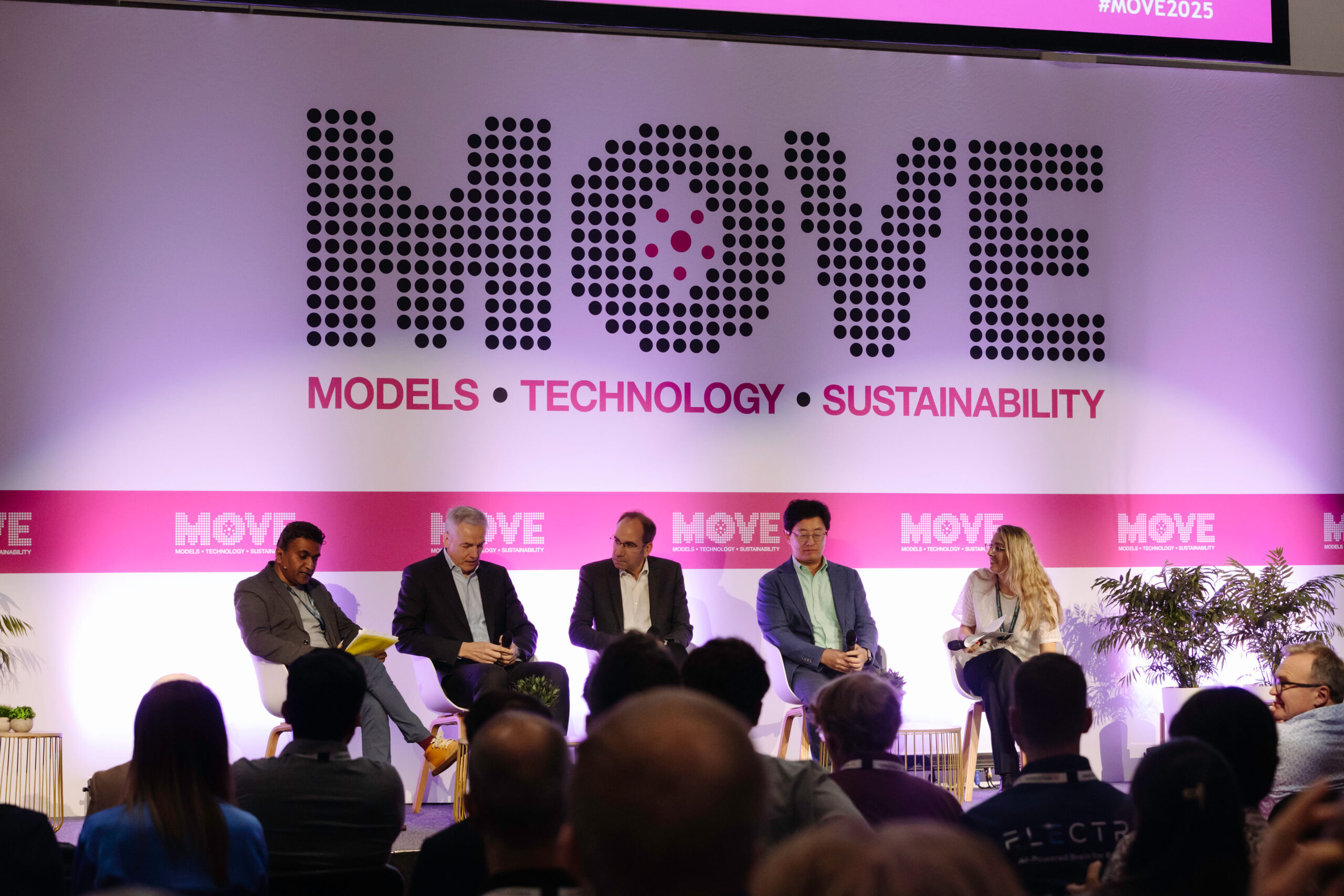
Auto tech event MOVE 2026 serves as a catalyst for this convergence; MOVE is an event designed to bring together the automotive and technology sectors to propel the industry forward and spark essential discussions around legislation, regulation, and public trust. Returning to London’s ExCeL on 17–18 June 2026 for its eighth annual edition, MOVE will gather the visionaries shaping the future of mobility across electric, autonomous, and software-defined vehicles. As one of the industry’s premier commercial forums, MOVE unites automotive, fleet, energy, and technology leaders to exchange knowledge, collaborate, and drive meaningful change.
Featuring more than 200 world-class speakers and a truly global audience, MOVE connects decision-makers from OEMs, fleet operators, charge point operators, investors, tech providers, and government. Designed as a high-energy, festival-style experience, the event includes 15 stages, workshops, headline speakers, and immersive networking environments that ignite ideas and accelerate partnerships.
More than just a conference, MOVE is a global hub for collaboration, deal-making, and industry leadership. Through tailored networking, media coverage via MOVEmnt, and high-impact live experiences, MOVE delivers lasting value for attendees, exhibitors, and sponsors alike—making it an indispensable platform for anyone committed to shaping the future of mobility.
MOVE features 2,000+ attendees, 250+ speakers, 75+ sponsors and exhibitors, 75+ startups, and premium content across 15 unique stages.
MOVE’s General Manager, Cormac Cronin Martin, described the event as an essential gathering for stakeholders across the mobility ecosystem. He said: “MOVE brings together the visionaries shaping the future of mobility. Electric, autonomous, and software-defined vehicles have come such a long way in recent years—and they’re here now! If you’re not planning how to integrate these modes and technologies into your city, you need to be there. With industry leaders like Rivian CEO RJ Scaringe and Wayve CEO Alex Kendall headlining, this will be the place to do business in mobility tech.”
Register your attendance for MOVE 2026 today!
Comment on this article via X: @IoTNow_ and visit our homepage IoT Now
