



Stay updated with ZDNET: Add us as a favorite source on Google.
Once your TV setup is complete, most ports fade into the background—except maybe HDMI and USB. Yet for tech-savvy users, the RS-232 serial port offers robust control over your home theater and smart devices.
Also: I discovered 7 budget-friendly ways to significantly improve my TV’s audio (even without a soundbar)
With a bit of persistence and technical know-how, you can build a fully automated home entertainment system featuring scheduled playback, multi-screen synchronized content, and even diagnostic capabilities.
Understanding the RS-232 Serial Port
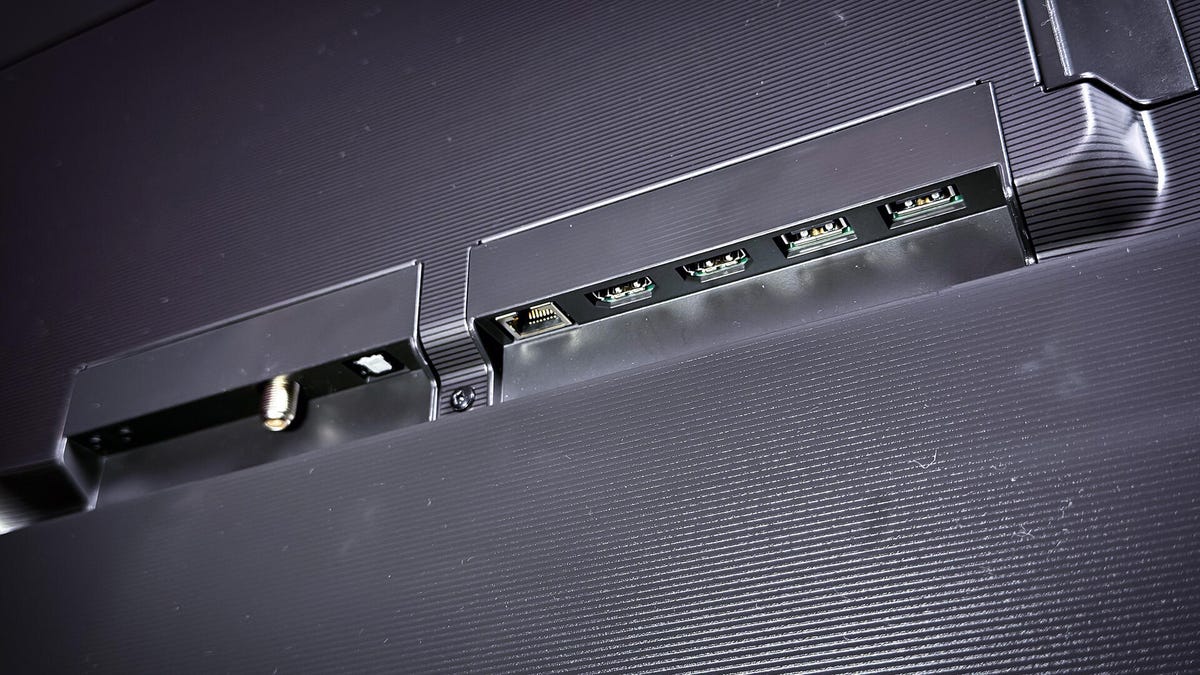
Examine the back of your TV, and you might notice an unusual 9-pin port tucked between standard HDMI and USB connections—one that probably doesn’t match any cable in your collection (though it may ring a bell if you used printers in the ’90s). This is the RS-232 serial port, typically used for professional calibration and diagnostics.
Production-line technicians and repair specialists use specialized testing equipment connected via the RS-232 port to evaluate signal quality, troubleshoot firmware, and test hardware integrity.
The RS-232 interface also enables commercial and smart-home connectivity by linking several displays to a single input for coordinated playback. Every time you see synchronized screens repeating ads and safety messages at clinics or airports, that’s the RS-232 connection doing its job.
Also: Our picks for the best TVs to buy: Expert tested and reviewed
Though this port is mostly aimed at commercial users, if you’re willing to invest the effort, you can build a custom multi-room broadcast network with it; enjoy perfectly synced playback across different rooms of your household, or craft tailored playlists for your home office, play area, or upcoming gathering.
Which TVs Include an RS-232 Port?
Although various manufacturers integrate RS-232 ports into smart TV designs, it’s typically limited to premium models. Professional-grade displays will also have this connection since they’re purpose-built for RS-232 broadcast networks. Some mid-tier options from trusted brands such as LG may offer RS-232 connectivity, though finding one on a budget-friendly set is uncommon.
Setting Up the RS-232 Port for Home Use
Leveraging RS-232 control on your TV isn’t ideal for casual users or those uncomfortable with technology. However, if you have programming experience, automating video streaming is relatively manageable. You’ll need either an RS-232 cable or RS-232-to-Bluetooth adapter paired with a computer.
Once your TV is linked to your desktop or laptop, you can develop code protocols for precise timing, defining what content to include, and designating broadcast targets.
Also: I adjusted 13 TV settings and saw dramatic performance gains – here’s my process
Additionally, a Serial Port/HDMI matrix will be required. This device acts as your system’s central hub, joining your primary display, additional screens, and PC into a single switching unit for consolidated control. These matrix devices vary in connectivity, with some handling up to 32 separate HDMI inputs and outputs for enterprise-level setups.
For personal use, however, an 8×8 HDMI matrix is more than sufficient for a basic configuration. Many HDMI matrix units include Ethernet and Wi-Fi, letting you stream content from platforms like Netflix, HBO Max, YouTube, and Twitch. There are also models with Dolby and DTS audio passthrough to feed custom sound setups or power external audio systems.
Selecting the Right Programming Language
Since every configuration differs, you’ll need to identify which coding language your equipment relies on for communication and audio-visual processing. These protocols are often proprietary and demand considerable expertise to customize for your specific environment.
If you’re looking for a starting point, detailed tutorials for controlling particular brands and device ecosystems are available on GitHub; supported languages span HTML, C#, Python, Java, and many others—so locating a compatible control module should be straightforward.
Also: Your TV could be collecting your watch history – here’s how to prevent it (beyond disabling ACR)
If you’d prefer to use RS-232 for checking your smart TV’s condition, a signal tester costs roughly $20. Most support Windows, MacOS, and Linux, making it easy to incorporate your TV with any PC setup.
The RS-232 tester examines faulty or worn pins, transmission strength, and connectivity between your TV and computer; when issues arise, you’ll receive thorough diagnostics for quick problem-solving and resolution.
Final Thoughts
For enthusiasts using Home Assistant, Crestron, or Roomie Remote, the RS-232 port is incredibly valuable. It’s far more dependable than IR blasters (which can fail due to interference) or CEC (notorious for being unreliable). Just be aware that configuring the RS-232 port to handle automations or custom functions will require an investment of time and patience to learn.
