



Follow ZDNET: Add us as a preferred source on Google.
ZDNET’s main takeaways
- PC-DOS 1.0 would help make Microsoft the dominant force in computing
- Microsoft continues to support open source.
- The source code and annotations offer valuable perspective into the operating system’s early development.
Before “Micro Soft” evolved into Microsoft, Bill Gates developed BASIC interpreters. The company’s first shipped operating system was a Unix distribution named Xenix. Then, in 1980, Microsoft got its big break: IBM needed an operating system for its upcoming IBM PC and asked Gates if he could deliver one. Absolutely! The rest is history.
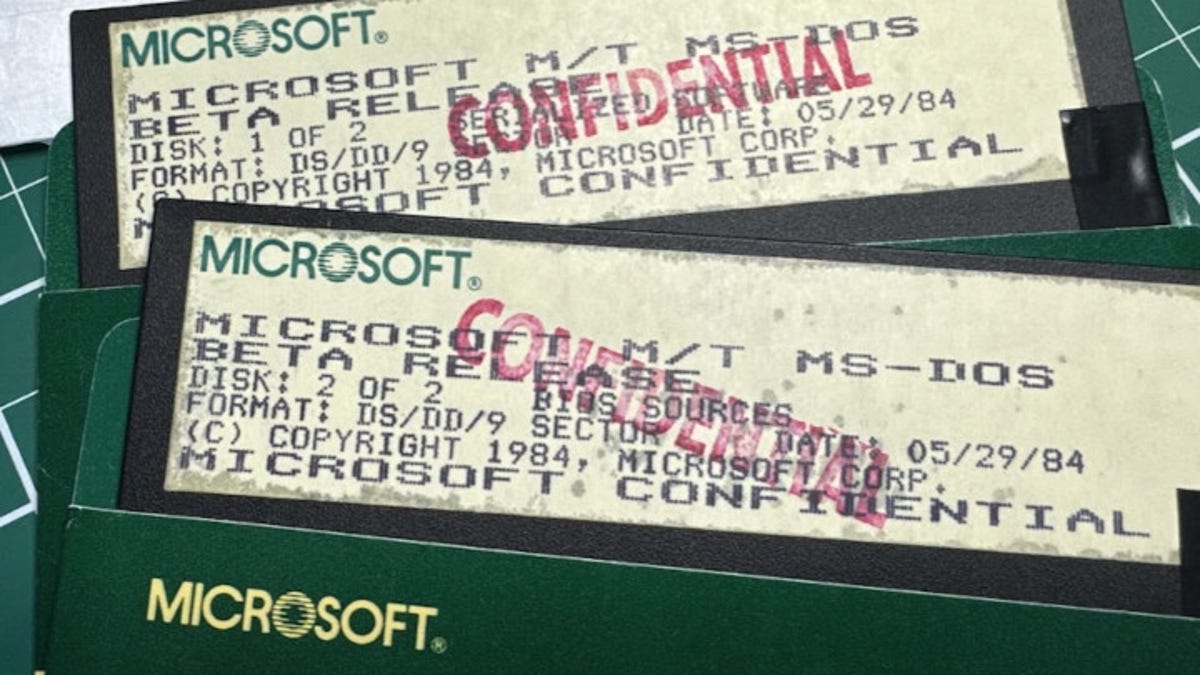
Now, Microsoft has made available the source code and notes for PC-DOS 1.0, the first DOS release for the IBM PC.
Also: Microsoft’s incredible rise, 15 lost years, and remarkable comeback – in 4 charts
Microsoft’s AT&T Unix license didn’t permit the company to adapt Xenix to the x86-based IBM PC. That lack of freedom could have led to a very different landscape where Unix became the leading desktop operating system ever since. In that alternate reality, Linus Torvalds might well have been Microsoft’s Unix CTO.
Microsoft purchases 86‑DOS for $100,000
In reality, Gates and his team needed to build an operating system as fast as possible. They didn’t have time to create their own from scratch, so they acquired 86‑DOS, also known as QDOS, from Seattle Computer Products and its creator, Tim Patterson, for just under $100,000. What a bargain! DOS would go on to be the product that set Microsoft on its path to becoming one of the most influential tech companies for the next 50 years and beyond.
IBM had originally wanted a CP/M‑like operating system, but Digital Research, the owner of CP/M, missed the opportunity, so Big Blue approached Microsoft. Microsoft tailored 86-DOS, which featured CP/M‑style programming interfaces (APIs), into what IBM would release as PC‑DOS 1.0 in August 1981. Microsoft kept the right to license it as MS‑DOS to other compatible PC makers, positioning the company for its post‑1981 market dominance.
Also: Microsoft announces sweeping Windows changes – but no apologies
At the time, however, it was quite a risk. That initial version was very limited by today’s standards. It booted from 160KB floppy disks but offered no subdirectory or hard drive support. Even so, it became the foundation for the MS‑DOS line that would control the PC operating system market through the 1980s and early 1990s.
Up until now, the earliest DOS source code widely accessible to developers was MS‑DOS 1.25 and 2.0, which Microsoft initially shared via the Computer History Museum in 2014 and then republished on GitHub in 2018. These GitHub releases, along with the more recent publication of the joint Microsoft–IBM MS‑DOS 4.00 code, showed Microsoft’s growing comfort in treating its once-proprietary DOS software as an educational and historical resource.
When Microsoft and the Computer History Museum first released an early MS‑DOS source in 2014, it came with a tightly restricted license permitting only “non-commercial research, experimentation, and academic uses” and explicitly prohibited reuse in other projects. That approach let people read the code but not actually re-use it. The later GitHub re-release of MS‑DOS 1.25 and 2.0 under the MIT license transformed that, adopting a permissive license recognized by the Free Software Foundation as GPL-compatible and enabling nearly unrestricted re-use, modification, and redistribution.
Also: Fed up with Microsoft and Google? This new European office suite is a private, open-source alternative
Releasing DOS 1.0 under the same MIT license completes the journey from the very start of the PC era. Instead of being locked away in an archive, the code is now available in a browsable Git repository. With this code, systems programmers, educators, and retrocomputing enthusiasts can clone, build, and experiment with it using modern development tools.
It’s not just the DOS source code that Microsoft is sharing. Microsoft explained, “These resources aren’t simply operating system versions in the usual sense. In many cases, the code listings represent specific point-in-time development snapshots and handwritten annotations, preserved by Tim Paterson himself. Think of them as a printed commit history of a Git repository.”
How operating system development was handled
No one is going to use these releases for actual production work. Nonetheless, they remain incredibly educational for anyone wanting to grasp how operating systems were built for first-generation 8086 hardware. DOS 1.0’s small size and feature limitations make it a manageable codebase that can be studied almost end-to-end, especially when compared to today’s complex operating systems.
As Microsoft pointed out, “The listings include sources for the 86-DOS 1.00 kernel, multiple development snapshots of the PC-DOS 1.00 kernel, and several well-known utilities such as CHKDSK. Not only were these assembly language listings, but there were also listings for the assembler itself! This work provides rare insight into how MS-DOS/PC-DOS came to be, and how operating system development was practiced at the time, not as it was later reconstructed.”
Also: Canonical’s approach to AI is refreshingly thoughtful – Microsoft should take notice
Open-sourcing also helps clear up long-standing version numbering questions. There was never any MS‑DOS 1.0 product released under that name, and historians have had to sort through IBM’s PC‑DOS 1.0, internal Microsoft version numbers, and OEM releases like MS‑DOS 1.25. Having a clearly labeled DOS 1.0 code release that connects back to the original IBM PC era gives researchers a concrete reference point for that maze of early DOS builds.
So, if you want a nostalgic trip down memory lane, try exploring the code. If nothing else, it should give you an appreciation for how long and winding the journey has been from the dawn of the PC to today’s world, where you carry more computing power in your pocket than Gates and his team had access to in their entire company.
