



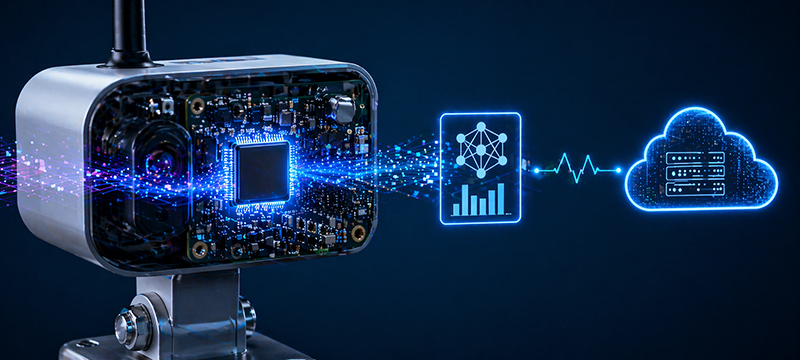
Edge computing has change into a central architectural consideration in trendy IoT deployments, notably as related programs scale in complexity and knowledge depth. Fairly than relying solely on centralized cloud platforms, organizations are more and more distributing processing nearer to gadgets to deal with latency, bandwidth, and reliability constraints.
On this context, Edge Computing IoT architectures are reshaping how knowledge is collected, processed, and acted upon. Understanding how edge computing works, the place it delivers worth, and what trade-offs it introduces is crucial for decision-makers designing resilient and scalable IoT programs.
Key Takeaways
- Edge Computing IoT allows knowledge processing nearer to gadgets, lowering latency and community dependency.
- It helps real-time decision-making in latency-sensitive purposes reminiscent of industrial automation and good infrastructure.
- Edge architectures mix {hardware}, software program, and connectivity layers, usually built-in with cloud platforms.
- Whereas it improves effectivity and resilience, edge computing introduces complexity in deployment and administration.
- The ecosystem spans chipmakers, gadget OEMs, connectivity suppliers, and cloud-edge platform distributors.
What’s Edge Computing for IoT?
Edge Computing IoT refers to a distributed computing mannequin through which knowledge processing and analytics happen close to the supply of information technology—reminiscent of sensors, gadgets, or native gateways—reasonably than being transmitted to centralized cloud environments.
Inside the IoT ecosystem, edge computing acts as an intermediate layer between related gadgets and cloud platforms. It allows localized knowledge filtering, real-time analytics, and autonomous decision-making, lowering the necessity to ship all uncooked knowledge upstream. That is notably related in eventualities the place community latency, bandwidth constraints, or operational reliability are essential elements.
How Edge Computing IoT works
Edge Computing IoT architectures usually observe a multi-layered mannequin that distributes intelligence throughout gadgets, edge nodes, and cloud programs.
On the gadget degree, sensors and actuators generate uncooked knowledge. This knowledge is transmitted to edge nodes—reminiscent of gateways, embedded processors, or industrial PCs—the place preliminary processing happens. Duties at this layer might embrace knowledge filtering, aggregation, protocol translation, and real-time analytics.
Edge nodes can function independently or in coordination with centralized cloud platforms. The cloud layer is often used for long-term storage, superior analytics, machine studying mannequin coaching, and fleet-wide orchestration.
Communication between these layers depends on a mixture of protocols and connectivity applied sciences, together with mobile IoT, LPWAN, Wi-Fi, Ethernet, and industrial fieldbus programs. The structure is designed to stability native autonomy with centralized management.
A typical Edge Computing IoT workflow consists of:
- Knowledge technology on the sensor or gadget degree
- Native processing and filtering on the edge
- Occasion-driven actions executed domestically when required
- Selective knowledge transmission to the cloud for storage or additional evaluation
Key applied sciences and requirements
Edge Computing IoT depends on a mixture of {hardware}, software program frameworks, and communication requirements that allow distributed processing.
- Edge {hardware}: gateways, microcontrollers, embedded processors, industrial edge servers
- Working environments: light-weight working programs, containerized environments, virtualization on the edge
- Knowledge processing frameworks: stream processing engines, event-driven architectures, AI inference engines
- Communication protocols: MQTT, CoAP, HTTP/REST, OPC UA for industrial environments
- Connectivity applied sciences: LTE-M, NB-IoT, 5G, Wi-Fi, Ethernet, LoRaWAN
- Safety mechanisms: gadget authentication, safe boot, encryption, zero-trust architectures
Standardization efforts give attention to interoperability and lifecycle administration, notably in industrial IoT environments the place heterogeneous programs should coexist over lengthy operational lifespans.
Principal IoT use circumstances
Edge Computing IoT is especially related in purposes the place latency, reliability, or knowledge quantity make cloud-only architectures impractical.
Industrial IoT (IIoT)
Manufacturing environments use edge computing to watch tools, detect anomalies, and allow predictive upkeep. Actual-time processing permits quick responses to operational points with out counting on cloud connectivity.
Sensible cities
Edge nodes course of knowledge from site visitors programs, surveillance cameras, and environmental sensors domestically. This reduces bandwidth utilization and helps real-time decision-making, reminiscent of site visitors optimization or incident detection.
Logistics and asset monitoring
In provide chain operations, edge computing allows native processing of monitoring knowledge, situation monitoring (e.g., temperature), and occasion detection throughout transit, even in low-connectivity environments.
Vitality and utilities
Sensible grids and metering programs use edge intelligence to handle distributed vitality sources, detect faults, and stability masses in close to actual time.
Healthcare
Medical gadgets and distant monitoring programs use edge processing to research affected person knowledge domestically, enabling sooner alerts and lowering the necessity to transmit delicate knowledge repeatedly.
Autonomous programs
Purposes reminiscent of related automobiles or robotics rely closely on edge computing to course of sensor knowledge with minimal latency, making certain protected and responsive operation.
Advantages and limitations
Edge Computing IoT introduces a number of operational and architectural benefits, but in addition comes with trade-offs that have to be fastidiously managed.
Advantages
- Diminished latency: native processing allows close to real-time decision-making
- Bandwidth optimization: solely related knowledge is transmitted to the cloud
- Improved reliability: programs can proceed working throughout community disruptions
- Enhanced privateness: delicate knowledge may be processed domestically with out leaving the gadget setting
- Scalability: distributed processing reduces strain on centralized infrastructure
Limitations
- Deployment complexity: managing distributed infrastructure throughout a number of websites may be difficult
- Safety dangers: a bigger assault floor because of a number of edge nodes
- Useful resource constraints: restricted compute and storage capability on the edge in comparison with cloud environments
- Integration challenges: interoperability throughout heterogeneous programs and legacy infrastructure
- Operational prices: {hardware} deployment and upkeep can improve complete value of possession
Balancing these elements is a key consideration when designing Edge Computing IoT architectures.
Market panorama and ecosystem
The Edge Computing IoT ecosystem spans a number of layers, every involving distinct classes of stakeholders.
Machine and {hardware} producers
Firms creating sensors, modules, and edge {hardware} present the bodily basis for edge deployments. This consists of chipmakers and embedded system distributors.
Connectivity suppliers
Telecom operators and LPWAN suppliers allow knowledge transmission between gadgets, edge nodes, and cloud platforms. The evolution of 5G and personal networks performs a major position in edge adoption.
Platform suppliers
Cloud and edge platform distributors supply instruments for gadget administration, knowledge orchestration, and software deployment throughout distributed environments.
System integrators
Integrators design and deploy end-to-end options, notably in industrial and enterprise contexts the place customization is required.
Software program and AI distributors
Suppliers of analytics, machine studying, and orchestration instruments allow superior processing capabilities on the edge.
The market stays fragmented, with ongoing efforts to standardize interfaces and enhance interoperability throughout platforms.
Future outlook
Edge Computing IoT is predicted to evolve alongside broader tendencies in connectivity, synthetic intelligence, and distributed programs.
One key improvement is the combination of AI inference capabilities immediately on the edge, enabling extra autonomous and clever programs. That is notably related in purposes reminiscent of video analytics, predictive upkeep, and robotics.
The rollout of 5G and personal mobile networks can also be accelerating edge adoption by offering low-latency, high-reliability connectivity. These networks allow new deployment fashions the place edge computing sources are embedded inside telecom infrastructure.
Standardization and orchestration instruments are doubtless to enhance, making it simpler to handle large-scale distributed deployments. On the similar time, safety frameworks might want to evolve to deal with the expanded assault floor launched by edge architectures.
General, Edge Computing IoT is transferring towards a extra built-in continuum the place cloud, edge, and gadget layers function seamlessly reasonably than as distinct silos.
Ceaselessly Requested Questions
What’s Edge Computing IoT?
Edge Computing IoT is a distributed computing method the place knowledge processing happens near IoT gadgets reasonably than in centralized cloud programs, enabling sooner and extra environment friendly operations.
Why is edge computing essential for IoT?
It reduces latency, minimizes bandwidth utilization, and permits real-time decision-making, which is essential for a lot of IoT purposes.
What’s the distinction between edge and cloud computing in IoT?
Cloud computing centralizes knowledge processing in distant knowledge facilities, whereas edge computing processes knowledge domestically or close to the supply, usually earlier than sending chosen knowledge to the cloud.
What are widespread edge computing gadgets?
Frequent gadgets embrace IoT gateways, industrial PCs, embedded processors, and edge servers deployed close to knowledge sources.
Is edge computing safe?
Edge computing can improve knowledge privateness by protecting delicate knowledge native, however it additionally introduces safety challenges as a result of distributed nature of edge nodes.
Does edge computing exchange the cloud?
No, edge computing enhances the cloud. Most IoT architectures use a hybrid method combining edge processing with cloud-based analytics and administration.
