



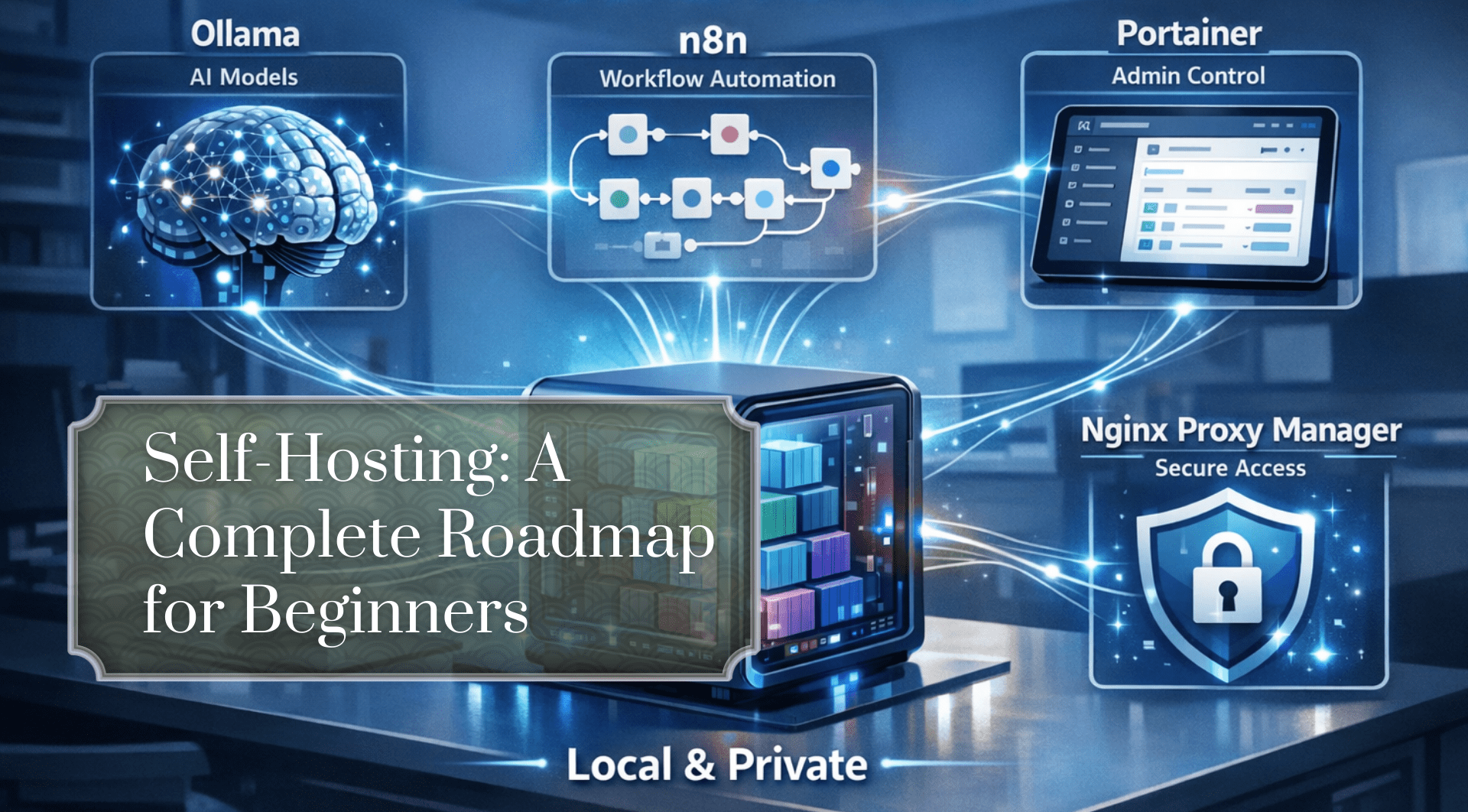
Picture by Creator
# Introduction
Constructing your individual native AI hub offers you the liberty to automate duties, course of non-public information, and create customized assistants, all with out relying on the cloud or having to take care of month-to-month charges. On this article, I’ll stroll you thru constructing a self-hosted AI workflow hub on a house server, providing you with full management, larger privateness, and highly effective automation.
We are going to mix instruments like Docker for packaging software program, Ollama to run native machine studying fashions, n8n to create visible automations, and Portainer for straightforward administration. This setup is ideal for a reasonably highly effective x86-64 system like a mini-PC or an previous desktop with at the least 8GB of RAM, which might capably deal with a number of companies without delay.
# Why Construct a Native AI Hub?
Once you self-host your instruments, you progress from being a consumer of companies to an proprietor of infrastructure, and that’s highly effective. An area hub is non-public (your information by no means leaves your community), cost-effective (no software programming interface (API) charges), and totally customizable.
The core of this hub is a strong group of things the place:
- Ollama serves as your non-public, on-device AI mind, operating fashions for textual content technology and evaluation
- n8n acts because the nervous system, connecting Ollama to different apps (like calendars, electronic mail, or information) to construct automated workflows
- Docker is the muse, packaging every instrument into separate, easy-to-manage containers
// Core Elements of Your Self-Hosted AI Hub
| Instrument | Major Position | Key Profit for Your Hub |
|---|---|---|
| Docker/Portainer | Containerization & administration | Isolates apps, simplifies deployment, and gives a visible administration dashboard |
| Ollama | Native massive language mannequin (LLM) server | Runs AI fashions regionally for privateness; gives an API for different instruments to make use of |
| n8n | Workflow automation platform | Visually connects Ollama to different companies (APIs, databases, information) to create highly effective automations |
| Nginx Proxy Supervisor | Safe entry & routing | Offers a safe net gateway to your companies with simple SSL certificates setup |
# Getting ready Your Server Basis
First, guarantee your server is prepared. We advocate a clear set up of Ubuntu Server LTS or the same Linux distribution. As soon as put in, hook up with your server through safe shell (SSH). The primary and most important step is putting in Docker, which can run all our subsequent instruments.
// Putting in Docker and Docker Compose
Run the next instructions in your terminal to put in Docker and Docker Compose. Docker Compose is a instrument that permits you to outline and handle multi-container functions with a easy YAML file.
sudo apt replace && sudo apt improve -y
sudo apt set up apt-transport-https ca-certificates curl software-properties-common -y
curl -fsSL  | sudo apt-key add -
sudo add-apt-repository "deb [arch=amd64]  $(lsb_release -cs) stable"
sudo apt replace
sudo apt set up docker-ce docker-ce-cli containerd.io docker-compose-plugin -y
// Verifying and Setting Permissions
Confirm the set up and add your consumer to the Docker group to run instructions with out sudo:
sudo docker model
sudo usermod -aG docker $USER
Output:

You will have to log off after which log in once more for this to take impact.
// Managing with Portainer
As an alternative of utilizing solely the command line, we are going to deploy Portainer, a web-based graphical consumer interface (GUI) for managing Docker. Create a listing for it and a docker-compose.yml file with the next command.
mkdir -p ~/portainer && cd ~/portainer
nano docker-compose.yml
Paste the next configuration into the file. This tells Docker to obtain the Portainer picture, restart it robotically, and expose its net interface on port 9000.
companies:
  portainer:
    picture: portainer/portainer-ce:newest
    container_name: portainer
    restart: unless-stopped
    ports:
      - "9000:9000"
    volumes:
      - /var/run/docker.sock:/var/run/docker.sock
      - portainer_data:/information

volumes:
  portainer_data:
Save the file (Ctrl+X, then Y, then Enter). Now, deploy Portainer:
Your output ought to seem like this:

Now navigate to in your browser. For me, it’s

You could must restart the server. You are able to do that with the next command:
sudo docker begin portainer
Create an admin account:
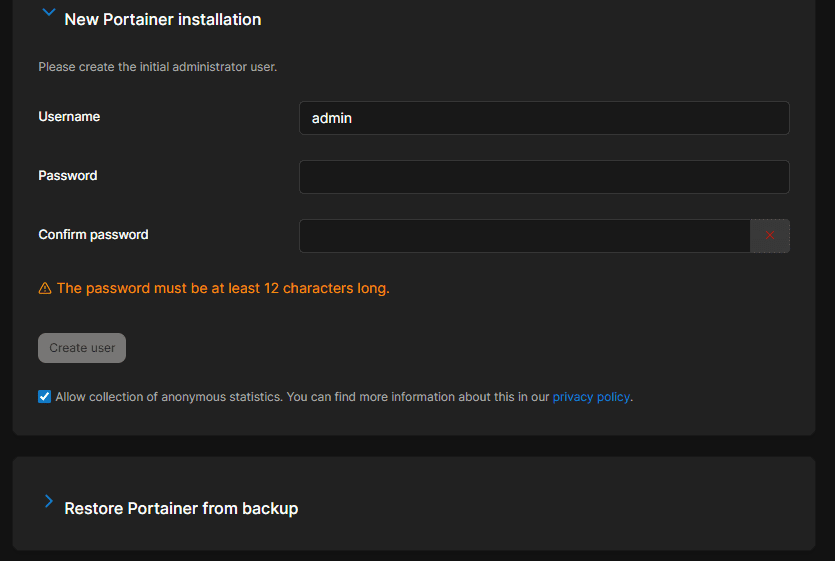
And you will note the Portainer dashboard after creating an account.

That is your mission management for all different containers. You can begin, cease, view logs, and handle each different service from right here.
# Putting in Ollama: Your Native AI Engine
Ollama is a instrument designed to simply run open-source massive language fashions (LLMs) like Llama 3.2 or Mistral regionally. It gives a easy API that n8n and different apps can use.
// Deploying Ollama with Docker
Whereas Ollama could be put in straight, utilizing Docker ensures consistency. Create a brand new listing and a docker-compose.yml file for it with the next command.
mkdir -p ~/ollama && cd ~/ollama
nano docker-compose.yml
Use this configuration. The volumes line is necessary as a result of it shops your downloaded machine studying fashions persistently, so you do not lose them if the container restarts.
companies:
  ollama:
    picture: ollama/ollama:newest
    container_name: ollama
    restart: unless-stopped
    ports:
      - "11434:11434"
    volumes:
      - ollama_data:/root/.ollama

volumes:
  ollama_data:
Deploy it: docker compose up -d
// Pulling and Operating Your First Mannequin
As soon as the container is operating, you may pull a mannequin. Let’s begin with a succesful however environment friendly mannequin like Llama 3.2.
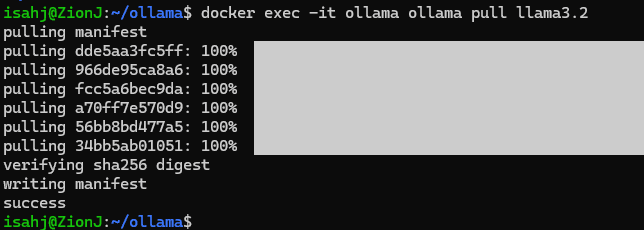
This command executes ollama pull llama3.2 contained in the operating container:
docker exec -it ollama ollama pull llama3.2
Activity Demonstration: Querying Ollama
Now you can work together together with your native AI straight. The next command sends a immediate to the mannequin operating contained in the container.
docker exec -it ollama ollama run llama3.2 "Write a short haiku about technology."
You must see a generated poem in your terminal. Extra importantly, Ollama’s API is now out there at for n8n to make use of.

# Integrating n8n for Clever Automation
n8n is a visible workflow automation instrument. You may drag and drop nodes to create sequences; for instance, “When I save a document, summarize it with Ollama, then send the summary to my notes app.”
// Deploying n8n with Docker
Create a listing for n8n. We are going to use a Compose file that features a database for n8n to avoid wasting your workflows and execution information.
mkdir -p ~/n8n && cd ~/n8n
nano docker-compose.yml
Now paste the next contained in the YAML file:
companies:
  n8n:
    picture: n8nio/n8n:newest
    container_name: n8n
    restart: unless-stopped
    ports:
      - "5678:5678"
    setting:
      - N8N_PROTOCOL=http
      - WEBHOOK_URL=
      - N8N_ENCRYPTION_KEY=your_secure_encryption_key_here
      - DB_TYPE=postgresdb
      - DB_POSTGRESDB_HOST=db
      - DB_POSTGRESDB_PORT=5432
      - DB_POSTGRESDB_DATABASE=n8n
      - DB_POSTGRESDB_USER=n8n
      - DB_POSTGRESDB_PASSWORD=your_secure_db_password
    volumes:
      - n8n_data:/residence/node/.n8n
    depends_on:
      - db

  db:
    picture: postgres:17-alpine
    container_name: n8n_db
    restart: unless-stopped
    setting:
      - POSTGRES_USER=n8n
      - POSTGRES_PASSWORD=your_secure_db_password
      - POSTGRES_DB=n8n
    volumes:
      - postgres_data:/var/lib/postgresql/information

volumes:
  n8n_data:
  postgres_data:
Exchange YOUR_SERVER_IP and the placeholder passwords. Deploy with docker compose up -d. Entry n8n at http://YOUR_SERVER_IP:5678.
Activity Demonstration: Constructing Your First AI Workflow
Let’s create a easy workflow the place n8n makes use of Ollama to behave as a artistic writing assistant.
- Within the n8n editor, add a “Schedule Trigger” node and set it to run manually for testing
- Add an “HTTP Request” node. Configure it to name your Ollama API:
- Technique: POST
- URL:
- Set Physique Content material Sort to JSON
- Within the JSON physique, enter: {“model”: “llama3.2”, “prompt”: “Generate three ideas for a sci-fi short story.”}
- Add a “Set” node to extract simply the textual content from Ollama’s JSON response. Set the worth to
{{ $json["response"] }} - Add a “Code” node and use a easy line like
gadgets = [{"json": {"story_ideas": $input.item.json}}]; return gadgets;to format the info - Lastly, join an “Email Send” node (configured together with your electronic mail service) or a “Save to File” node to output the outcomes
Click on “Execute Workflow.” n8n will ship the immediate to your native Ollama container, obtain the concepts, and course of them. You’ve got simply constructed a non-public, automated AI assistant.
# Securing Your Hub with Nginx Proxy Supervisor
You now have companies on completely different ports (Portainer: 9000, n8n: 5678). Nginx Proxy Supervisor (NPM) permits you to entry them through neat subdomains (like portainer.residence.internet) with free safe sockets layer (SSL) encryption from Let’s Encrypt.
// Deploying Nginx Proxy Supervisor
Create a ultimate listing for NPM.
mkdir -p ~/npm && cd ~/npm
nano docker-compose.yml
Paste the next code in your YAML file:
companies:
  app:
    picture: 'jc21/nginx-proxy-manager:newest'
    container_name: nginx-proxy-manager
    restart: unless-stopped
    ports:
      - '80:80'
      - '443:443'
      - '81:81'
    volumes:
      - ./information:/information
      - ./letsencrypt:/and many others/letsencrypt

volumes:
  information:
  letsencrypt:
Deploy with docker compose up -d.
The admin panel is at http://YOUR_SERVER_IP:81. Log in with the default credentials (admin@instance.com / changeme) and alter them instantly.
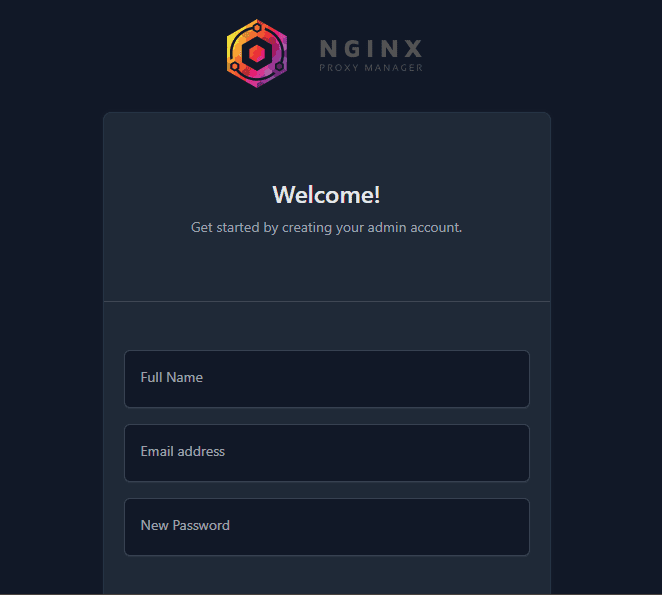
Activity Demonstration: Securing n8n Entry
- In your house router, ahead ports 80 and 443 to your server’s inside web protocol (IP) deal with. That is the one port forwarding required
- In NPM’s admin panel (your-server-ip:81), go to Hosts -> Proxy Hosts -> Add Proxy Host

- For n8n, fill within the particulars:
- Area: n8n.yourdomain.com (or a subdomain you personal pointing to your house IP)
- Scheme: http
- Ahead Hostname / IP: n8n (Docker’s inside community resolves the container identify!)
- Ahead Port: 5678
- Click on SSL and request a Let’s Encrypt certificates, forcing SSL
Now you can securely entry n8n at Repeat for Portainer (portainer.yourdomain.com forwarding to portainer:9000).
# Conclusion
You now have a totally functioning, non-public AI automation hub. Your subsequent steps might be:
- Increasing Ollama: Experiment with completely different fashions like Mistral for pace or codellama for programming duties
- Superior n8n Workflows: Join your hub to exterior APIs (Google Calendar, Telegram, RSS feeds) or inside companies (like a neighborhood file server)
- Monitoring: Add a instrument like Uptime Kuma (additionally deployable through Docker) to watch the standing of all of your companies
This setup turns your modest {hardware} into a strong, non-public digital mind. You management the software program, personal the info, and pay no ongoing charges. The abilities you’ve got realized managing containers, orchestrating companies, and automating with AI are the muse of recent, impartial tech infrastructure.
// Additional Studying
Shittu Olumide is a software program engineer and technical author enthusiastic about leveraging cutting-edge applied sciences to craft compelling narratives, with a eager eye for element and a knack for simplifying complicated ideas. You too can discover Shittu on Twitter.
